
Reviewed · WALKING TOURS
The Heart of Chester Walking Tour – Guided Walk
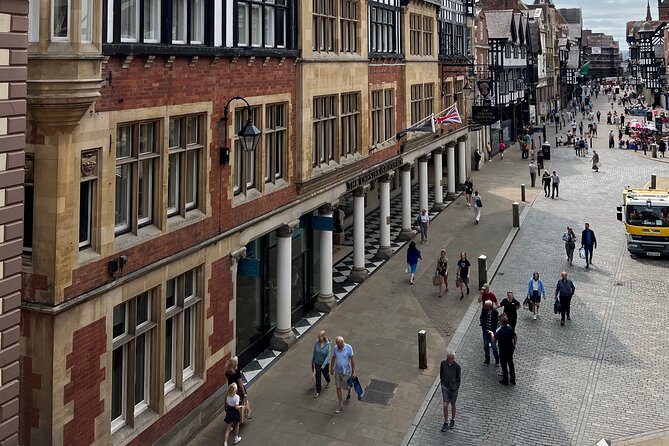
Chester’s past is packed into a remarkably small area. In 90 minutes, this guided walk takes you from Roman fortress to medieval market town, along the old city walls, beneath the famous Rows, and past the Gothic Town Hall. I like the small group limit of 15 and the way guides such as Caroline and Phil connect buildings with the people who used them. I also like that the walk gives you a clear first look at the city before you explore alone.
The main consideration is pace. You cover a lot of ground and encounter steps, so this is not a leisurely stroll for anyone who needs frequent stops. The tour stays outside historic buildings, too, so admission fees and interior visits are not included.
Key points to know before you book
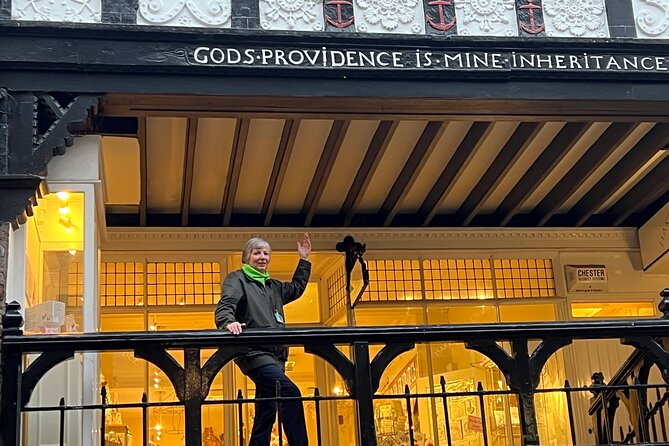
- Roman Chester beneath your feet: The walk explains how the modern city grew over a legionary fortress, including surviving ruins beneath present-day buildings.
- A close look at the medieval Rows: You go up into Chester’s unusual two-level shopping streets and learn why they developed.
- Eight central stops in 90 minutes: The route links Northgate Street, the Cathedral, Watergate Street, the Cross, Eastgate, and Bridge Street.
- Guides Caroline and Phil: Both are professional Green Badge Guides praised for clear explanations, local insight, and a good sense of humor.
- A useful first orientation: The route ends in the city centre, making it easy to continue shopping, sightseeing, or eating afterward.
Why this short Chester walk works
I like this tour because Chester can seem confusing at first. Its Roman street plan, medieval Rows, city walls, modern shops, and grand Victorian buildings all overlap. Without context, you may simply see attractive old streets. With a guide, you begin to understand why the streets look the way they do.
The route also makes good use of Chester’s compact centre. You are not spending most of the 90 minutes marching between distant sights. Instead, the walk moves through the city’s main historic core, with time at each stop for photographs and questions.
The guides bring different strengths. Caroline is praised for speaking slowly and clearly, which helps if English is not your first language. She also connects Chester’s past with what is happening in the city today. Phil is described as enthusiastic, humorous, and especially good at putting Roman, medieval, and modern events into a clear sequence.
That matters on a short walk. Chester has too many centuries to explain one by one, so a good guide must choose examples that make the changes easy to grasp. This tour uses buildings, streets, ruins, and public spaces as its teaching tools.
A few more England trips to weigh up
- Oxford University Walking Tour With University Alumni Guide
★ 5.0 · 6,905 reviews - Tour for Muggles The Ultimate Harry Potter Walking Tour in London
★ 5.0 · 4,684 reviews - London Jack The Ripper Guided Walking Tour
★ 5.0 · 3,131 reviews
Starting at Northgate Street and the Town Hall
The meeting point is the Chester Visitor Information Centre at the Town Hall on Northgate Street. The walk begins at 1:00 pm in the Town Hall square, an effective starting point because several important layers of Chester are visible here.
You hear about the Roman fortress, the medieval abbey, and Chester’s Gothic-style Town Hall. The guide sets up the main story of the city: a Roman military base became a medieval religious and trading centre, then developed into the modern city you see today.
The stop lasts about 10 minutes. That is enough to establish the setting without using too much of the tour at the first corner. You should have time to take photographs, but keep your attention on the guide because the opening explanation helps make sense of later stops.
Chester Cathedral and stories of survival
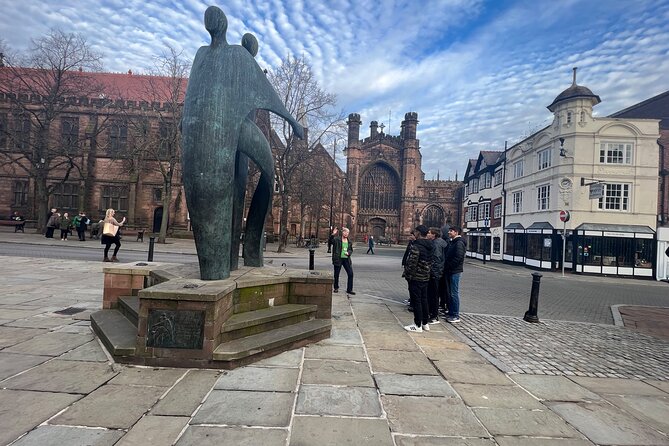
The walk continues to Chester Cathedral and its surrounding streets. This is one of the more story-filled parts of the route, bringing together a Mercian princess, a talking goose, a Norman earl, and the wolf associated with the power to make and break laws.
These details give the place some personality. The guide also explains how the cathedral survived the Dissolution, the period when monasteries and religious houses were closed and their property taken, and later received a Victorian makeover.
You will not enter the cathedral as part of the tour, and no admission to historic buildings is included. That is a limitation if your main goal is interior architecture. Still, the outside setting and surrounding area provide a useful account of how religion, politics, and building styles shaped Chester.
If you plan to visit the cathedral afterward, this introduction can help you look at it with more purpose. The tour gives you the background first, then you can decide if you want to pay for and spend time inside.
Watergate Street and Chester’s changing residents
Watergate Street shifts the focus from institutions to people. Here, the guide discusses medieval houses and the daily lives of ordinary residents, then moves toward the townhouses and mansions built for wealthier families.
This is a useful contrast. Chester was not only a fortress or a collection of grand buildings. It was also a working town, with people living, trading, and adapting old buildings to new needs.
The street helps you see how social status affected architecture. A small medieval house tells one story, while a larger townhouse signals money, influence, and ambition. You may find that these comparisons make the city more understandable than a long list of dates.
The stop is around 10 minutes. As with the rest of the tour, you are viewing the street from outside rather than entering every property. The reward is a broad explanation of how Chester’s built environment changed over time.
Same country, a completely different day out:
- Stonehenge, Windsor Castle, and Bath from London
★ 4.5 · 18,662 reviews - London Big Bus Hop-On Hop-Off Tour with Optional River Cruise
★ 3.5 · 10,803 reviews - London Small Group Tour of Historical Pubs
★ 5.0 · 10,422 reviews - Beatles Magical Mystery Tour
★ 5.0 · 9,266 reviews
The four streets leading to the Cross
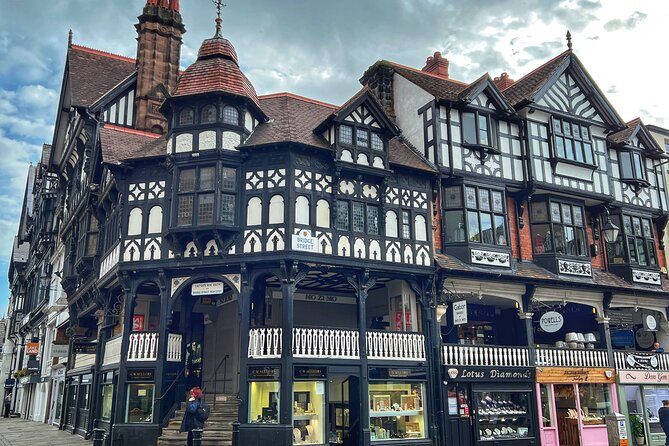
Chester’s four main streets lead toward the Cross, the central meeting point of the city. This section presents Chester in several roles: medieval town, major trading hub, Roman military base, and later fortress and army centre.
The guide uses the streets themselves to show how the city functioned. The route is not just about pretty facades. It explains how movement, commerce, defence, and public life came together in the centre.
This is where the walk is especially useful for getting your bearings. After this section, you should have a clearer mental map of the central streets and their relationship to the Cross, the Rows, and the walls.
Allowing about 10 minutes here means the explanation stays focused. If you want long pauses for shopping or detailed photography, you will need to return later. The tour gives you orientation, not free time at every shop or building.
Eastgate Clock and the city walls
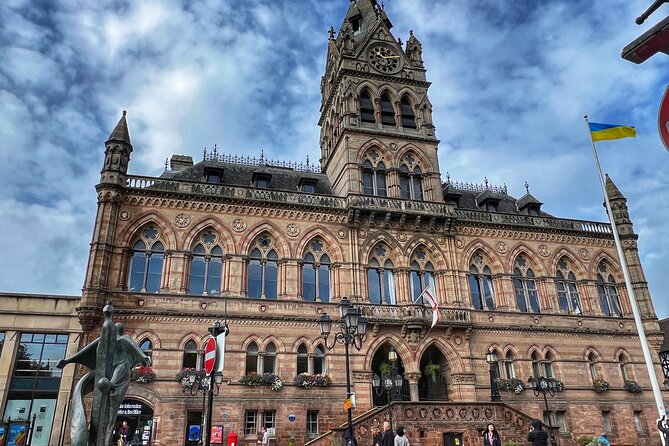
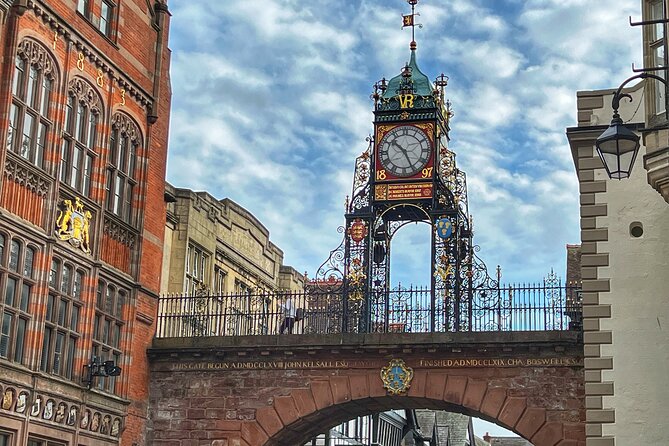
Eastgate Clock is one of Chester’s best-known landmarks, and the tour gives it a proper setting rather than treating it as a quick photo stop. You stand on the city walls, which were first built for defence and later became an attractive promenade.
This change in purpose is a good example of Chester’s wider story. Structures that once protected the city eventually became part of everyday public life and sightseeing.
The clock and wall are also useful places to pause for photographs. The walk provides time for pictures, but the wall section includes steps, so you should be comfortable climbing them. The physical demands are moderate rather than extreme, but anyone with mobility concerns should take the steps seriously when deciding if this outing fits.
The wall gives you a different view of the city from street level. It helps you understand Chester as a fortified place, not simply an old shopping centre.
The Chester Rows and the city below
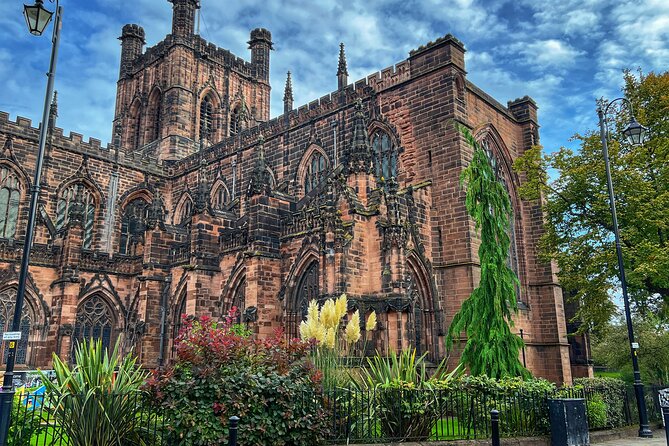
The Chester Rows are likely to be the highlight for many people. These unusual medieval shopping streets have upper walkways and lower-level spaces, creating a distinctive two-tier arrangement.
The tour takes you up into the Rows and explains how they worked, including their connection to medieval merchants and commercial life. This is more useful than simply being told that the Rows are old and attractive. You learn why the streets developed their unusual form and how people used them.
The Rows also reveal Chester’s layers particularly well. Medieval structures now contain shops, bars, and restaurants, so the same spaces have continued to serve public life in new ways.
Some historic undercrofts and Roman remains are visible beneath present-day buildings. The walk may point out these surviving traces, including Roman ruins hidden below the modern city. You might be having coffee or shopping while ancient remains sit below your feet, a fact that changes how you see the centre.
The stop lasts roughly 10 minutes. That will not allow a full survey of every Row, but it gives you enough context to return later with a better eye.
The Chester Cross and medieval market life
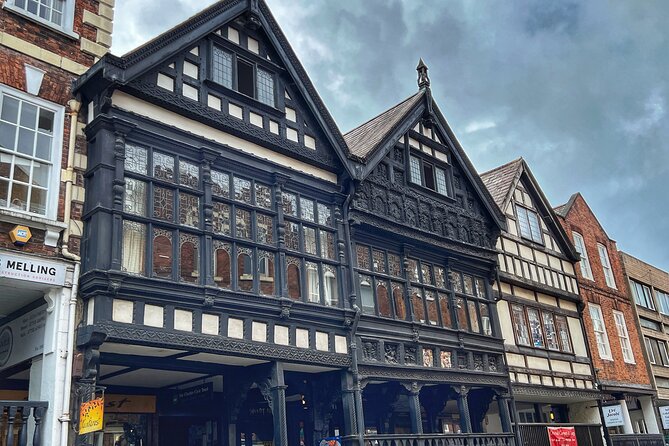
At the Chester Cross, the tour turns to medieval markets, local stories, Roman headquarters, and the buskers who now use the space. The Cross has long been a natural gathering point, so it is an ideal place to connect trade, public entertainment, law, and civic life.
This is also where the route’s time periods meet most clearly. Roman administration, medieval commerce, and modern street performance all occupy the same central space.
The guide may bring in stories described as cock-and-bull tales, giving the historical explanation a lighter touch. Phil, in particular, is praised for using humor without losing the main thread of the history.
A central square can be busy, and sound from shops or street performers may make it harder to hear at times. Staying close to the guide is sensible, especially in a group of up to 15 people.
Eastgate Street, Bridge Street, and a romantic finish
The final section covers Eastgate Street and Bridge Street, ending near 2 Bridge Street in the heart of Chester. The route presents Chester as a city of love, with stories connected to the ancient and romantic character of the centre.
This gives the tour a softer ending after the military and commercial themes earlier in the walk. You finish among historic streets that are still used for shopping, eating, and meeting friends.
The end point is practical. You are already in the city centre, so you can continue exploring without arranging transport back to the starting point. You might return to the Rows, visit the cathedral, walk more of the walls, or stop for a meal.
What $16.65 buys you
At $16.65 per person, the tour is fairly priced for a 90-minute walk led by a professional Green Badge Guide. You are paying for interpretation, local knowledge, and a planned route through Chester’s most important central areas.
There are no attraction admission fees included, but that keeps the basic cost clear. You are not paying for entry to the cathedral or other historic buildings during the walk. If you want interiors, treat this tour as an introduction and budget separately for any places you choose to visit afterward.
The small group matters, too. A maximum of 15 people is large enough to create a social atmosphere but small enough for questions and clearer contact with the guide. It is a better setup than a large group spread along narrow streets or crowded Rows.
The value is strongest if you are new to Chester or want the city’s history explained in one connected story. If you have already spent several days studying the centre on your own, you may find the route familiar, though the guide can still add details about buildings and people you missed.
Who should book this walk
I would choose this tour for a first afternoon in Chester. The 1:00 pm start leaves the morning free, and the route gives you a useful map of the centre before you decide where to spend the rest of the day.
It suits adults, older children, and anyone interested in Roman, medieval, military, religious, and architectural history. It is also a good choice if you prefer facts tied to real places rather than a lecture in a museum.
The tour is a sensible option for people who do not speak fluent English, particularly with Caroline, whose slow, clear delivery has helped non-native speakers follow the explanations. The standard tour is offered in English only. Private tours in other languages may be requested, but the provided information does not confirm their price or availability.
You should have moderate physical fitness and be ready for steps. Service animals are allowed, and the meeting point is near public transport.
Practical details that affect your day
You receive confirmation at booking, and the experience is offered with a mobile ticket. The tour lasts about 90 minutes, though you should allow a little extra time before the start so you can locate the Visitor Information Centre at the Town Hall.
Wear comfortable shoes. Chester’s centre is walkable, but the route includes city walls and steps, and you will spend the full tour on foot.
The walk is offered in English, with a maximum of 15 people. It ends at 2 Bridge Street rather than returning to the Town Hall. That is helpful if you want to continue into the shopping streets, but remember it means you should collect anything you need before setting off.
Free cancellation is available up to 24 hours before the 1:00 pm start for a full refund. Inside that window, cancellations and changes are not accepted for a refund.
Should you book The Heart of Chester Walking Tour?
Book it if you want a clear introduction to Chester’s Roman and medieval past, especially the Rows, the city walls, Eastgate Clock, and the remains beneath the modern streets. The strongest part is the connection between visible buildings and the people, trades, armies, and religious communities that shaped them.
I would also book it early in your visit, then use the final city-centre location as a launch point for your own exploring. Skip it if you want extensive interior visits, a slow photography walk, or a route beyond central Chester.
For the price, small group size, central route, and strong guide-led storytelling, this is a practical way to get your first sense of the city.
FAQ
How long is The Heart of Chester Walking Tour?
The guided walk lasts approximately 1 hour and 30 minutes.
Where does the tour start?
The tour starts at the Chester Visitor Information Centre at the Town Hall, Northgate Street, Chester CH1 2HJ, UK.
What time does the tour begin?
The scheduled start time is 1:00 pm.
Where does the tour end?
The walk ends at 2 Bridge Street, Chester CH1 1NP, in the city centre.
Are admission fees to historic buildings included?
No. The experience is an outdoor walking tour, and admission to historic buildings is not included.
Is the tour offered in languages other than English?
The regular tour is offered in English only. Private tours in other languages can be requested, but availability and pricing are not specified.
Just added around England
- Private The Beatles Taxi Tour in London★ 5.0 · 12 reviews
- Dinner and Jazz Cruise on the River Thames★ 4.0 · 140 reviews
- Airport Coach Service from Heathrow to Oxford★ 3.5 · 67 reviews
- The Alfred Hitchcock London Walk with Sandra Shevey★ 5.0 · 15 reviews
- Tower of London & 30+ London Sights Walking Tour★ 4.5 · 33 reviews
- Thames Beachcombing★ 4.5 · 100 reviews
- Ted Lasso London Taxi Tour★ 5.0 · 5 reviews
- Ted Lasso Tour of Richmond with Private Guide★ 5.0 · 25 reviews
Walking Tours, compared.

Oxford University Walking Tour With University Alumni Guide
Read our review →
Tour for Muggles The Ultimate Harry Potter Walking Tour in London
Read our review →
Cambridge University Walking Tour by Alumni™ Kings College Option
Read our review →
Blackbeard to Banksy – The Ultimate Walking Tour of Bristol
Read our review →
Air Raid Shelter + St. Nicholas Market Walking Tour
Read our review →
Walking Tour of Bath with Blue Badge Tourist Guide
Read our review →
Changing of the Guard Guided Walking Tour in London
Read our review →Browse the lists this tour appears in