Reviewed · WALKING TOURS
Walking tour of Lancaster – Execution Slavery Industry
Lancaster’s past is not tidy, and that is exactly what makes this walk so arresting. In three hours, you move from castle trials and executions to the city’s links with the international slave trade, then on to witchcraft, vanished princes, forensic murder cases, canals, and working-class charity. Barrie, the guide, gives these subjects a human face and a good dose of humor.
I like the way the tour connects grand buildings to difficult questions. Saint George’s Quay is not just a pretty waterfront, and Dalton Square is not merely an open city space: each place helps explain how Lancaster made money, wielded power, and dealt with crime and poverty. I also like the small group limit of 20, which makes it easier to hear the guide and ask questions.
The main thing to consider is stamina. The walk lasts about three hours, with plenty of standing at outdoor stops, and one visitor found the cold and wet weather a challenge. The tour is best treated as an outdoor history class, not a quick stroll with a few photo stops.
Key points to know before you book
- Lancaster Castle begins the story: Hear about prisoners, trials, executions, and the castle’s wider role in local history.
- The slave-trade connection is central: Saint George’s Quay and the city’s merchants provide a direct look at Lancaster’s involvement in the international slave trade.
- Barrie keeps the pace lively: His style mixes carefully researched facts, unusual anecdotes, humor, and time for questions.
- Nine stops cover a lot of ground: The route includes royal stories, witchcraft, forensic science, canals, industry, and an operating almshouse.
- Expect walking and standing: The pace is described as gentle, but you should be ready to stay outdoors for much of the three-hour tour.
- The price is reasonable for the coverage: At $20.81 per person, you get a citywide introduction that can help you choose what to revisit later.
Lancaster Castle: executions, prisoners, and power
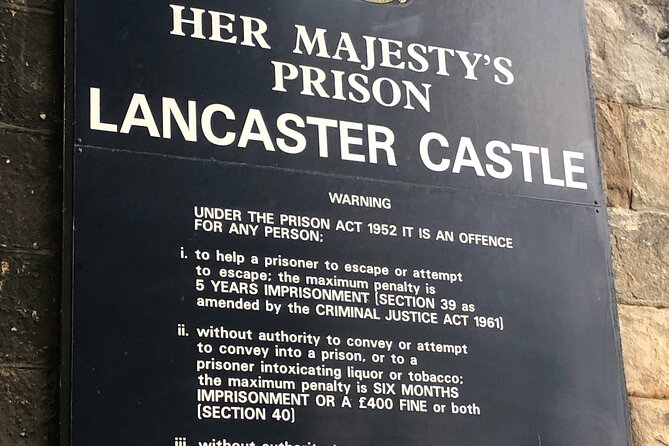
The tour starts at Castle Approach, directly by Lancaster Castle. This is a handy meeting point if you are new to the city, and the castle gives the walk an immediate sense of place.
The opening stop lasts about 20 minutes. You will look beyond the castle’s medieval appearance and consider its role as a prison, courthouse, and execution site. Barrie covers famous and less famous prisoners, the trials held here, and the grim business of executions.
That beginning sets the tone. This is not a tour that avoids uncomfortable subjects or reduces Lancaster to attractive old buildings. You get a look at how justice worked, who held authority, and how punishment became part of the city’s public life.
The castle itself is listed as a free stop within the walk, though this experience does not promise an interior visit. If you want to tour the castle inside, treat that as a separate plan rather than assuming it is included.
A few more England trips to weigh up
- Oxford University Walking Tour With University Alumni Guide
★ 5.0 · 6,905 reviews - Tour for Muggles The Ultimate Harry Potter Walking Tour in London
★ 5.0 · 4,684 reviews - London Jack The Ripper Guided Walking Tour
★ 5.0 · 3,131 reviews
Saint George’s Quay and Lancaster’s slave-trade links
From the castle, the route continues to Saint George’s Quay, an eighteenth-century harbor beside the River Lune. The stop is shorter, about 15 minutes, but it may be one of the most important parts of the walk.
Here you examine Lancaster’s connections with the international slave trade and meet some of the people linked to the waterfront. The subject adds needed weight to the city’s commercial story. A harbor can look peaceful today, yet its trade networks once reached far beyond Lancashire.
I value this part because it avoids treating economic success as an abstract tale of ships and warehouses. You are asked to consider who benefited, how wealth was made, and what human cost sat behind that prosperity. The waterfront also gives the story a physical setting, making it easier to picture sailing ships alongside the quay.
The tour does not turn into a long specialist lecture on slavery. Instead, this stop fits the wider story of Lancaster’s power, trade, and social change. If you are especially interested in the subject, you may want to leave time before or after the walk for further reading or a return visit to the dockside.
Judges’ Lodgings and the shadow of witchcraft
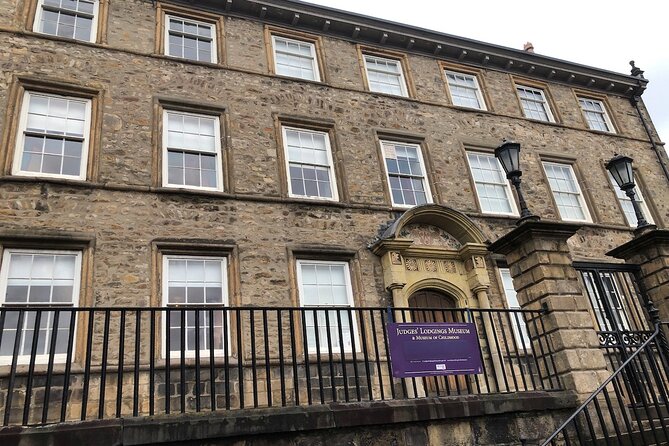
The next stop is Judges’ Lodgings, described as Lancaster’s oldest house. You spend about ten minutes here, learning who owned it and how the building connects with witchcraft.
This is a useful shift from public punishment to private status. The house helps show how law, property, social rank, and belief could overlap. The witchcraft connection adds a darker strand to the city’s story without repeating the same castle material.
Because the stop is brief, expect the key story rather than a room-by-room examination of the building. That is one of the trade-offs of this walk: you see many locations, but none receives the attention of a dedicated museum tour.
Church Street and the missing prince
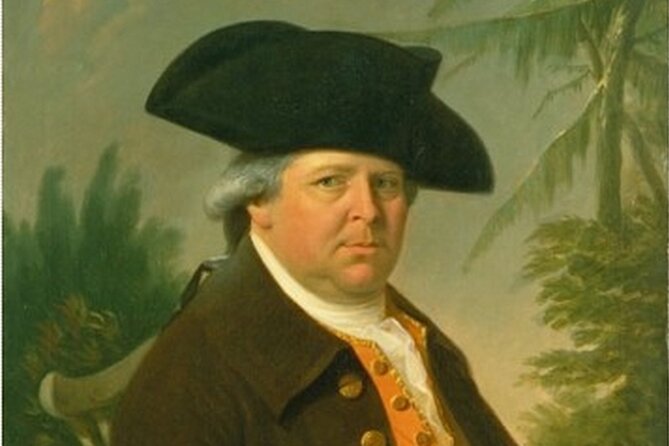
Church Street brings a change of mood. The subject here is a prince who goes missing, along with stories about a possible future king of England.
Royal tales can easily become a string of names and dates, but a disappearance gives the guide a strong narrative hook. You will hear how Lancaster’s streets connect with larger questions of succession, uncertainty, and political power.
The stop lasts about ten minutes. It is long enough to establish the story and its local setting, but not enough for every theory or wider national detail. I see this as one of the route’s strengths for a first visit: you get a taste of several subjects, then can decide which ones deserve more of your time.
Same country, a completely different day out:
- Stonehenge, Windsor Castle, and Bath from London
★ 4.5 · 18,662 reviews - London Big Bus Hop-On Hop-Off Tour with Optional River Cruise
★ 3.5 · 10,803 reviews - London Small Group Tour of Historical Pubs
★ 5.0 · 10,422 reviews - Beatles Magical Mystery Tour
★ 5.0 · 9,266 reviews
Market Street and two royal stories
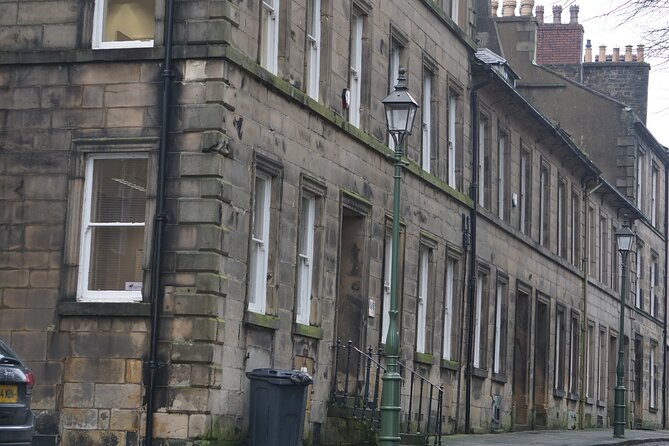
At Market Street, another royal episode takes center stage. One prince raises a banner, while another loses a shoe, with the two incidents separated by about 300 years.
The odd detail of the shoe is exactly the sort of small human touch that helps a historical story stick. Alongside it, the raised banner points to a more serious moment of political action. Together, the tales show how ordinary city streets can carry stories from very different periods.
This is where Barrie’s storytelling style matters. The tour’s appeal is not only the number of facts but the way unusual details make them easier to remember. Several reviews describe the guide as entertaining, patient with questions, and able to keep the group engaged even in poor weather.
Dalton Square: murder and compensation
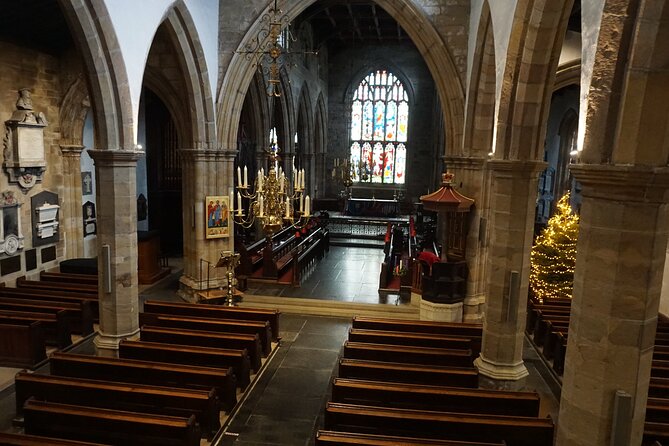
Dalton Square brings two striking subjects together: the first murder solved by forensic science and the government bonus paid to slave owners.
The murder case gives the tour a crime-story edge, but the forensic angle makes it more than a tale of blood and scandal. You will consider how new scientific methods changed criminal investigation. Then the discussion returns to slavery, this time through the compensation paid to slave owners after abolition.
That pairing is uncomfortable, but useful. It links technological change with the financial and political systems of the nineteenth century. Lancaster’s story becomes less about isolated events and more about how law, science, government, and wealth shaped daily life.
This stop may be especially valuable if you prefer social history to a list of architectural dates. It also shows why the tour’s title includes execution and slavery: these are not side notes. They form part of the route’s main argument about power and its consequences.
Lancaster Canal and the Storey brothers
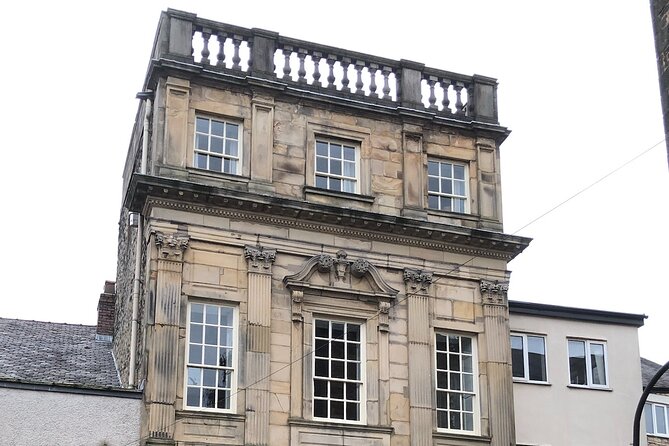
At the Lancaster Canal, the focus shifts to industry and transport. You will hear about White Cross Mill, the Storey brothers, and the canal’s heyday as a coastal waterway.
The canal helps explain how goods and people moved through the area before modern transport changed the pattern. White Cross Mill adds an industrial setting, while the Storey family brings individual names into the story of local enterprise.
This section gives the walk welcome variety. After castles, trials, royalty, and slavery, the canal shows how work and trade affected the city’s physical growth. You may find this stop particularly helpful if you are trying to understand why Lancaster developed as it did rather than simply admiring its older streets.
Again, the ten-minute format means you will receive an introduction, not a full industrial archaeology course. Still, it is enough to give later sightseeing more purpose. Buildings that might otherwise blur together begin to fit into a story about mills, commerce, and transport.
Penny’s Almshouses and living charity
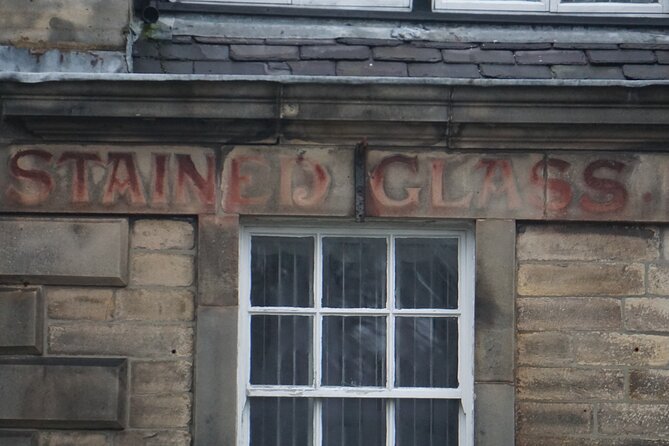
Penny’s Almshouses offer a look at a charitable institution that is still functioning today. The tour explains who founded it and how it was financed.
This is one of the route’s more grounded stops. Instead of focusing only on rulers, criminals, or wealthy merchants, it asks how ordinary people in need were supported and how charitable money was organized.
The fact that the almshouse remains active gives the story a living connection to the present. You are not simply looking at a preserved relic. At the same time, because it continues to function, you should treat it as a working place and listen carefully to any instructions about viewing it.
The stop also balances the darker material elsewhere. Lancaster’s past includes exploitation and harsh punishment, but it also includes attempts to provide housing and support. That contrast makes the city feel more real.
The Storey and Lancaster’s educational tradition
The final stop is The Storey, an educational institute founded through donations. Barrie explains how it became an early part of Lancaster’s tradition of higher education.
This conclusion brings several themes together: philanthropy, civic pride, access to learning, and the city’s long development. It also gives you a useful bridge from historic Lancaster to the modern city.
The walk then returns to the original meeting point. Finishing where you began is practical, especially if you have onward plans or want to visit the castle after the tour. It also means you do not need to arrange transport back across town.
What the three-hour format really gives you
The route includes nine stops, most lasting ten minutes, with longer attention at the castle and Saint George’s Quay. That is a brisk program, but the walking time between places helps connect the subjects.
You should not expect to enter every building or spend half an hour at each site. The value comes from the route as a whole. Barrie links places that you might otherwise see separately, then adds stories that are easy to miss when walking alone.
The pace is described as gentle, but you will still walk and stand for much of the afternoon. One person called the route easygoing yet tiring by the end, which is a fair warning. Wear comfortable shoes, check the weather, and bring a waterproof layer. The experience requires good weather, and outdoor conditions can affect your enjoyment.
Barrie’s delivery is a major part of the appeal. He is described as friendly, professional, patient, and full of unusual local detail. His humor and anecdotes keep the difficult material from becoming a dry lecture, while the serious subjects are not brushed aside.
Group size, price, and practical value
At $20.81 per person, this is a good-value introduction to Lancaster if you want context rather than a single attraction. The tour lasts roughly three hours and covers much of the city’s historical range, so the cost works out well compared with paying separately for several short activities.
The maximum group size is 20. That is small enough for a personal feel in most situations, while still large enough to create the energy of a shared walk. The guide has also handled plenty of questions, so you should feel free to ask when a particular story catches your interest.
The meeting point at Castle Approach is easy to find, and the route ends there. The experience is offered in English with a mobile ticket, and it is close to public transportation. Service animals are allowed, and the information supplied says most people can participate.
Do keep the physical side in mind. The route includes plenty of walking and standing, and the tour takes place outdoors. If you need frequent seating or have concerns about the walking distance, contact the provider before booking rather than assuming the gentle pace solves every issue.
The tour is usually booked about 19 days ahead. That does not mean you must reserve that early, but it suggests you should avoid leaving it until the last moment if your dates are fixed.
Free cancellation is available up to 24 hours before the start time for a full refund. Changes or cancellations inside that window are not accepted for a refund. If bad weather cancels the walk, you can receive a different date or a full refund. The same applies if the minimum number needed to operate is not reached.
Who will get the most from this walk?
I would choose this for a first visit to Lancaster, especially if you have only an afternoon or are staying elsewhere in Lancashire and want a strong introduction to the city. It also works well near the start of a longer stay because you will hear about places worth returning to.
History fans will appreciate the range. You get punishment and law, slavery and commerce, witchcraft, royal politics, scientific crime solving, industrial transport, charity, and education in one route.
It is also a good fit if you enjoy local stories more than polished sightseeing. The tale of a missing prince, a lost shoe, a government payment to slave owners, and a murder solved through forensic science gives the walk character.
You may prefer a different activity if you want a museum-heavy experience, a short photography stroll, or a tour focused only on Lancaster Castle. This is a broad city walk, and its rewards come from the connections between places.
Should you book the Lancaster walking tour?
Book it if you want a lively citywide introduction with serious subjects, unusual stories, and a guide who can fill three hours with more than standard dates. The $20.81 price is fair for the amount of ground and history covered, particularly when you use the tour to plan later visits.
Skip it if three hours of outdoor walking and standing sounds tiring, or if cold and wet weather would spoil the day. For everyone else, this is a smart way to get your bearings, understand Lancaster’s complicated past, and see parts of the city you might otherwise pass without noticing.
FAQ
How long does the walking tour last?
The tour lasts approximately three hours.
Where does the tour start?
It starts at Castle Approach, Lancaster LA1 1YN, United Kingdom, in front of Lancaster Castle.
Where does the tour finish?
The activity ends back at the original meeting point.
How much does the tour cost?
The listed price is $20.81 per person.
What language is the tour offered in?
The tour is offered in English.
How large can the group be?
The maximum group size is 20 people.
Is a mobile ticket provided?
Yes. The experience includes a mobile ticket.
Are service animals allowed?
Yes, service animals are allowed.
Can most people take part?
The supplied information says most people can participate. The walk does include plenty of walking and standing.
What happens if the weather is poor?
The experience requires good weather. If it is canceled because of poor weather, you will be offered a different date or a full refund.
How late can I cancel for a full refund?
You can cancel at least 24 hours before the experience start time for a full refund. Cancellations or changes made less than 24 hours before the start time are not accepted for a refund.
Just added around England
- Private The Beatles Taxi Tour in London★ 5.0 · 12 reviews
- Dinner and Jazz Cruise on the River Thames★ 4.0 · 140 reviews
- Airport Coach Service from Heathrow to Oxford★ 3.5 · 67 reviews
- The Alfred Hitchcock London Walk with Sandra Shevey★ 5.0 · 15 reviews
- Tower of London & 30+ London Sights Walking Tour★ 4.5 · 33 reviews
- Thames Beachcombing★ 4.5 · 100 reviews
- Ted Lasso London Taxi Tour★ 5.0 · 5 reviews
- Ted Lasso Tour of Richmond with Private Guide★ 5.0 · 25 reviews
Walking Tours, compared.
Oxford University Walking Tour With University Alumni Guide
Read our review →
Tour for Muggles The Ultimate Harry Potter Walking Tour in London
Read our review →
Cambridge University Walking Tour by Alumni™ Kings College Option
Read our review →
Blackbeard to Banksy – The Ultimate Walking Tour of Bristol
Read our review →
Air Raid Shelter + St. Nicholas Market Walking Tour
Read our review →
Walking Tour of Bath with Blue Badge Tourist Guide
Read our review →