
Reviewed · BRITISH MUSEUM TOURS
Private Highlights Tour of the British Museum
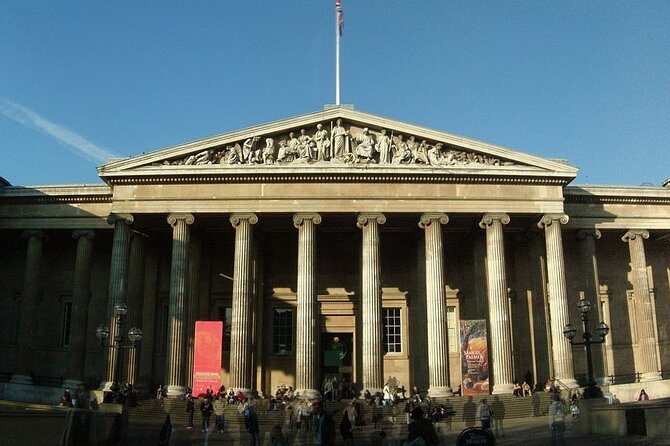
The British Museum is easier to appreciate when someone helps you choose what matters. This private three-hour tour moves from the Rosetta Stone and Egyptian mummies to the Lewis Chessmen, Sutton Hoo, and the Parthenon Sculptures, while leaving room for your own questions.
I like the personal approach, and I like the guide’s willingness to discuss difficult subjects rather than present every object as a simple triumph. The main drawback is the price: at $468.78 for up to 10 people, it makes far more sense for a full family or friend group than for one or two visitors.
Key points to know before booking
- Your interests shape the route: Tell the guide which periods, regions, or galleries you care about, and the visit can be adjusted around them.
- The tour covers major museum icons: Expect the Rosetta Stone, Parthenon Sculptures, Egyptian mummies, Sutton Hoo, and many more.
- Controversial objects are part of the conversation: The guide does not avoid hard questions about ownership, empire, and cultural heritage.
- A private group keeps the pace flexible: Only your party participates, with space for questions and family discussion.
- Entry is free, but the guide is the paid part: The value comes from interpretation, route planning, and context rather than admission.
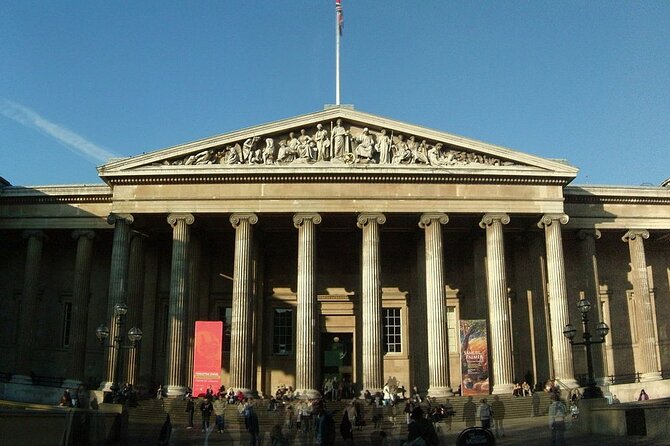
- The meeting point is practical: Begin at Montague Place and finish inside the British Museum on Great Russell Street.
Why a private British Museum tour can change your visit
The British Museum can feel like several museums joined together. Its displays reach across inhabited continents and many thousands of years, so a first visit can become a march from one famous object to another without much sense of connection.
A private guide gives you a way through that sprawl. At the start, the guide asks what interests you, then builds the visit around those priorities while still covering the major highlights. If you care about ancient Egypt, British archaeology, empire, religion, or strange objects, you can say so before the walking begins.
I especially like this format for families and mixed-age groups. A teenager may want the Lewis Chessmen or the macabre side of the collection, while an adult may want the Parthenon Sculptures or Assyrian art. The guide can keep everyone moving through the same museum without forcing the whole group into one narrow subject.
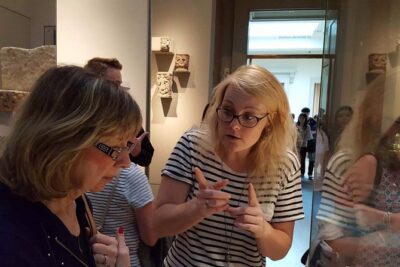
The private setup also matters for a group of 10. You are not trying to hear a guide across a crowd, and you can stop to ask a question without worrying about holding up strangers. One reported group included 10 family members and teenagers, and guide Jessica kept the whole party involved with stories and explanations that worked across ages.
More British Museum Tours in London:
- British Museum London Guided Tour Semi-Private 8ppl Max
★ 5.0 · 984 reviews - The British Museum London – Exclusive Guided Museum Tour
★ 5.0 · 555 reviews - British Museum Guided Tour
★ 4.0 · 470 reviews
Meeting at Montague Place and entering the museum
The tour begins at Montague Place, London. This is useful because you meet outside rather than trying to find your guide among the museum’s many rooms and entrances.
The experience includes entry through a lesser-known entrance, then finishes inside the museum on Great Russell Street. The British Museum admission itself is free, so you are paying for the private guiding service, not for an admission ticket.
Allow enough time to reach Montague Place before the start time. A large group should also agree on a simple meeting plan, since the tour ends inside the museum rather than bringing you back to the starting point.
The end point gives you a useful choice. You can continue looking at the museum on your own, return to a display that caught your attention, or leave from the main Great Russell Street side. Since the tour lasts about three hours, you may want to keep the rest of the day open for a slower second look.
The Rosetta Stone and the logic of the route
The Rosetta Stone is one of the museum’s best-known objects and a natural early highlight. It gives the guide a chance to explain why a single object can matter far beyond its size and appearance.
You will not simply be pointed toward a famous display and sent on. The stated approach is to connect the objects to wider questions about how museums collect, preserve, explain, and sometimes contest the objects in their care.
That broader approach is important at the British Museum. Its collection is full of objects that are admired for their beauty or importance, but some also raise questions about excavation, removal, ownership, and display. The guide is prepared to address those issues instead of treating them as awkward interruptions.
For you, that means the tour can feel more honest than a standard highlights walk. You get the famous objects, but you also get a chance to ask why they are in London, how they were interpreted, and why some remain controversial.
Parthenon Sculptures and difficult museum questions
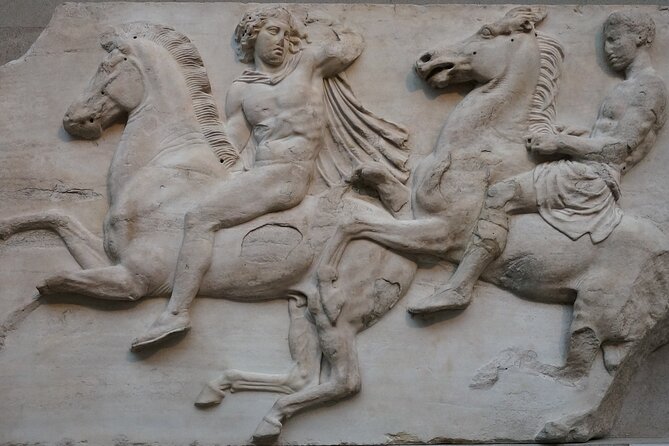
The Parthenon Sculptures, also called the Elgin Marbles, are among the most important and disputed objects on the route. Their inclusion is valuable even if you have only a passing interest in classical art, because they open the door to questions about ownership and cultural heritage.
The guide’s stated style is direct. Tough history topics are not brushed aside, and the controversy surrounding certain items is part of the visit. That does not mean every minute becomes a debate. It means you can expect more than a list of dates, names, and artistic labels.
I would pay attention here if you want a museum visit that allows room for uncertainty. The British Museum holds objects connected to many places, and the guide can help you consider both their importance and the arguments surrounding their presence in Britain.
This is also where the private format earns its keep. If someone in your group has a strong view, you can ask a follow-up question and hear the explanation at your own pace. In a large public group, that sort of exchange is harder to manage.
A few more London trips to weigh up
- Tower of London and Crown Jewels Exhibition Ticket
★ 4.5 · 6,677 reviews - Chelsea FC Stadium Tours and Museum
★ 5.0 · 1,908 reviews - Official tickets: Moco Modern & Contemporary Art Museum
★ 4.5 · 1,157 reviews - The Postal Museum Admission Ticket
★ 4.5 · 347 reviews
European and British highlights: chess, ships, and written evidence
The Lewis Chessmen offer a sharp change of mood. These carved chess pieces are among the tour’s listed highlights, and their small scale makes them a good reminder that the museum’s appeal is not limited to huge monuments.
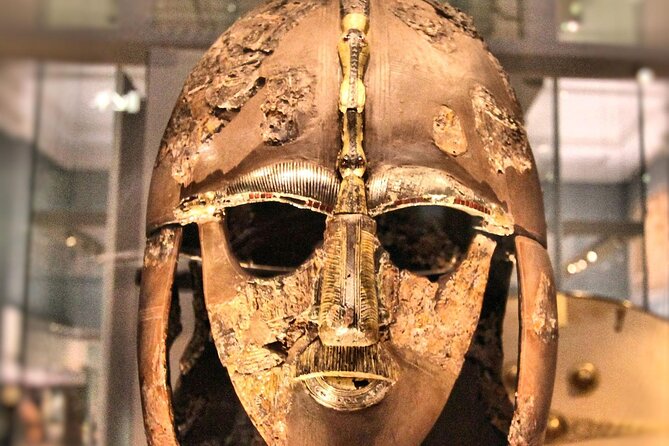
Sutton Hoo brings another kind of story into the visit. It represents the museum’s British archaeology holdings and gives the tour a chance to move from famous ancient civilizations to objects connected with Britain’s own past.
The Vindolanda Tablets add a written record to the route. Their inclusion shows how varied the three-hour visit can be: sculpture, burial finds, games, and documents can all sit within the same carefully chosen path.
These stops are useful for families because they break up the grander displays. A child or teenager may connect more easily with a chess piece or a personal written record than with a monumental sculpture. An adult may appreciate how the objects reveal different ways people lived, worked, played, and remembered.
Ancient civilizations from Mesopotamia to Egypt
The Standard of Ur is another major stop. Along with the Egyptian mummies and the statue of Ramesses II, it gives the tour a strong ancient-world thread.
The Egyptian displays are likely to be among the most familiar parts of the museum, but familiarity is not a reason to skip them. A guide can help you decide which details deserve your attention when the galleries offer more objects than you can absorb in one visit.
The mummies also show why the museum can feel strange as well as grand. The tour promises the wondrous, the macabre, and the unusual, so you should expect a range of emotional reactions rather than a polished parade of beautiful things.
The Assyrian Guards add another imposing stop to the route. Their inclusion, alongside the Standard of Ur and Ramesses II, helps give the visit scale. You move between intimate objects and large works that were designed to command attention.
Asia, Africa, and the Americas in one afternoon
The Statue of Tara extends the route beyond the ancient Mediterranean and Near East. The Ife Head adds another important point of reference, while the Aztec Double-Headed Serpent brings the Americas into the conversation.
This wide geographic range is one of the main reasons to choose a guide. You are not just crossing from one gallery to another. You are moving between different cultures and periods, and a good explanation can help you understand why each object deserves time.
The tour is not presented as a fixed script. If one area grabs your group, you can ask for more attention there. If your interests lie elsewhere, the guide can craft a more bespoke route around a particular topic or gallery.
That flexibility is especially useful for repeat visitors and London locals. You may already know the major rooms, but you might not have connected with a specialist guide about a particular region, theme, or group of objects.
The Portland Vase, Hoa Hakananai’a, and the museum’s stranger side
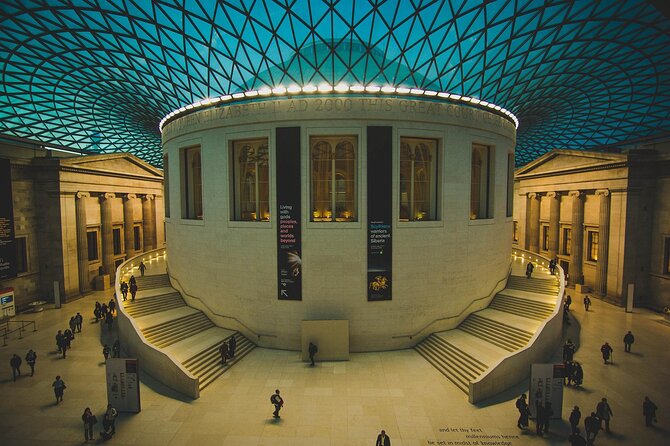
The Portland Vase is among the named highlights, offering a change from large stone sculpture and monumental architecture. Its place on the route reinforces the point that the visit is not limited to the objects everyone recognizes from guidebooks.
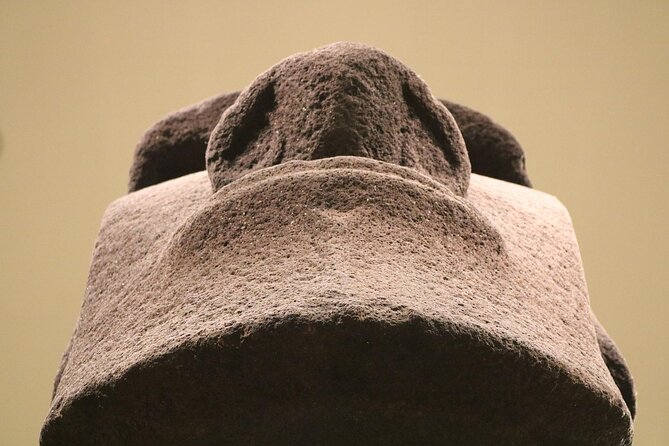
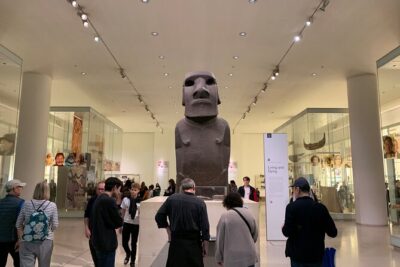
Hoa Hakananai’a adds another important and contested object to the experience. The FeeJee Mermaid brings the tour into a more unusual register, matching the promise to point out strange and curious pieces as well as celebrated treasures.
These objects may be ideal if you prefer a museum visit with some surprise. A private guide can respond to the mood of your group, spending more time on the odd or macabre when that is what keeps your family engaged.
I like that the advertised route does not pretend the museum is only solemn. The collection includes objects that are beautiful, puzzling, unsettling, and controversial. A tour that acknowledges all four qualities is likely to feel more human and less like memorizing a school worksheet.
What the three-hour length really means
Three hours is long enough to give you a strong first picture of the British Museum, but it is not enough to inspect every gallery. The guide must make choices, and the customized format helps ensure those choices match your group.
You should arrive with two or three priorities, not a demand to see everything in equal detail. Pick a favorite period, a region, or a few must-see objects. Then let the guide connect those choices to the wider collection.
The pace may feel active because the museum is large and the highlight list is long. Wear comfortable shoes and expect to spend much of the visit walking and standing. The supplied information says most participants can take part, and service animals are allowed.
Near the end, you may feel ready for a break rather than more interpretation. That is not a flaw in the tour. It is a sensible point to stop, have a rest, and decide if you want to continue independently.
Is $468.78 good value for your group?
The price is $468.78 per group of up to 10 people. Spread across 10 people, that is about $46.88 each. For a full family group, the cost can compare well with several separate guided activities, especially because the tour is private and includes an expert guide with advanced degrees in Cultural Heritage and Museum Studies.
For two people, the calculation changes. You are paying the same group price, while museum entry is free. If you and a companion are comfortable planning your own route and reading the displays, this may be more than you want to spend.
For a family reunion, school-age group, or gathering of friends, the value is easier to see. One guide can keep the party together, tailor the content, and handle questions without a larger public group setting.
The strongest value comes from interpretation. You are not paying for a ticket or a special collection access. You are paying to use three hours well in a huge museum, with someone who can choose a sensible route and discuss controversial objects in context.
Who should book this British Museum experience?
I would recommend it most strongly for history buffs, first-time visitors, families, and London residents who want a fresh route through familiar rooms. It is also a good match for groups with mixed interests, since the guide can shift between famous treasures, strange objects, and tougher historical questions.
The experience suits you if you prefer conversation over a fixed audio guide. It also works well if you want to ask direct questions about the objects and spend less time worrying about where to go next.
You may want to skip it if you are visiting alone or as a pair on a tight budget. Since the museum is free, a self-guided visit can be a sensible alternative, especially if you already know which galleries you want to see.
Booking is more convincing when you can fill most of the 10 available places. You get the best value from the private format, the custom route, and the guide’s ability to keep a large family group engaged. Jessica’s work with a 10-person family group, including teenagers, shows why that format can be useful when different ages need different kinds of stories.
The experience has a five-star rating from four reviews, including praise for explanations that brought the objects to life and kept a full family group involved. That is a small sample, so I would not treat it as proof of every future tour, but it does point to the service’s strongest feature: a lively, well-balanced guide who helps a huge museum feel manageable.
FAQ
How long is the private British Museum tour?
The tour lasts approximately three hours.
What is included in the experience?
The experience includes a fully guided tour in English, insider information about the British Museum and London, and free entry through a lesser-known museum entrance.
Is admission to the British Museum included?
The museum entry is free. The price covers the private guided experience.
Where does the tour begin and end?
The tour begins at Montague Place in London and finishes inside the British Museum on Great Russell Street.
Is this a private tour?
Yes. Only your group participates, with a maximum group size of 10 people.
Can the tour be customized?
Yes. The guide asks about your interests at the beginning and can craft a bespoke tour around a specific topic or gallery.
Just added around London
- Private The Beatles Taxi Tour in London★ 5.0 · 12 reviews
- Dinner and Jazz Cruise on the River Thames★ 4.0 · 140 reviews
- Airport Coach Service from Heathrow to Oxford★ 3.5 · 67 reviews
- The Alfred Hitchcock London Walk with Sandra Shevey★ 5.0 · 15 reviews
- Tower of London & 30+ London Sights Walking Tour★ 4.5 · 33 reviews
- Thames Beachcombing★ 4.5 · 100 reviews
- Ted Lasso London Taxi Tour★ 5.0 · 5 reviews
- Ted Lasso Tour of Richmond with Private Guide★ 5.0 · 25 reviews
British Museum Tours, compared.
British Museum London Guided Tour Semi-Private 8ppl Max
Read our review →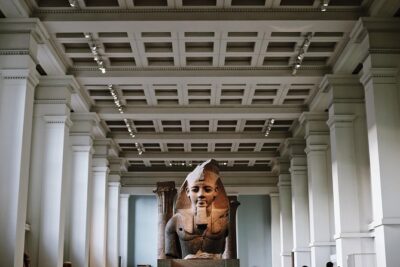
The British Museum London – Exclusive Guided Museum Tour
Read our review →
Private Guided Tour of the British Museum – Tickets Included
Read our review →
British Museum Guided Tour with Priority Timeslots(Small Group)
Read our review →
British Museum & National Gallery of London Semi-Private 8ppl Max
Read our review →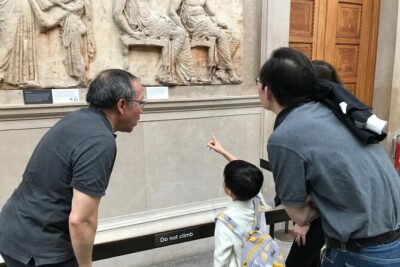
Explore Biblical Artifacts at the British Museum
Read our review →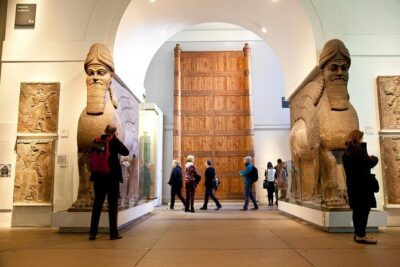
British Museum Highlights Private Tour in London including the Rosetta Stone
Read our review →Browse the lists this tour appears in