
Reviewed · BIRMINGHAM TOURS
Digbeth, Public Art & Peaky Film
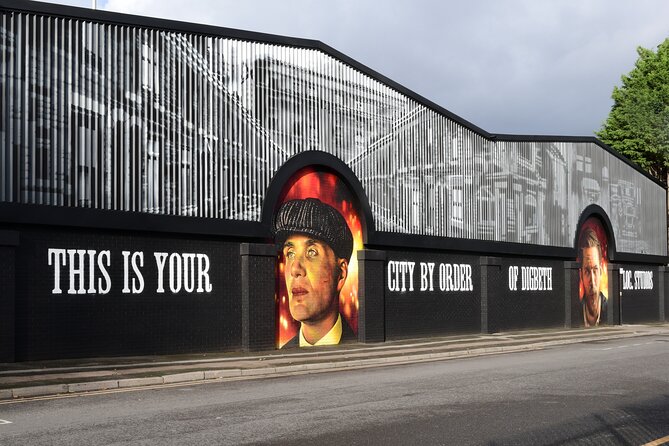
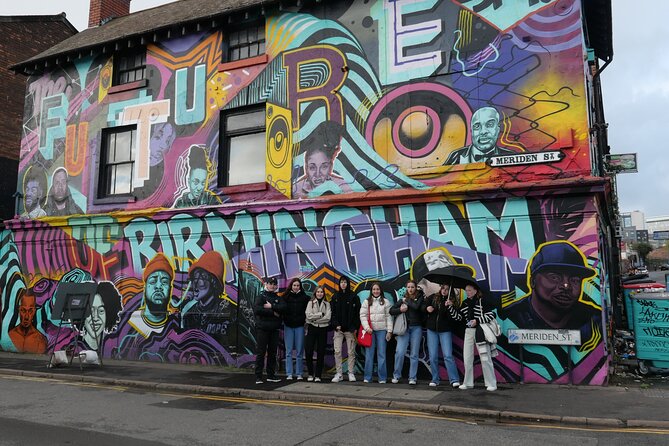
Digbeth is where Birmingham’s past and present collide: old industrial streets now carry huge murals, sharp graffiti and the moody backdrop chosen for the Peaky Blinders feature film. Jonathan Berg, a local author, leads this 2-hour-15-minute walk with stories about the city’s growth, public art and the artists who have reshaped neglected walls.
I like the live audio receiver, which lets you hear Jonathan even on busy streets or if you pause to study a mural. I also like the route’s mix of famous central sights and less polished Digbeth, especially the unexpected art around the Custard Factory.
The main drawback is pace. The walk covers a lot of ground, and one person described Jonathan as a speedy walker. You need moderate fitness, sensible shoes and enough interest in both city history and street art to enjoy the full two hours.
Key points to know before you book
- Digbeth is the main event: Expect around an hour among atmospheric streets, public art and places linked with Birmingham’s industrial beginnings.
- Jonathan Berg leads the walk: His local knowledge, humor and enthusiasm shape the experience, with plenty of room for questions.
- The audio equipment helps: Bring wired earphones with a 3.5 mm jack, or pay £1 for a supplied pair.
- The Custard Factory adds character: Former Birds Custard premises now form a bohemian arts quarter filled with graffiti in surprising spots.
- The route starts and usually ends at the Bullring: This makes it easy to combine with shopping, central Birmingham sights or public transport.
- The group can reach 35 people: The receiver helps, but a larger group may feel less personal than a small walking tour.
Why Digbeth makes a better walking subject than a postcard view
Birmingham is easy to underestimate if you only see its shopping streets and modern city centre. This walk gives you another version of the city, one built on industry, transport, labor and reused urban spaces.
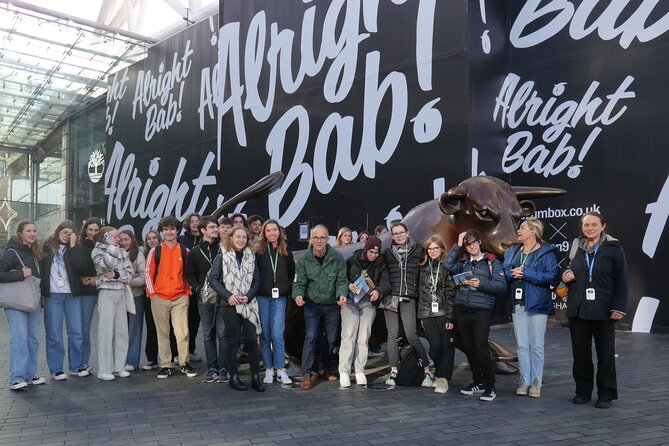
The route begins by the Bull statue at the Bullring Shopping Centre walkway. That is a practical meeting point, but it also sets up the story well. You are in the heart of present-day Birmingham, surrounded by retail and redevelopment, before moving toward Digbeth, where older industrial traces and newer creative work sit side by side.
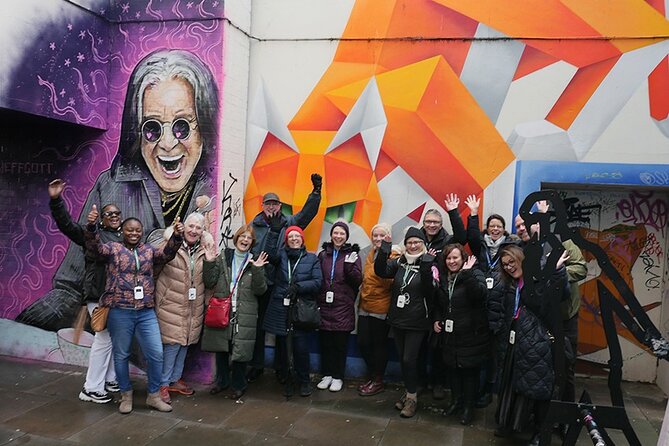
I like that the tour does not treat public art as decoration alone. The paintings and murals become clues to how Birmingham has changed. You hear about art from the Victorian era through to the present, then see how current artists use walls, shutters and overlooked corners to give Digbeth a stronger identity.
The Peaky Blinders connection adds a popular-culture hook without being the whole point. Digbeth supplies atmospheric streets that will form the backdrop for the feature film, so you get a sense of place rather than a manufactured film attraction. If you know the series, this part will likely add extra fun. If you do not, the streets and art still carry the walk.
Other Birmingham days people book alongside this one:
- Entry ticket to Hoo Zoo and Dinosaur World in Telford
★ 5.0 · 591 reviews - Cadbury World Entry Ticket
★ 3.0 · 524 reviews - Birmingham Walking Tour: Canals, Victorians & Today (1:30pm)
★ 5.0 · 346 reviews
From the Bull statue to St. Martin’s Church
The opening stop is brief, about five minutes by the Bull statue. Do not expect a long talk here. Think of it as a clear meeting point and a quick orientation before the walking begins.
From there, the group passes St. Martin’s Church in the Bull Ring. The church is another short stop, listed at about five minutes, but it helps connect the modern shopping district with Birmingham’s older centre. The contrast is part of the point: a historic place of worship sits beside one of the city’s best-known retail areas.
You should keep your expectations realistic at these first two stops. They are not extended visits with indoor admission. The appeal is the transition between central Birmingham and Digbeth, and the way Jonathan links visible buildings to the city’s development.
The wider city walk also includes central sights such as Centenary Square and Grand Central. The supplied route details focus most closely on the Bullring, St. Martin’s Church, Digbeth and the Custard Factory, so the exact amount of time at each central landmark can vary. The main emphasis remains the walk toward Digbeth and its public art.
One hour among Digbeth’s murals and old streets
Digbeth receives the longest stop, about one hour, and this is where the tour earns its name. You walk through streets that reveal Birmingham’s origins while also showing how the modern city is using public art to change the feel of the area.
The experience is not simply a search for painted walls. Jonathan explains the difference between graffiti and street art, a distinction that becomes easier to see once someone points out the choices, styles and purpose behind the work. You may not remember every artist’s name, but you will begin to notice which styles appeal to you and why.
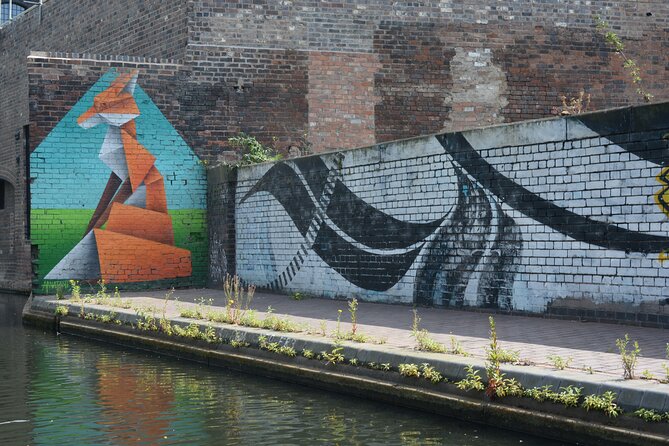
That is one of the best reasons to take a guided walk here. Digbeth’s art can be scattered across industrial facades, side streets and unexpected surfaces. Without a guide, you could pass close by and miss the pieces entirely. Jonathan’s commentary gives each work a place in the city’s wider story.
The tour also leaves room to stop and look. One useful feature of the audio receiver is that you can adjust the volume and still hear the guide if you fall slightly behind. That matters on a street-art walk, since rushing past a mural defeats the purpose.
At the same time, you should not confuse flexibility with a slow stroll. The route covers a good amount of ground, and the pace can be brisk. If you like stopping for close photographs of every piece, you may need to balance that with staying near the group.
The setting is part of Digbeth’s appeal. It is atmospheric rather than polished, with traces of its industrial past alongside creative activity. The tour presents this honestly. You see a part of Birmingham that is being reinterpreted, not a finished outdoor gallery arranged for visitors.
The Custard Factory and Birmingham’s creative side
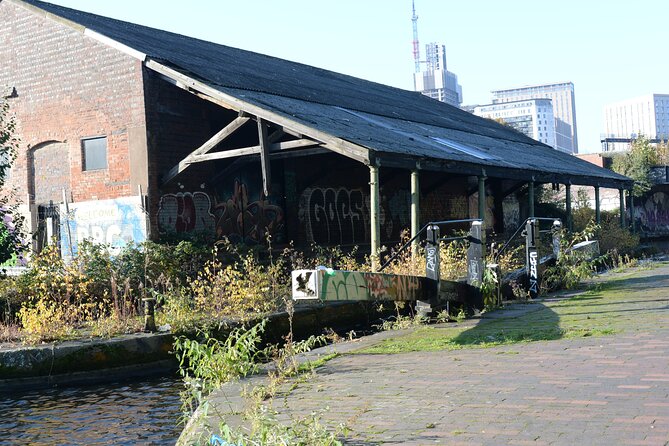
The Custard Factory gets about 15 minutes. Its name comes from Birds Custard, and the former custard works now form a bohemian section of Digbeth with art tucked into places you might not expect.
This is a strong stop for readers who enjoy adaptive reuse. Instead of separating old industry from new culture, the area puts them together. Former production spaces and creative businesses help explain why Digbeth has become associated with art, music and nightlife without turning the walk into a generic entertainment tour.
The graffiti here is worth viewing with the same attention as the larger murals. Look above eye level and around corners. The supplied details specifically point to art in unexpected places, so the best approach is to stay observant rather than wait only for a grand wall.
The Custard Factory stop is short. It gives you a taste of the area rather than time for a long independent visit. If you want to explore it at leisure, consider returning after the tour, though the experience itself finishes back at the Bullring in the usual arrangement.
Same country, a completely different day out:
- Discovering Birmingham 2 hour Walking Tour to the Jewellery Quarter
★ 5.0 · 333 reviews - Birmingham Slogging Gangs Walking Tour with Edward Shelby
★ 4.5 · 306 reviews - Birmingham City Centre Daily Walking Tour (10:30am & 2pm)
★ 5.0 · 265 reviews - SEA LIFE Birmingham Admission Ticket
★ 3.0 · 218 reviews
Jonathan Berg’s storytelling and the audio receiver
Jonathan Berg is a local author, and his role is central to the experience. He brings together Birmingham’s origins, public art, film links and current change rather than delivering a list of dates.
The strongest feature of his approach is the mix of information and humor. The walk is educational, but it is not presented as a lecture. He encourages questions and keeps the commentary lively, which helps during a route that covers a lot of ground.
The audio system is unusually useful for a walking tour. You receive a live audio receiver and can listen through wired earphones. Bring your own pair with a 3.5 mm jack, or the operator can provide earphones for £1, with the details describing this as a donation or cost contribution.
This setup gives you some freedom to move around a mural while still following the explanation. It also helps if the group spreads out on busy streets. You are not forced to stay shoulder to shoulder with the guide just to hear the next point.
There is a small trade-off. Wired earphones can be less convenient than wireless ones, and you need to remember the correct jack. Check your equipment before arriving. If you forget, the £1 replacement cost is modest, but bringing your own avoids a last-minute nuisance.
Is the $19.43 price good value?
At $19.43 per person, the tour is priced as an affordable guided introduction to Digbeth. You are paying for about two hours and 15 minutes of commentary, route planning and the live audio equipment, not for entry to a paid attraction.
That distinction matters. All the listed stops are free to enter, so the value comes from knowing where to go and understanding what you are seeing. Public art is often free but easy to miss. A guide can turn a loose collection of murals into a readable story about Birmingham.
I see the price as particularly fair for a first visit. You get a quick introduction to the Bullring area, St. Martin’s Church, Digbeth and the Custard Factory, plus the Peaky Blinders film connection. It can save you from spending half a day trying to locate the strongest art on your own.
The value is less certain if you already know Digbeth well or mainly want time for photography. A self-guided walk would cost nothing beyond your time, and you could move at your own pace. This tour earns its fee through interpretation, access to local insight and the chance to ask questions.
Timing, meeting point and practical comfort
The start time is 10:30 a.m. Meet at the Bull statue by the Bullring, Birmingham B5 4BU. The walk usually ends back at the Bullring, which is useful if you want to continue shopping, eat nearby or connect with public transport.
A mobile ticket makes the start simple. Confirmation is issued when you book, so keep the booking information available on your phone.
Wear comfortable shoes. The route is a walking experience with a moderate physical fitness requirement, and the fast pace mentioned in the tour details means this is not designed as a slow, stop-and-start wander. Rain may not ruin the experience, but practical clothing will make it easier to focus on the commentary and art.
The maximum group size is 35 people. That is large enough for the audio system to make sense, but it can feel less intimate than a small private walk. If you want a quiet, highly personal conversation with the guide, a private tour may suit you better. If you enjoy group energy and a structured route, the size should be manageable.
Service animals are allowed, and the tour is near public transportation. No admission tickets are needed for the stops described.
Who will get the most from this Birmingham walk?
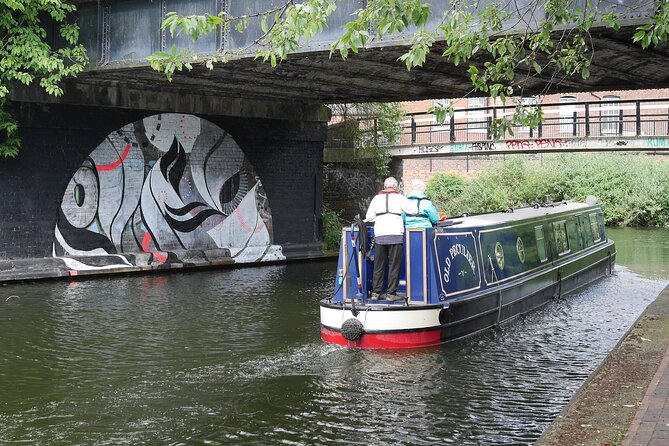
I would choose this for someone who wants a first look at Birmingham beyond the standard city-centre sights. It suits people interested in urban art, local history, industrial places, film locations and the way cities reuse older districts.
It is also a good choice for Birmingham residents who have walked past Digbeth without really seeing it. The local focus can reveal details that routine journeys hide, and the public-art angle gives you a fresh reason to look at familiar streets.
Families with older children may enjoy the mix of murals and Peaky Blinders connections, though the pace and length are worth considering. Art students, photographers and anyone curious about graffiti styles will have plenty to watch for.
I would hesitate to recommend it to someone seeking a formal museum tour, a slow architectural walk or a visit inside major attractions. This is an outdoor route, and its pleasure comes from the streets, walls and guide’s commentary.
A few smart ways to prepare
Bring 3.5 mm wired earphones if you have them. That small detail can save the £1 replacement charge and ensures the audio system works for you from the first stop.
Arrive ready to walk rather than browse. You can take photographs, ask questions and pause to study the murals, but you need to keep moving with the group.
Think of the tour as an introduction, not the final word on Digbeth’s art. If a particular artist or style catches your eye, make a note of it. The walk can help you decide which parts of Birmingham’s public-art scene you want to explore again at your own speed.
The experience provider also publishes walking tours throughout the year, and Jonathan Berg has written about Birmingham’s public art. His forthcoming book, Birmingham: A Drone’s Eye View, is scheduled for publication on November 22, according to the supplied tour information. That may appeal if you want to continue learning about the city after the walk.
Should you book Digbeth, Public Art & Peaky Film?
Book it if you want a well-planned, affordable introduction to Digbeth with a guide who connects art to Birmingham’s past and present. The best parts are the hour among the murals, the lively local storytelling and the audio system that lets you look around without losing the thread.
Skip it if your priority is a slow pace, indoor attractions or a tightly focused Peaky Blinders sightseeing experience. The film connection is one strand of a broader walk, not the entire subject.
For most first-time visitors with moderate fitness, an interest in street art and a free morning, this is a strong way to see a less obvious side of Birmingham. Free cancellation is available up to 24 hours before the start time, giving you some flexibility when planning.
FAQ
Where does the tour start?
The tour starts by the Bull statue at the Bullring Shopping Centre in Birmingham, postcode B5 4BU.
Where does the tour finish?
It usually finishes back at the Bullring Shopping Centre.
What time does the tour start?
The stated start time is 10:30 a.m.
How long does the experience last?
The walking tour lasts approximately 2 hours and 15 minutes.
Do I need to bring earphones?
Yes. Bring earphones with a 3.5 mm jack for the live audio receiver. Earphones can also be supplied for £1.
Is the tour suitable for people with limited fitness?
The tour requires a moderate level of physical fitness and covers a substantial amount of ground. The walking pace may be brisk.
What is the cancellation policy?
You can cancel up to 24 hours before the experience start time for a full refund. Cancellations or changes made less than 24 hours beforehand are not accepted for a refund.
Just added around Birmingham
- Birmingham Gangs Nighttime Historical Walking Tour with Pub Stops★ 5.0 · 53 reviews
- Fun, Flexible Treasure Hunt Around Birmingham with Cryptic Clues & Hidden Gems★ 5.0 · 167 reviews
- Private Birmingham Ghosts and Gallows Walking Tour★ 5.0 · 5 reviews
- Taste of Shrewsbury Food and Drink Tour with Guide★ 5.0 · 22 reviews
- On the Origins of Charles Darwin: A Self-Guided Audio Tour of Shrewsbury★ 4.5 · 16 reviews
- Birmingham Ghost Hunt: Haunted Self-Guide Tour & Quest★ 4.5 · 37 reviews
- Pride History of Birmingham Tour★ 5.0 · 3 reviews
- From Birmingham Stonehenge and Bath Day Tour★ 4.5 · 33 reviews
Birmingham Tours, compared.

Entry ticket to Hoo Zoo and Dinosaur World in Telford
Read our review →
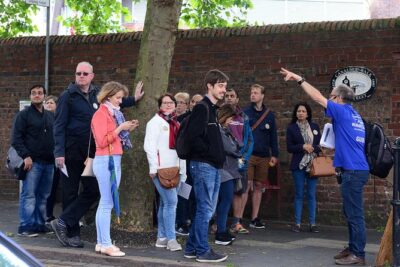
Birmingham Walking Tour: Canals, Victorians & Today (1:30pm)
Read our review →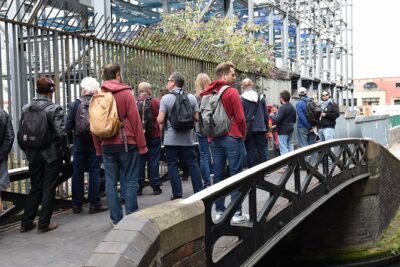
Discovering Birmingham 2 hour Walking Tour to the Jewellery Quarter
Read our review →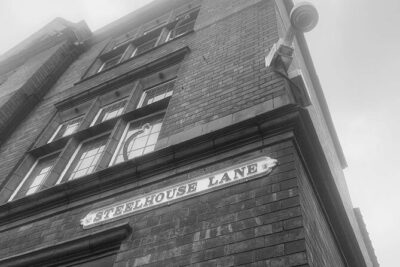
Birmingham Slogging Gangs Walking Tour with Edward Shelby
Read our review →
Birmingham City Centre Daily Walking Tour (10:30am & 2pm)
Read our review →

Fun, Flexible Treasure Hunt Around Birmingham with Cryptic Clues & Hidden Gems
Read our review →Browse the lists this tour appears in