
Reviewed · BRITISH MUSEUM TOURS
Private Guided Tour of the British Museum
The best thing about this private British Museum tour is its sense of direction. Instead of wandering through room after room of ancient objects, you get a focused route through Egyptian, Greek, and Roman collections, with explanations that connect each piece to a larger story. Guide Anthony Matthews brings archaeological training, humor, and a knack for reading ancient languages to the visit.
I like two things right away: the tour is limited to your own group of up to six, and the route can follow your interests. I also like the early-start strategy. Anthony has arrived before opening time for some groups, helping them enter near the front and see major pieces before the museum fills up.
The main drawback is time. The advertised experience lasts about two and a half hours, while the museum itself could occupy several days. You will see important highlights, but you cannot cover every gallery. The meeting point is also described broadly as Greater London, so confirm the exact place and time before setting out.
Key points to know before booking
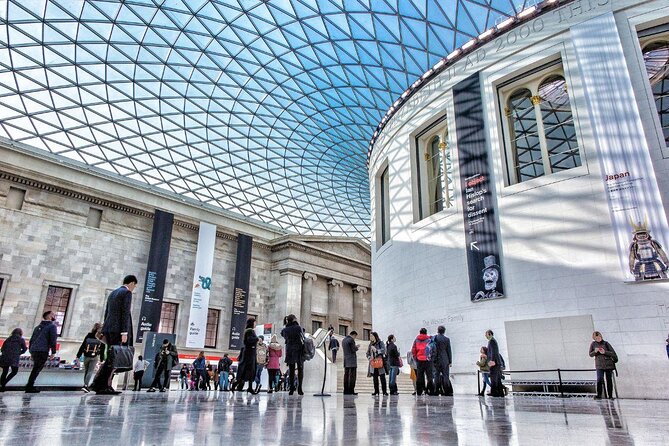
- Anthony Matthews adds an archaeologist’s eye: Expect more than labels and dates, including discussion of excavation, translation, materials, and how objects reached the museum.
- The route centers on ancient Egypt, Greece, and Rome: You may see the Rosetta Stone, Tutankhamun, sarcophagi, canopic jars, the Book of the Dead, Greek statues, Roman glass, armor, and gold jewelry.
- A private group makes questions easy: Your party of up to six can pause, ask for context, or shift attention toward a favorite period.
- Morning timing may help with crowds: Early arrival has been used to get near the front of the line and begin before the busiest periods.
- Families have a strong reason to consider it: The guide’s stories, questions, and humor have kept children and teenagers involved for more than two hours.
- The price works best for a full group: At $344.49 for up to six people, the per-person cost changes sharply depending on how many people share the booking.
Why a guide helps inside the British Museum
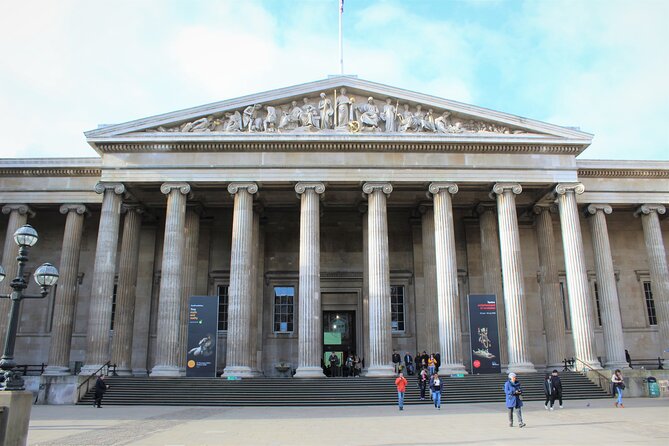
The British Museum is free to enter, but free admission does not make it simple. Its collections cover thousands of years and many parts of the world. You can easily spend half an hour reading about one object, then realize you have barely reached the rooms you most wanted to see.
A private guide gives you a plan. Anthony can point out which objects matter, explain why they matter, and keep the group moving without making the visit feel like a race. That balance matters in a museum where the most famous pieces are often surrounded by many other objects competing for your attention.
I especially like the scientific angle described by his background in archaeology. You may hear how an object was made, excavated, translated, or acquired, rather than receiving only a grand story about kings and battles. Anthony has also explained crowbar marks and the practical evidence left on ancient objects, a useful reminder that museum collections have complicated paths into modern display cases.
The private format changes the tone, too. You are not trying to hear a guide over a large crowd or waiting while strangers ask questions. If your children want more Greek mythology, if you want Egyptology, or if one person in your group is fascinated by Rome, the conversation can adjust.
More British Museum Tours in London:
- British Museum London Guided Tour Semi-Private 8ppl Max
★ 5.0 · 984 reviews - The British Museum London – Exclusive Guided Museum Tour
★ 5.0 · 555 reviews - British Museum Guided Tour
★ 4.0 · 470 reviews
The Rosetta Stone and the problem of translation
The Rosetta Stone is the natural opening attraction for many people. Its importance is not just that it is famous or visually impressive. The same decree appears in different scripts, allowing scholars to compare the text and make progress in reading ancient Egyptian hieroglyphs.
Anthony explains how the translation worked, turning a potentially dry language lesson into a clear piece of detective work. You learn why the stone mattered and how written evidence can change what we know about an entire civilization.
This is a good example of what the tour does best. A display label can tell you that the Rosetta Stone was central to deciphering hieroglyphs. A guide can explain the problem scholars faced, the clues they used, and why the discovery was such a turning point.
The room can be busy, and the stone itself may not look as dramatic as the story behind it. That is where the explanation earns its place. You are not simply checking off a famous object. You are learning how historians build knowledge from fragments.
Egyptian rooms: Tutankhamun, jars, and funerary beliefs
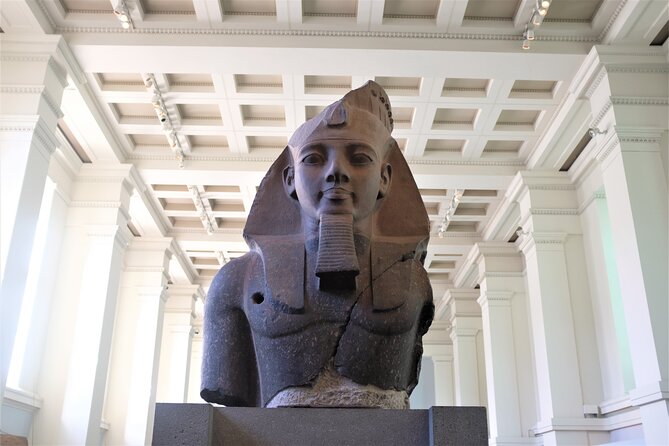
The Egyptian section gives the tour much of its visual drama. You can see a statue of Tutankhamun and hear about his short life and death, subjects that often attract both adults and younger visitors.
The value here comes from context. Tutankhamun is easy to reduce to a golden mask and a famous tomb, but his place in Egyptian history is more complicated. Anthony can help you understand why the young pharaoh became so well known and how the objects connected to him fit into wider Egyptian beliefs.
The route also includes sarcophagus motifs, canopic jars, and the Book of the Dead. These pieces help explain the Egyptian approach to death, burial, protection, and the afterlife. Canopic jars were tied to the preservation of organs, while the Book of the Dead contained texts and images meant to guide the dead.
Look closely at the decoration on coffins and sarcophagi. The images are not random ornament. They carry religious meaning and offer protection, identify the deceased, or help the person pass into the next world. A guide can make those symbols easier to read without turning the stop into a lecture.
One especially memorable skill noted by several groups is Anthony’s ability to read hieroglyphs. That does not mean every wall becomes instantly readable, but it gives you a direct sense of how language, image, and belief worked together in ancient Egypt.
Greece and Rome beyond the famous statues
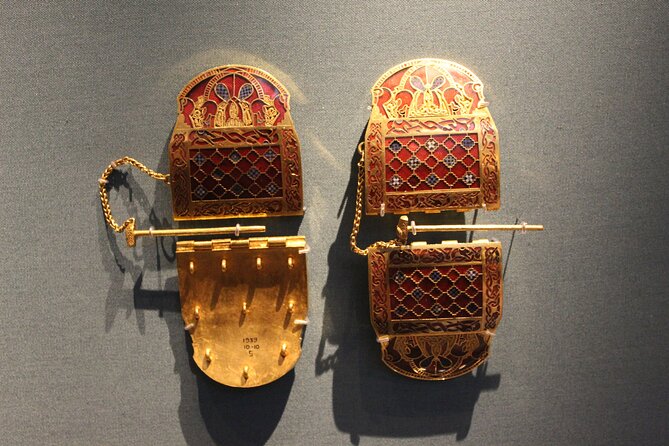
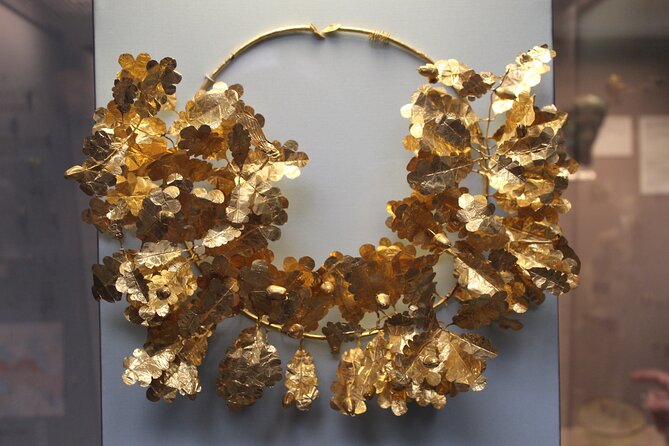
The Greek galleries bring a different set of questions. You may see Greek statuary, a gold headdress, and scenes of Amazons fighting. These objects open conversations about idealized bodies, myth, warfare, power, and the way ancient artists represented outsiders.
Anthony’s explanations are particularly useful if you are visiting with teenagers. He uses questions and humor to draw them in, rather than assuming they already care about dates and names. Families with children aged eight through fifteen have found the Greek and Egyptian material accessible, which is no small achievement in a museum full of long labels.
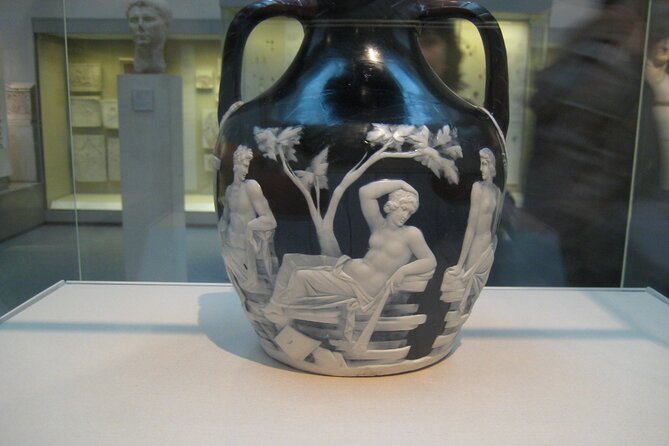
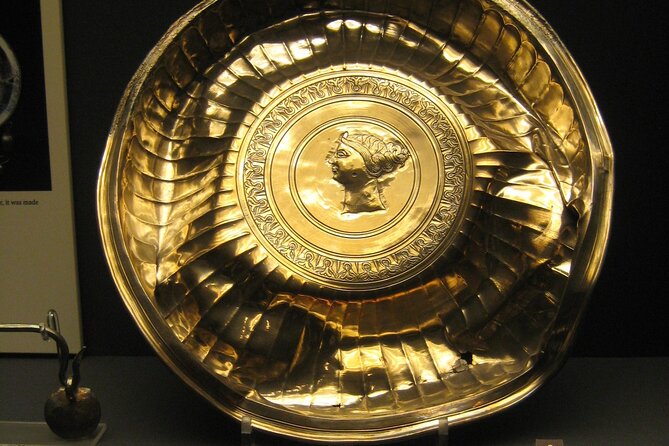
The Roman material adds technology and political messaging. You may see glass used as a form of propaganda, Roman gold jewelry, and unusual armor made to protect against alligators. The alligator armor is the sort of object that can wake up a tired group because it is unexpected and concrete.
Rome also gives Anthony room to explain how a large state used objects to communicate power. Coins, glass, statues, jewelry, and armor were not only practical or decorative. They could show status, advertise authority, or carry an image of Roman strength into daily life.
The route through Greece and Rome is not just a procession of beautiful objects. It links art to politics, engineering, religion, and social rank. That makes the collection easier to remember after you leave.
A few more London trips to weigh up
- Tower of London and Crown Jewels Exhibition Ticket
★ 4.5 · 6,677 reviews - Chelsea FC Stadium Tours and Museum
★ 5.0 · 1,908 reviews - Official tickets: Moco Modern & Contemporary Art Museum
★ 4.5 · 1,157 reviews - The Postal Museum Admission Ticket
★ 4.5 · 347 reviews
A flexible route for families and specialists
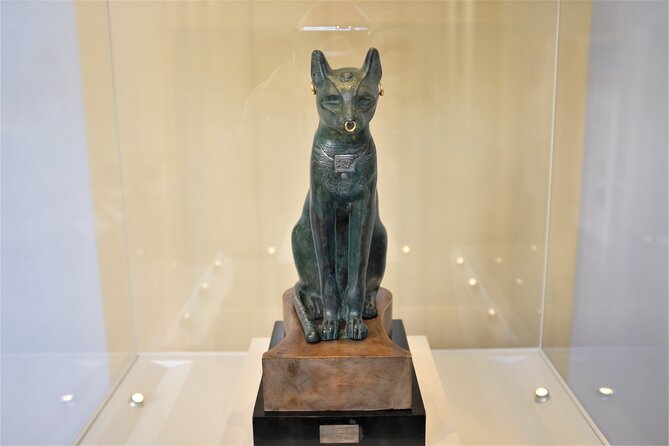
The tour is designed to be customized, and that is more important than it may sound. A family with a teenager who loves Greek mythology will need a different pace from a couple focused on Egyptian writing. A group with only one morning in London may want the essential highlights, while another group may prefer to spend longer in one collection.
Before the tour, decide what you most want to see. Tell the guide if you have a strong interest in Egypt, Rome, Greece, archaeology, ancient languages, or museum collecting. The more specific you are, the more useful the private format becomes.
Anthony has also helped groups connect the museum to later stops in Rome. That kind of link is practical for a multi-city trip. An object or theme introduced in London can become easier to recognize when you visit ancient sites elsewhere.
The route also works for people who prefer to explore independently after an introduction. One group used the guided time to understand the main objects, then continued through the museum on its own. That is a sensible plan if you want expert help at the start but also like unstructured browsing.
Timing, crowds, and the two-hour pace
You can choose a morning or afternoon start. If your schedule allows, morning is worth serious consideration because the guide has used an early arrival to help groups get near the front of the line. The museum can become much harder to navigate once the popular galleries fill.
The experience is listed at approximately two hours and thirty minutes, with the museum visit itself described as about two hours. Treat that as a focused introduction, not a complete survey of the building. You will need to keep moving, especially if you want Egyptian, Greek, and Roman highlights in one visit.
That pace is a benefit if London time is tight. It is also a limitation if you like to study every case. You should not book this expecting a slow afternoon of independent museum wandering.
There is no air-conditioned vehicle included, and this is a walking tour inside the museum. Transportation to the meeting point is not part of the experience, so allow time to reach Greater London and confirm the exact starting instructions. The activity ends back at the meeting point.
What the $344.49 group price means
The listed price is $344.49 for a group of up to six. For six people, that works out to roughly $57 per person. For two people, it is about $172 per person, so the value is much stronger for a family or group sharing the booking.
The entrance ticket is included, along with a licensed and insured guide. The British Museum itself has free admission, so you are paying mainly for Anthony’s time, planning, interpretation, and private attention rather than for entry.
That distinction is important. If you are happy to read labels, follow a map, and accept that you will miss some major pieces, you can visit the museum without a paid guide. If you have limited time, several age groups in one party, or little interest in planning a route, the fee can make sense.
I would be most likely to book it for a group of four to six, especially on a first visit. The guide helps prevent the classic British Museum problem: leaving after hours inside the building while still feeling you missed the point.
Who will get the most from this visit
This tour suits you if you want ancient Egypt, Greece, and Rome explained in plain language. It is also a good fit if you like archaeology as a process, including how objects were found, interpreted, translated, and placed in a museum.
Families are a strong match. Anthony has been praised for keeping children and teenagers engaged, using humor, questions, and stories rather than speaking only to the adults. The private setting lets you pause when a child has a question or move on when attention starts to fade.
It also works well for couples and older relatives with a strict schedule. One group used the guide to see key objects before an afternoon commitment, with the route adjusted around their time limit. That sort of planning is hard to achieve when you simply arrive and start walking.
You may want another type of experience if your main interest is modern art, Asian collections, or a slow look at every gallery. The stated focus is strongly ancient Mediterranean and Egyptian, though the private format gives you room to discuss other interests if arranged.
Practical details before you go
Confirmation arrives when you book, and the tour is offered in English with a mobile ticket. Service animals are allowed, and the museum is near public transportation.
Accessibility is not uniform. In a city and museum environment with very old structures, most areas are accessible, but not every area is fully so. If anyone in your group has specific mobility needs, ask for current details before booking.
Most people can take part, but remember that the visit involves walking and standing in museum galleries. Wear practical shoes and avoid planning an immediately rushed connection afterward. Free cancellation is available if you cancel at least 24 hours before the local start time. Cancellations or changes made inside that window are not accepted for a refund.
Should you book the private British Museum tour?
Book it if you want the British Museum to make sense quickly, especially if you are splitting the $344.49 price among several people. Anthony Matthews is the guide to request if available: his archaeology background, language skills, humor, and skill with children are central to the experience.
Choose a morning start if you want the best chance of entering ahead of heavier crowds. Bring two or three clear interests, such as Egyptian funerary customs, Greek sculpture, Roman technology, or the museum’s collecting practices.
Skip the private tour if you prefer to wander alone, have a full day for the museum, or only want to browse at your own pace. But for a first visit, a family group, or a short London stay, this is a practical way to see the major ancient collections without getting lost in one of the world’s most demanding museums.
FAQ
How long does the private British Museum tour last?
The experience lasts approximately two hours and thirty minutes. The museum visit is also described as about two hours, so expect a focused tour rather than a full-day visit.
How many people can join the private tour?
The private tour is for your group only, with up to six people included in the group price.
What is included in the price?
The price includes a licensed and insured guide and the entrance ticket. The British Museum entrance is included as part of the activity.
What does the tour focus on?
The route focuses mainly on ancient Egyptian, Greek, and Roman collections. Featured objects include the Rosetta Stone, a statue of Tutankhamun, sarcophagi, canopic jars, the Book of the Dead, Greek statuary, Roman glass, alligator armor, and gold jewelry.
Can the tour be customized?
Yes. The tour can be tailored to your needs and interests. Tell the guide what you most want to see so the route can reflect your group.
Are morning and afternoon departures available?
Yes. You can choose a morning or afternoon tour.
Is transportation included?
No. An air-conditioned vehicle is not included. The activity begins and ends at the meeting point, with the start listed in Greater London.
Is the tour suitable for children?
Most travelers can participate, and the experience has been used successfully by families with children and teenagers. The guide’s stories, questions, and humor can help younger visitors stay involved.
What is the cancellation policy?
You can cancel for a full refund up to 24 hours before the experience begins. Cancellations or changes made less than 24 hours before the start time are not accepted for a refund.
Just added around London
- Private The Beatles Taxi Tour in London★ 5.0 · 12 reviews
- Dinner and Jazz Cruise on the River Thames★ 4.0 · 140 reviews
- Airport Coach Service from Heathrow to Oxford★ 3.5 · 67 reviews
- The Alfred Hitchcock London Walk with Sandra Shevey★ 5.0 · 15 reviews
- Tower of London & 30+ London Sights Walking Tour★ 4.5 · 33 reviews
- Thames Beachcombing★ 4.5 · 100 reviews
- Ted Lasso London Taxi Tour★ 5.0 · 5 reviews
- Ted Lasso Tour of Richmond with Private Guide★ 5.0 · 25 reviews
British Museum Tours, compared.
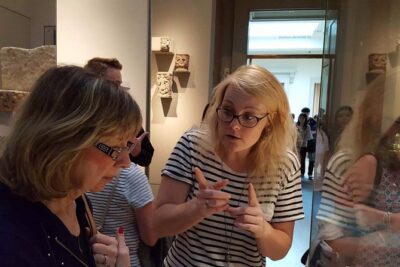
British Museum London Guided Tour Semi-Private 8ppl Max
Read our review →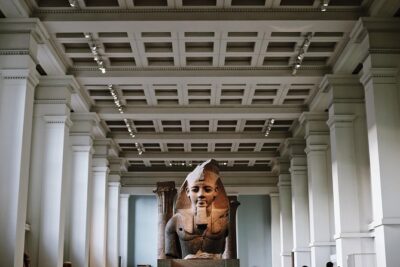
The British Museum London – Exclusive Guided Museum Tour
Read our review →
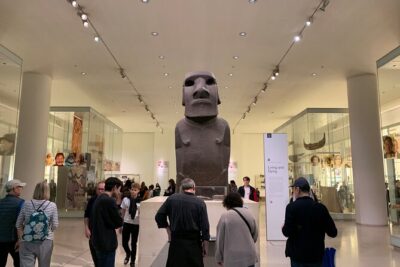
Private Guided Tour of the British Museum – Tickets Included
Read our review →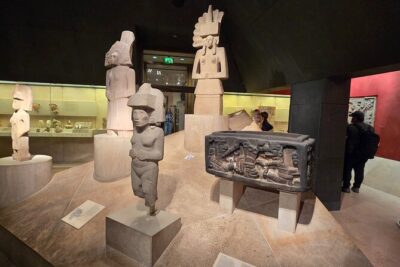
British Museum Guided Tour with Priority Timeslots(Small Group)
Read our review →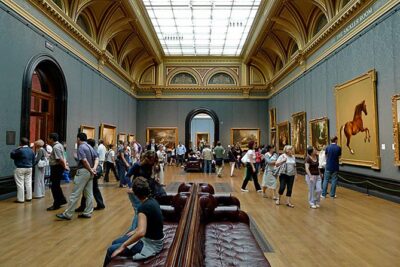
British Museum & National Gallery of London Semi-Private 8ppl Max
Read our review →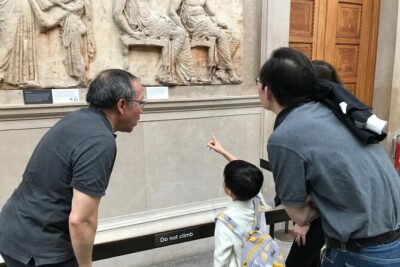
Explore Biblical Artifacts at the British Museum
Read our review →
British Museum Highlights Private Tour in London including the Rosetta Stone
Read our review →Browse the lists this tour appears in