
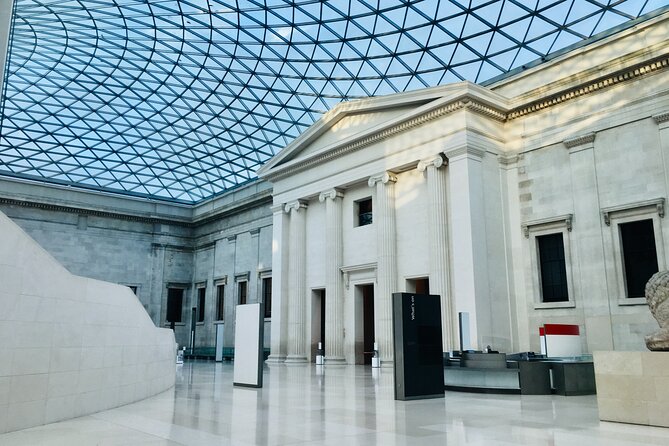
Reviewed · BRITISH MUSEUM TOURS
The British Museum: a highlights tour with a TV historian
The most useful thing about this British Museum tour is its guide. Loona once worked at the museum and even supervised sleepovers with the mummies, so he can give you more than labels and dates. He connects the Rosetta Stone, ancient libraries, fake mermaids, Aztec jewellery, and the Parthenon Sculptures into a fast-moving story about human ideas and ambition.
I like the private format, since your group gets the guide’s full attention and can ask questions without competing with a crowd. I also like the way the tour deals with awkward subjects, including fakes and the acquisition of famous objects. The main consideration is timing: you must book the museum’s free timed ticket yourself, and entry can take about 30 minutes.
Key points to know before you book
- Former museum staff guide: Loona brings first-hand experience from years at the British Museum, including unusual behind-the-scenes stories.
- A true highlights route: You can see the Rosetta Stone, Rameses II, Sutton Hoo, the Lewis Chess pieces, the Parthenon Sculptures, and many more major objects.
- History made accessible: Harry Potter, Hollywood, and modern life may be used to make ancient subjects easier for children and first-time museum visitors to grasp.
- Private attention: Only your group takes part, making it easier to ask questions or adjust the pace.
- Free museum entry: The tour fee covers guiding services only. You still need your own free, timed museum ticket.
- Allow extra time at the door: The tour begins at 11:00 am, but museum entry may take around 30 minutes, so arriving late could cause trouble.
Why a guide matters inside the British Museum
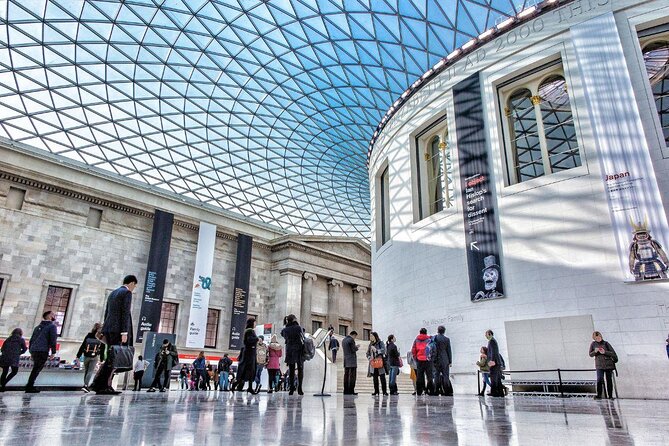
The British Museum can overwhelm you before you even reach the first gallery. Its collections span thousands of years and many regions, with famous objects spread across a large building. You can wander on your own, but it is easy to spend too long on one display and miss objects that deserve your time.
This tour gives you a route through the museum’s major stories. You are not simply shown a list of celebrated objects. You hear how writing was deciphered, how rulers presented themselves, how myths were recorded, and how modern museums acquired objects from other cultures.
Loona’s former staff experience is especially useful here. He knows the building well and can add details that are not obvious from a display case. The unusual reference to supervising overnight events with the mummies gives you a sense of the kind of museum life he can describe.
The tone is designed to work for mixed groups. If you have children who are not eager to spend three hours with ancient sculpture, the guide can bring in Harry Potter, films, and contemporary life. That does not turn the tour into a children’s show. It simply gives you familiar points of reference when the material becomes remote or technical.
More British Museum Tours in London:
- British Museum London Guided Tour Semi-Private 8ppl Max
★ 5.0 · 984 reviews - The British Museum London – Exclusive Guided Museum Tour
★ 5.0 · 555 reviews - British Museum Guided Tour
★ 4.0 · 470 reviews
Starting at the Reading Room at 11:00 am

The meeting point is the British Museum Reading Room on Great Russell Street. The tour starts at 11:00 am and ends inside the British Museum, with the Mummies gallery listed as the end location.
The important practical detail is that your guiding appointment and your museum admission are separate. The museum is free, but you are advised to reserve a free timed ticket through the British Museum’s own website. The ticket is not supplied as part of this experience.
Book that museum ticket several days ahead if possible. Free admission does not mean unlimited entry, and timed slots can fill. You should also leave about 30 minutes for getting into the museum. That makes an early arrival sensible, even though the tour itself begins at 11:00 am.
The tour lasts about three hours. One account describes a visit lasting three and a half hours, so I would keep your schedule open beyond the advertised time. That extra margin is useful if you want to continue looking around after the guided portion.
The Rosetta Stone and the power of written language
The Rosetta Stone is an obvious first priority, but the value lies in the explanation around it. You will hear how the stone helped scholars decipher Egyptian hieroglyphs by comparing different forms of the same text.
This is a strong opening because it shows how an object can change what people know about the past. The stone is not just an old slab covered in writing. It became a key to a script that had been unread for centuries.
The route also includes cuneiform and the process of translating it. Together, these displays help you see writing as a practical tool, not only an art form. You can follow how records, royal claims, religious texts, and stories survived because someone pressed marks into clay or carved them into stone.
The world’s oldest epic story is another stop on this broad journey through early writing. The precise details matter less than the connection: the museum is showing you how people recorded fears, heroes, rulers, and ideas long before modern books existed.
Pharaohs, Aztec jewellery, and the image of power
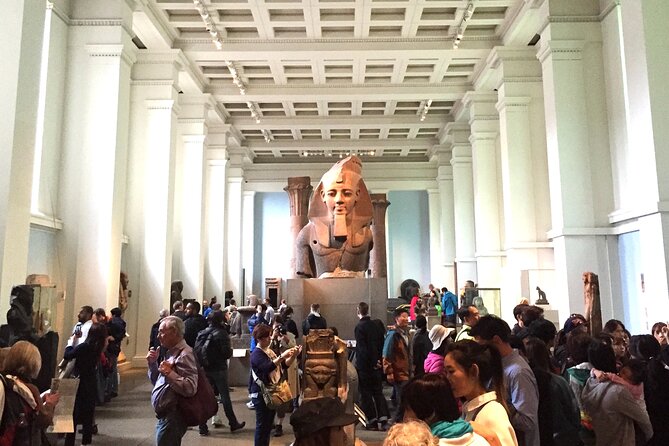
The bust of Rameses II gives the tour a chance to discuss royal image-making. Large portraits of rulers were never neutral. Size, pose, clothing, and facial expression all helped present a leader as powerful and permanent.
You will also see Aztec jewellery associated with Montezuma. This brings a different culture and a different form of authority into the tour. Jewellery can reveal status, belief, ceremony, and craftsmanship, while also raising questions about the people who owned it and how it later reached a European museum.
I like this part of the route because the objects are visually strong, but the discussion can go beyond appearance. You are encouraged to think about who made each item, who used it, and what may have been lost when it was removed from its original setting.
The tour’s attention to acquisition is important. The British Museum holds objects from many parts of the world, and the story of how they arrived is not always simple. A guide who can address acquisition directly gives you a more honest visit than a tour that treats every object as if it simply appeared in London.
A few more London trips to weigh up
- Tower of London and Crown Jewels Exhibition Ticket
★ 4.5 · 6,677 reviews - Chelsea FC Stadium Tours and Museum
★ 5.0 · 1,908 reviews - Official tickets: Moco Modern & Contemporary Art Museum
★ 4.5 · 1,157 reviews - The Postal Museum Admission Ticket
★ 4.5 · 347 reviews
Fakes, crystal skulls, and mermaids
Not everything in a famous museum is genuine in the way you might expect. The tour includes fakes, crystal skulls, and mermaids, which makes room for a useful lesson in how museums judge objects.
These examples can be fun, especially for children, but they also make a serious point. People have long created objects that imitate older traditions, support a false story, or appeal to a public appetite for mystery. A museum visit is not only about admiring beautiful things. It is also about asking how experts know what they are looking at.
This section should appeal to anyone who likes detective stories. You get a break from the expected parade of ancient masterpieces, and you see how errors, fraud, and wishful thinking can shape our view of the past.
Sutton Hoo and the Anglo-Saxon world
The Anglo-Saxon Sutton Hoo collection is one of the tour’s most distinctive stops. It offers a chance to see the early medieval world through exceptional objects rather than through a long lecture.
The collection is particularly appealing if you enjoy jewellery, metalwork, and the human details found in burial objects. One praised feature of the tour is the attention given to the Anglo-Saxon treasure, and it is easy to see why. The pieces are visually immediate, but they also raise questions about status, ritual, trade, and memory.
The route also includes Celtic jewellery. Placing these objects within a wider journey helps you compare artistic choices and social customs across different European cultures. You are not left with the idea that history moved in a straight line from ancient Egypt to classical Greece and then to Rome. The museum holds many overlapping traditions.
Assyrian warfare and the first declaration of human rights
The Assyrian material brings a tougher side of ancient rule into view. The tour presents Assyria as a powerful military state, with objects that show how warfare and royal authority were displayed.
This is a useful counterpoint to the museum’s jewellery, statues, and written stories. Ancient rulers did not only commission art to look impressive. They also used images and inscriptions to warn enemies, praise victories, and make power visible.
The tour also covers what is described as the first declaration of human rights. This is one of the moments where a good guide can add needed context. Grand labels can make a complicated historical claim sound simple, while the real value comes from understanding what the declaration meant in its own setting and why people still discuss it.
You should expect the guide to connect these objects to larger questions about law, government, and the way societies define freedom. That makes the visit more than a procession of old things.
Parthenon Sculptures and the question of ownership
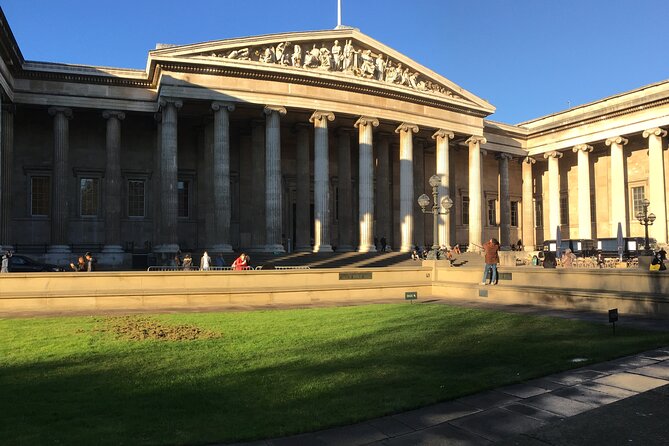
The Parthenon Sculptures are among the British Museum’s most famous displays, and they are also among its most contested. The tour includes the sculptures while discussing their acquisition, giving you a chance to consider the arguments surrounding their removal and present location.
This is an important part of the experience for anyone who wants more than a polished presentation of the museum. The objects are remarkable works of art, but their ownership and display involve modern political and cultural questions.
A guide cannot settle those questions for you in three hours, and you should not expect a final answer. What the tour can do is give you a clearer starting point. You can look closely at the sculptures while learning why their presence in London remains debated.
The same approach matters for the Benin Bronzes. These objects have an extraordinary artistic and historical importance, but their arrival in European collections is tied to colonial violence. Including them in the route shows that the museum’s story is also a story about power, collecting, and responsibility.
Lewis Chess pieces, Easter Island, and objects with a human scale
The Lewis Chess pieces provide a welcome change of mood. Their small size and expressive faces make them easy to enjoy, even if you are not a chess player. They also show how a game set can reveal design, social roles, clothing, and humour.
The Easter Island statue offers a different kind of encounter. A single large figure can make a distant culture feel present, while also reminding you how much context can be lost when an object is separated from its original place.
The route continues with a Chinese Buddha and a Shiva statue from India. These works help broaden the tour beyond the best-known European and Egyptian displays. You get to compare different ways of representing the sacred, the human body, and the relationship between people and divine power.
This range is one of the strongest reasons to choose a private guide. You can move from a chess piece to a religious statue, from an ancient script to a colonial-era collection, without having to build the connections yourself.
A three-hour pace, with room for questions
Three hours is enough for a strong first visit, but it is not enough to see the British Museum in full. That is not a flaw. A highlights tour should help you make sensible choices rather than pretend that one morning can cover every gallery.
The private format gives the guide some flexibility, but the route contains many subjects. If you stop for long discussions at every object, you may not reach everything listed. I would think of the itinerary as a generous range of planned highlights, with the exact pace shaped by your questions and interests.
You will have time for breaks, according to the experience details, but you should still wear comfortable shoes and avoid scheduling something immediately afterward. A three-hour museum visit requires steady walking and attention, even when the guide keeps the tone light.
The tour suits families, first-time visitors, and adults who want a clear route through the collection. It is also useful if you have limited time in London and want to see major objects without spending half a day deciding which room to enter next.
What you pay for, and what you still need
The museum admission is free, but this is not a free tour. Your payment covers guiding services only. Souvenirs, taxes, and other fees are not included, and you must arrange the museum’s free timed entry separately.
The value depends on how you like to visit museums. If you enjoy reading every label and choosing your own path, you may prefer to enter independently. If you want a focused route, clear explanations, and access to a guide with former museum staff experience, the cost can make sense.
A private tour is also easier to justify for a family or small group. You are not paying for a large shared audience, and the guide can use references that suit your party. Children can be brought into the subject through popular culture, while adults can ask about translation, collecting, and ownership.
The strongest value is not the number of objects. It is the structure. You leave with a better sense of how the museum’s collections connect, and you avoid spending your limited London time on rooms that do not match your interests.
Who should book this British Museum tour
I would choose this experience if you want the museum’s major sights but do not want a dry lecture. Loona’s background, lively examples, and attention to unusual objects make the route a good fit for mixed ages and mixed levels of interest.
It is especially suitable for:
- Families with children who need stories and modern references to stay engaged
- First-time British Museum visitors who want help choosing the key galleries
- Adults interested in how objects were translated, identified, collected, or acquired
- Small private groups who prefer to ask questions freely
- Anyone with roughly three hours who wants a broad introduction rather than a specialist study of one culture
You may want to skip it if you prefer a slow, self-guided visit or if you already know the museum’s major collections well. The tour moves across many periods and regions, so it favours range and connection over long, detailed study of a single object.
Book your museum ticket early, arrive with time to spare, and keep a little flexibility after the scheduled finish. Those three steps will make the morning much easier.
Should you book it?
Book this tour if you want the British Museum to feel understandable rather than enormous. You will see celebrated objects such as the Rosetta Stone, Parthenon Sculptures, Sutton Hoo treasures, and Lewis Chess pieces, but you will also get fakes, ancient writing, Benin Bronzes, and stories about acquisition.
The best reason to choose it is Loona’s former museum experience and the private setting. The main tradeoff is that you must handle your own free admission ticket, and the wide route cannot give every object equal time.
For a first visit, a family outing, or a short London schedule, this is a strong way to get your bearings and leave with a list of galleries worth exploring later.
FAQ
How long does the British Museum highlights tour last?
The tour lasts approximately three hours. You should keep extra time available because one account of the experience lasted about three and a half hours.
What time does the tour start?
The listed start time is 11:00 am.
Where does the tour meet?
The meeting point is the British Museum Reading Room on Great Russell Street in London.
Where does the tour finish?
The tour ends at the British Museum, with the Mummies gallery listed as the end location.
Do I need to buy a museum admission ticket?
Yes. Museum admission is free, but you must book your own free timed-entry ticket through the British Museum’s website.
Is this a private tour?
Yes. Only your group takes part in the private tour or activity.
Can I cancel for a full refund?
You can cancel at least 24 hours before the experience starts for a full refund. Cancellations or changes made less than 24 hours before the start time are not accepted for a refund.
Just added around London
- Private The Beatles Taxi Tour in London★ 5.0 · 12 reviews
- Airport Coach Service from Heathrow to Oxford★ 3.5 · 67 reviews
- The Alfred Hitchcock London Walk with Sandra Shevey★ 5.0 · 15 reviews
- Dinner and Jazz Cruise on the River Thames★ 4.0 · 140 reviews
- Tower of London & 30+ London Sights Walking Tour★ 4.5 · 33 reviews
- Thames Beachcombing★ 4.5 · 100 reviews
- Ted Lasso London Taxi Tour★ 5.0 · 5 reviews
- Ted Lasso Tour of Richmond with Private Guide★ 5.0 · 25 reviews
British Museum Tours, compared.
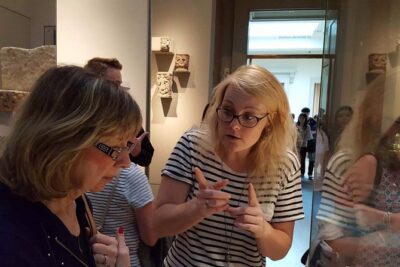
British Museum London Guided Tour Semi-Private 8ppl Max
Read our review →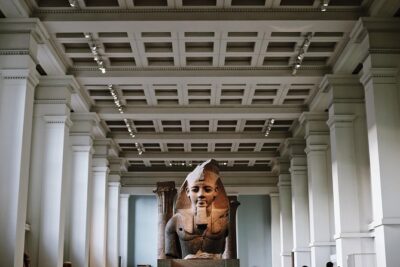
The British Museum London – Exclusive Guided Museum Tour
Read our review →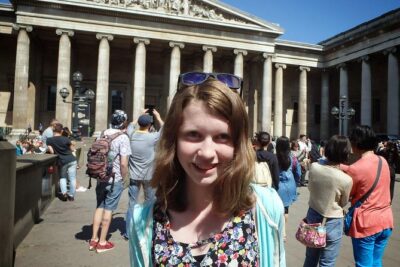
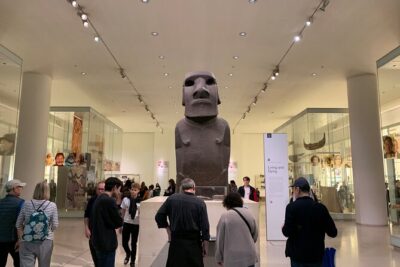
Private Guided Tour of the British Museum – Tickets Included
Read our review →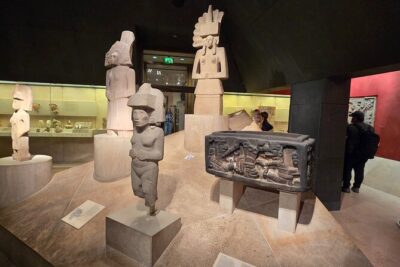
British Museum Guided Tour with Priority Timeslots(Small Group)
Read our review →
British Museum & National Gallery of London Semi-Private 8ppl Max
Read our review →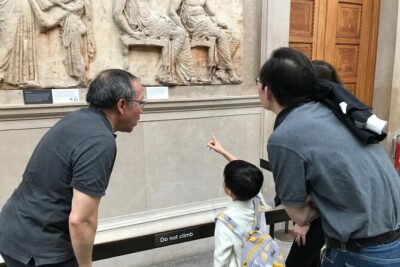
Explore Biblical Artifacts at the British Museum
Read our review →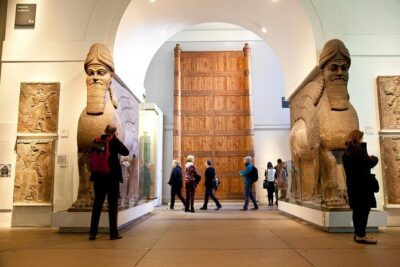
British Museum Highlights Private Tour in London including the Rosetta Stone
Read our review →Browse the lists this tour appears in