
Reviewed · HISTORICAL TOURS
Roman Ruins to Blitz Bombings: A Walking Tour of London’s Fiery History
London’s old stones tell a story of repeated destruction and rebuilding. This two-hour walk from the Tower of London to Fleet Street links Roman remains, medieval churches, the Great Fire of 1666, and wartime damage into one clear route.
I like the small maximum of 15 people, which gives you room to ask questions. I also like the way the walk pairs famous sights with easy-to-miss places such as St. Dunstan in the East and the London Stone. The main drawback is simple: you cover a lot of ground, so this may not suit you if walking is difficult.
Key points to know before you book
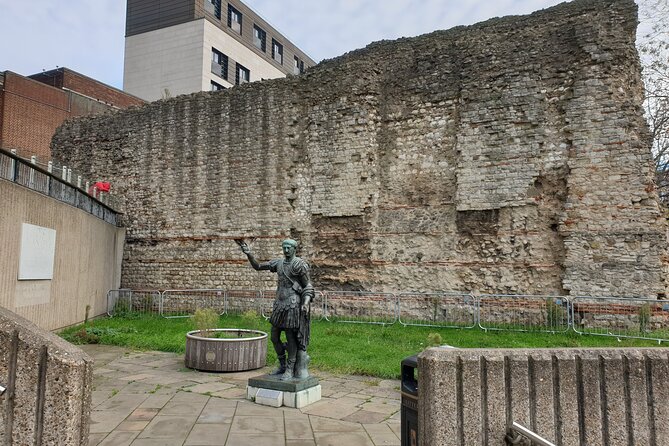
- Roman traces and wartime ruins: See how London’s past survives in fragments, from the Tower area to St. Dunstan in the East.
- A clear route through major disasters: The walk links the Great Fire of 1666 with the Blitz bombings and London’s rebuilding.
- Small-group format: The maximum group size is 15, a useful setup for questions and personal attention.
- Guide Tom’s storytelling: Tom is praised for making history easy to follow, answering questions fully, and suggesting other places to see afterward.
- Seven important stops: The route includes the Tower of London, the Monument, London Stone, Bank of England Museum, Guildhall, and St. Paul’s.
- Good value for history fans: At $27.78 per person, the price covers the guided walk, but admission to several sights is not included.
Why this London walk works so well
Many city walks give you a string of famous buildings and a few dates. This one has a stronger idea behind it: London keeps being damaged, rebuilt, and reinterpreted. You move from royal power and Roman-era traces to fire, finance, religion, and war.
That theme helps you make sense of the City of London. The route is not just about looking at old buildings. Your guide explains why certain stones matter, how major disasters changed the city, and why small remains can be as revealing as grand landmarks.
The group is capped at 15 people. I consider that a real advantage in central London, where a large group can clog narrow pavements and make questions awkward. With a smaller party, you have a better chance of hearing the guide clearly and stopping for an explanation without losing the group.
Tom is the guide named in the feedback supplied for this tour. His style comes across as lively and open to questions. He brings in side attractions, free museums with Roman objects, and suggestions for places you can visit after the walk. Other guides may lead the tour, but Tom is the clearest name associated with the experience.
The walk is offered in English and comes with a mobile ticket. You do not need to buy a separate sightseeing package to take part. The price is $27.78 per person, which is fair if you want a focused history lesson with a route already planned. It is less of a bargain if you mainly want entry into the major buildings, since those admissions are not included.
A few more London trips to weigh up
- London Small Group Tour of Historical Pubs
★ 5.0 · 10,422 reviews - Soho Music & Historic Pubs Tour
★ 5.0 · 1,993 reviews - Royal Historic Pubs Walking Guided Tour in London
★ 5.0 · 803 reviews
Starting beside the Tower of London
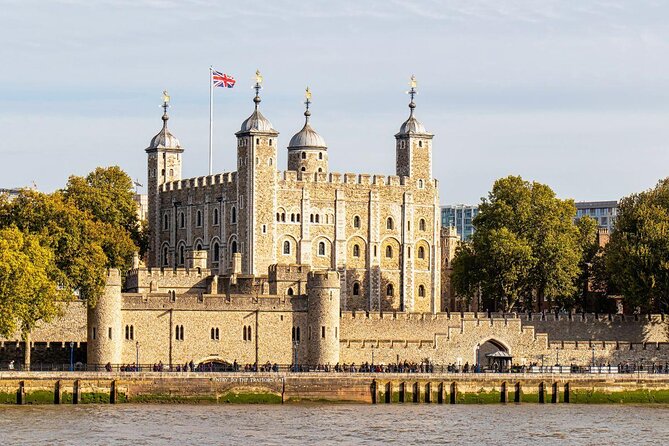
The meeting point is 38 Trinity Square, close to the Tower of London. This is a useful starting place because the Tower gives you an immediate sense of London’s long royal and military story.
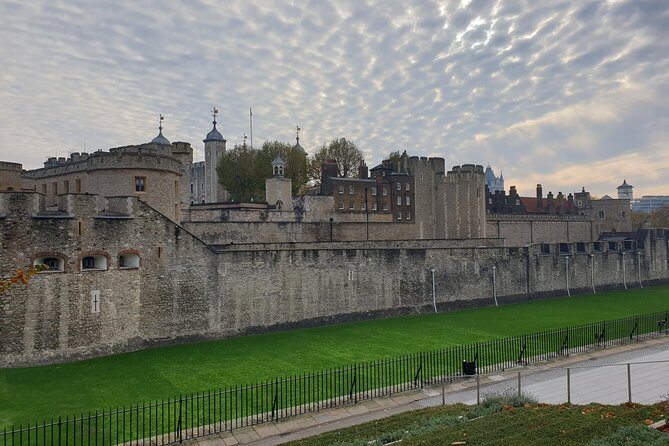
The Tower of London is described as Europe’s oldest surviving royal palace. On this walk, it is a stop rather than a full visit inside. Admission is not included, so you should not expect the tour price to cover the Tower’s interior rooms, displays, or grounds.
That arrangement suits you if you already have a separate Tower visit planned. It also keeps the walk moving. A full visit can take several hours on its own, while the walking tour uses the Tower as the first chapter in a wider story.
Give yourself enough time to reach the meeting point. The tour begins in a central area with good public transport connections, but the information provided does not name a specific station as the starting station. The route ends near Blackfriars Station, so you can use the finish point to plan your next stop.
St. Dunstan in the East and the beauty of damage
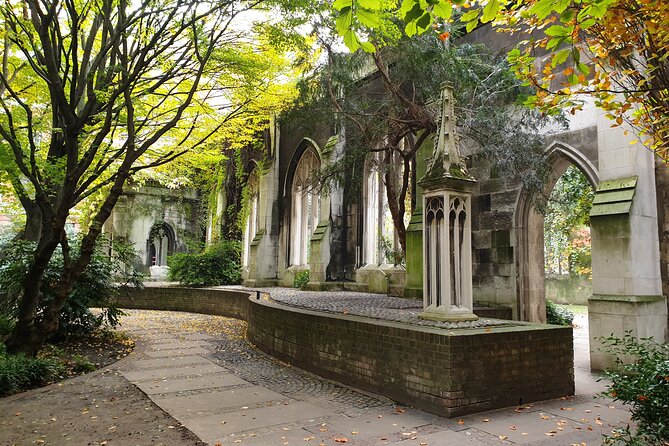
St. Dunstan in the East is one of the most striking stops because it shows destruction in a quiet, visual way. The gardens occupy the remains of a medieval church destroyed during the Second World War.
You can expect about five minutes at the stop. That is enough for your guide to explain what happened and point out how the ruined church was reused as a garden. It is a short pause, not a long garden visit.
This stop gives the tour its emotional balance. The Tower and St. Paul’s are major landmarks, but St. Dunstan’s shows what happens when a building is only partly lost. Broken walls and open sky make the effect easy to understand without a long lecture.
If you enjoy photographing old stone, this is likely to be one of your favorite pauses. If you prefer extended time at each sight, five minutes may feel brief. The value here comes from the explanation and the connection to the larger story, not from lingering alone.
The Monument and the Great Fire of 1666
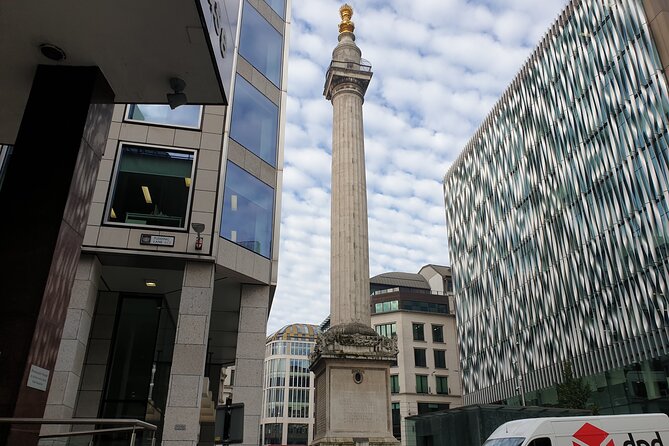
The Monument to the Great Fire of London marks one of the city’s most important turning points. The fire of 1666 reshaped a large part of London and led to major rebuilding.
Admission to the Monument is not included. The walk focuses on the monument and its place in the city rather than promising a climb or an interior visit. That distinction matters if you have imagined panoramic views from the top.
Your guide can use this point to explain how a disaster altered London’s streets, buildings, and public memory. The stop also shows why monuments matter: they preserve a major event in a place where modern city life continues around them.
The five-minute stop keeps the experience practical. You get the historical context without committing your whole day to a single attraction. If you want to enter the Monument, treat that as a separate plan and check its admission arrangements independently.
Same country, a completely different day out:
- Stonehenge, Windsor Castle, and Bath from London
★ 4.5 · 18,662 reviews - London Big Bus Hop-On Hop-Off Tour with Optional River Cruise
★ 3.5 · 10,803 reviews - Stonehenge, Windsor Castle and Bath with Pub Lunch in Lacock
★ 4.5 · 7,402 reviews - Tower of London and Crown Jewels Exhibition Ticket
★ 4.5 · 6,677 reviews
The London Stone and its old legends
The London Stone is a small object with unusually large legends attached to it. It is connected with stories about London’s past, and the guide brings attention to a piece of the city that you could easily pass without noticing.
Admission is free. The stop lasts about five minutes, which is appropriate for a landmark that is more about meaning and folklore than scale.
This is where a good guide makes a real difference. A stone in a wall or display case may seem unremarkable until you know why people have cared about it. Tom is praised for explaining these overlooked details and for helping you notice places you might normally walk past.
Do not expect a grand monument or a long set of ruins here. Expect a compact story, a few legends, and a useful reminder that London’s history is not always displayed in huge buildings.
The Bank of England Museum and the City’s money
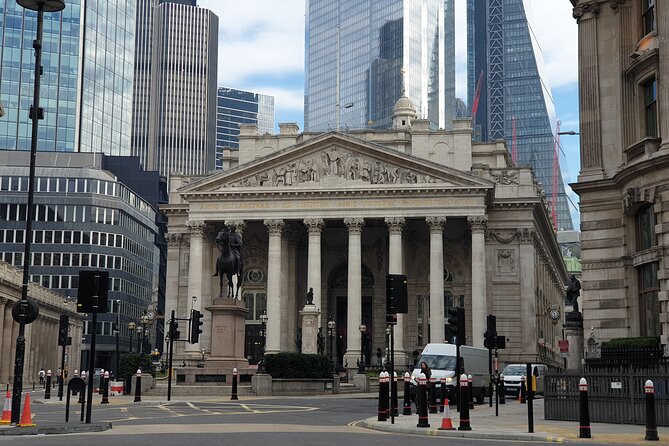
The Bank of England Museum brings the walk into the financial heart of the City. The Bank of England is the central bank of the United Kingdom, and its presence helps explain why this part of London remains tied to money and public institutions.
Admission is not included. The tour does not promise a full museum visit, so you should think of this as an outside stop and an introduction unless your guide says otherwise on the day.
This change of subject is useful. The walk is not only about battles, fires, and ruined churches. It also shows the institutions that helped shape modern London. The route moves from royal authority to finance, then on to civic government and religion.
If you have extra time, the guide may point out free museums or nearby places with Roman objects. The specific locations and opening arrangements are not provided, so check them before making firm plans. The useful point is that the walk can help you choose what to see next.
Guildhall and medieval civic London
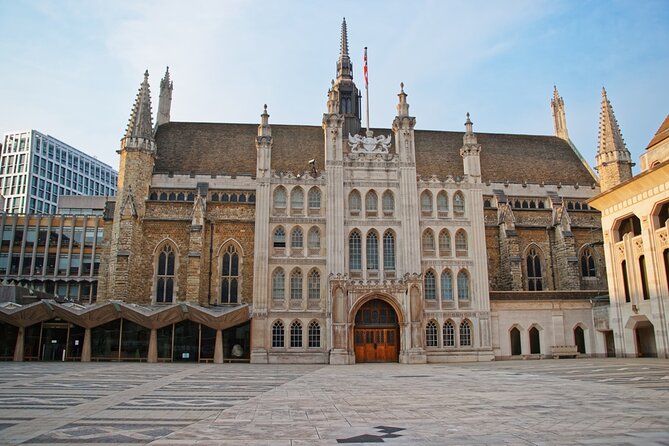
Guildhall is a 15th-century hall and the home of the Corporation of London. It represents the city’s civic power, giving you another angle on how London was organized and governed.
Admission is not included. The tour includes the stop, but you should not assume that your ticket allows entry into the hall or its displays.
Guildhall also helps keep the route grounded in the City itself. The Tower suggests the monarchy, the Bank of England points to national finance, and Guildhall shows the authority of London’s own corporation. These are different forms of power, all concentrated within a relatively compact area.
The stop is scheduled for about five minutes. That makes the tour a good choice if you want an overview, not a series of long indoor visits. You will get more from it if you listen for the links between each site rather than treating every stop as a separate attraction.
St. Paul’s Cathedral and Christopher Wren’s London
The final major sight is St. Paul’s Cathedral, the 17th-century cathedral designed by Christopher Wren. It provides a strong finish because it represents rebuilding on a grand scale after earlier destruction.
Admission is not included. The walk does not promise an interior tour, dome climb, or access to the cathedral’s services and displays. If St. Paul’s is high on your list, plan a separate visit.
Even from the route, St. Paul’s gives the story a sense of direction. London lost buildings to fire and war, but it also rebuilt with ambitious designs. The cathedral helps show how disaster can lead to a new architectural identity.
You should listen for how the guide connects St. Paul’s with the earlier stops. The point is not simply that Wren designed an impressive church. It is that London’s character was shaped by what came after the city’s worst setbacks.
Ending at Ye Olde Cheshire Cheese on Fleet Street
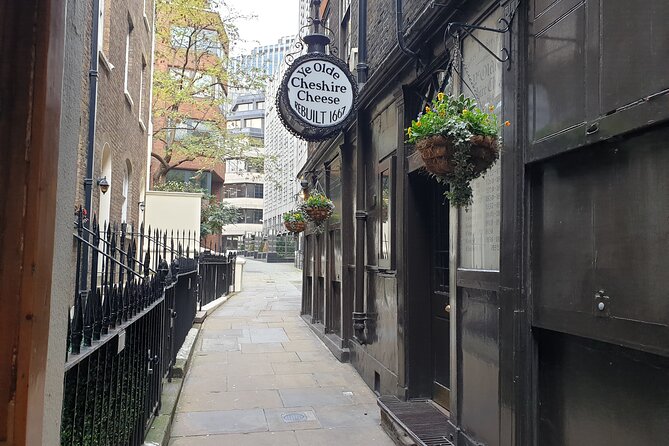
The walk ends outside Ye Olde Cheshire Cheese, 145 Fleet Street, not far from Blackfriars Station. This is a practical finish in a central area, with the option to continue exploring on foot or use nearby public transport.
The tour itself ends outside the pub. No meal or drink is included, so treat the location as a meeting and finishing point rather than part of the paid experience.
I like this ending because it leaves you in a part of London associated with old pubs, newspapers, and historic streets. The route begins with the Tower and ends in Fleet Street, giving you a clear east-to-west journey through the City.
The total duration is about two hours. The route includes seven stops, but each listed stop is only about five minutes, so much of the time is spent walking and listening between locations. That makes comfortable shoes important, even though the tour is not described as a strenuous hike.
The walking pace and practical limits
One useful piece of advice is to take the word walking seriously. The route covers a substantial stretch of central London, and one person described it as an extremely long walking tour while also warning that it may not suit anyone with mobility issues.
The supplied details say most people can participate, but they do not promise an accessible route or seating at every stop. If you have mobility concerns, contact the provider before booking and ask about the exact pavement conditions, pace, and rest opportunities.
Service animals are allowed. The tour is near public transportation, which makes both the start and end easier to reach. A mobile ticket is provided, and confirmation arrives when you book.
The group maximum is 15. That is small enough for personal attention but not necessarily private. If you want a fully private walk, this experience does not state that it is private, so check before paying.
The cancellation terms are friendly as long as you plan ahead. You can cancel for a full refund up to 24 hours before the local start time. Cancellations or changes made less than 24 hours before the start are not accepted for a refund.
Is $27.78 a fair price?
At $27.78 per person, you are paying for the guide, route planning, and interpretation rather than admission to London’s main sights. That is a reasonable price for a focused two-hour history walk, especially if you want context that is hard to assemble on your own.
The value is strongest for first-time visitors who want to understand the City before returning to selected attractions. You can use the walk to decide if you want to pay separately for the Tower of London, the Monument, the Bank of England Museum, Guildhall, or St. Paul’s Cathedral.
The value is weaker if you expect a ticketed tour inside each building. Admissions are not included at those stops, so budget separately if you plan to enter them.
The guide is the main reason to book rather than simply follow the route on a map. Tom’s ability to answer questions, explain side attractions, and make ordinary streets meaningful adds something you cannot get from a list of addresses.
Who should book this experience?
I would choose this walk if you enjoy history, want a strong introduction to the City of London, or prefer stories tied to real places. It also suits you if you like famous landmarks but want smaller, less obvious details along the way.
It is a good fit for an English-speaking group that wants personal attention without paying for a private tour. The two-hour length also works well on a day when you have other plans.
I would hesitate if you have difficulty walking, need frequent seating, or want long visits inside the attractions. The route moves through several subjects and locations at a steady pace. It is an overview with substance, not a slow architectural study.
Should you book Roman Ruins to Blitz Bombings?
Book it if you want London’s major sights placed into one connected story. The route from the Tower of London to St. Paul’s is especially useful because it shows how royal power, fire, war, civic government, religion, and finance shaped the same small part of the city.
Choose it for the guide-led storytelling, the maximum group of 15, and the chance to notice places such as the London Stone and St. Dunstan in the East. Skip it if you are mainly looking for interior access or if a long city walk would be uncomfortable.
For history fans, $27.78 is a sensible price for two hours of expert guidance. Just remember to wear comfortable shoes, budget for separate admissions, and leave yourself time after the walk for any museum or cathedral visit you want to add.
FAQ
How much does the walking tour cost?
The price is $27.78 per person.
How long does the tour last?
The tour lasts approximately two hours.
Where does the tour begin?
It begins at 38 Trinity Square, London EC3N 4DJ, UK.
Where does the tour end?
It ends outside Ye Olde Cheshire Cheese at 145 Fleet Street, London EC4A 2BP, not far from Blackfriars Station.
What language is the tour offered in?
The tour is offered in English.
How many people can join the tour?
The maximum group size is 15 people.
Are admission tickets included?
No. Admission is not included for the Tower of London, the Monument to the Great Fire of London, the Bank of England Museum, Guildhall, or St. Paul’s Cathedral. St. Dunstan in the East and the London Stone are listed as free stops.
Are service animals allowed?
Yes. Service animals are allowed.
Can I cancel for a full refund?
Yes. You can cancel at least 24 hours before the experience’s local start time for a full refund. Cancellations or changes made less than 24 hours before the start are not accepted for a refund.
Just added around London
- Private The Beatles Taxi Tour in London★ 5.0 · 12 reviews
- Dinner and Jazz Cruise on the River Thames★ 4.0 · 140 reviews
- Airport Coach Service from Heathrow to Oxford★ 3.5 · 67 reviews
- The Alfred Hitchcock London Walk with Sandra Shevey★ 5.0 · 15 reviews
- Tower of London & 30+ London Sights Walking Tour★ 4.5 · 33 reviews
- Thames Beachcombing★ 4.5 · 100 reviews
- Ted Lasso London Taxi Tour★ 5.0 · 5 reviews
- Ted Lasso Tour of Richmond with Private Guide★ 5.0 · 25 reviews
Historical Tours, compared.
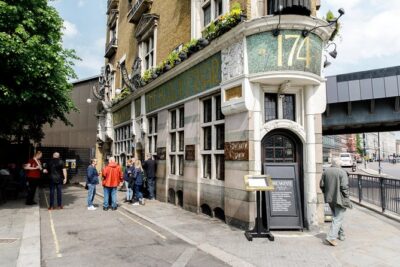


Shadows of York: Ghost Walk and Horrible History.
Read our review →
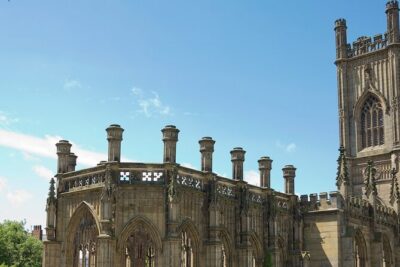
A Walk Through Time: History of Liverpool Walking Tour
Read our review →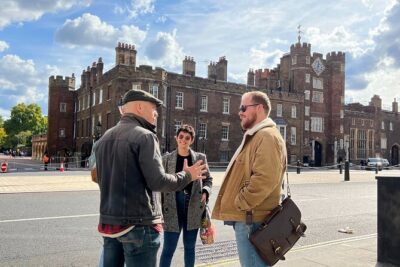
Royal Historic Pubs Walking Guided Tour in London
Read our review →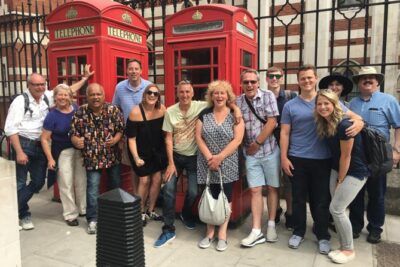
Private Group: Historical Pub Walking Tour of London
Read our review →
Best Of Liverpool Heritage, History & Culture Guided Walking Tour
Read our review →Browse the lists this tour appears in