
Reviewed · HISTORICAL TOURS
A Walk Through Time: History of Liverpool Walking Tour
Liverpool’s story comes into focus on this compact walk from the Royal Liver Building through medieval Liverpool, Georgian commerce, the Old Dock, and the waterfront that made the city famous. You get much more than a quick look at the Three Graces. The route connects buildings and streets to the trade that shaped Liverpool.
I like the clear time travel through the city, and I like that the guide does not skip Liverpool’s difficult past, including its role in the transatlantic slave trade. The main drawback is pace: there is a lot to absorb in 1 hour 50 minutes, and one review found the guide spoke too quickly.
Key points at a glance
- Liverpool in one walk: Cover the Three Graces, medieval relics, Castle Street, Liverpool ONE, the Old Dock, and Royal Albert Dock.
- A strong maritime focus: Learn how cotton, shipping, global trade, and dock building drove Liverpool’s growth.
- Guides with personality: John is noted for his local passion and Scouse humor, while Julio is described as engaging and clear.
- Serious history included: The walk addresses Liverpool’s connection to the transatlantic slave trade, not just its commercial success.
- Good first-day orientation: The route helps you understand why the waterfront and city center look as they do.
- Plan for the weather: Wind off the Mersey can make a cold morning uncomfortable, so wear a warm coat and comfortable shoes.
Why this walk makes Liverpool easier to understand
Liverpool can seem like several cities joined together. You have the grand waterfront, medieval traces, Georgian streets, Victorian docks, and the modern Liverpool ONE shopping district. This tour gives those pieces a sequence.
That sequence is the main reason I would consider booking it early in a Liverpool visit. You start with the city’s famous maritime image, then work backward to its medieval beginnings and forward again through commercial expansion, dock building, and modern redevelopment.
The route is especially useful if you want context before visiting museums or spending time around the docks. Instead of seeing the Royal Albert Dock as a handsome group of old warehouses, you learn how it fitted into a working port. Instead of viewing Castle Street as simply a fine architectural street, you connect it with the old castle and Liverpool’s rise as a center of trade.
The tone appears to be lively rather than dry. John is repeatedly praised for his command of Liverpool’s past, friendly manner, clear explanations, and humor. One local who had lived in Liverpool for more than 50 years still came away with new information. That is a good sign for someone who wants more than a basic introduction.
The overall rating is 4.8 from 911 ratings, and 97 percent of participants recommend the experience. Those figures suggest a dependable tour, though they do not erase two practical concerns: the walk can feel fast, and there have been a small number of very late cancellations.
A few more Liverpool trips to weigh up
- Best Of Liverpool Heritage, History & Culture Guided Walking Tour
★ 5.0 · 539 reviews - History Guided Tour of Liverpool and the Beatles
★ 5.0 · 408 reviews - Liverpool Hidden History and Dead House Evening Walking Tour
★ 5.0 · 200 reviews
Starting beneath the Three Graces
Meet at the Liver Building at Pier Head. The Royal Liver Building is one of Liverpool’s Three Graces, along with the Cunard Building and the Port of Liverpool Building. The first ten minutes are used to introduce the walk and explain the waterfront’s place in the city’s story.
This is a fitting start. You are not simply meeting beside a convenient landmark. You are beginning at the face Liverpool presented to the world as a major port. The setting also gives the guide a natural way to explain how maritime trade, commerce, and civic ambition shaped the waterfront.
Admission to the Royal Liver Building is not included, so this is an exterior history stop rather than a tower visit. If you want to visit the building separately, treat that as an additional plan and cost.
Take a moment before the group leaves to look across the waterfront. The route later returns to the Three Graces for a short final explanation, so the opening and closing views give the walk a useful frame.
Medieval Liverpool at Liverpool Parish Church Gardens
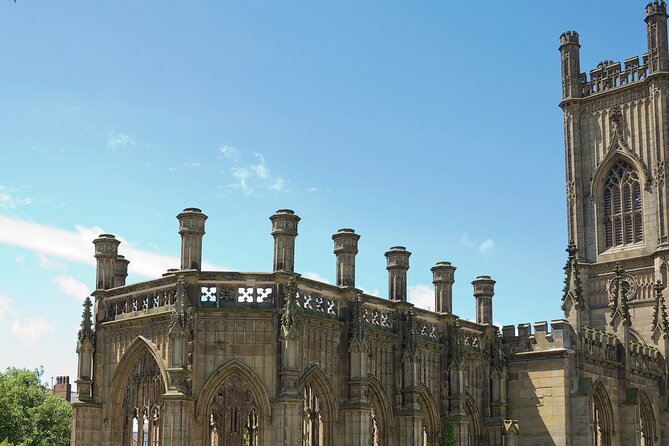
The group crosses the Strand to Liverpool Parish Church Gardens, the site associated with the old St. Nicholas’ Church. The church was named for the patron saint of the sea, a fitting link to Liverpool’s long connection with shipping and the Atlantic.
This is where the tour reaches back to Liverpool’s origins in 1207. The guide points to surviving physical evidence and uses the site to explain the medieval town’s beginnings. For many people, this is the most important corrective to Liverpool’s modern image. The city did not begin with the great docks or the Victorian waterfront.
The stop lasts about 15 minutes and admission is free. The value comes from having a guide explain what you are seeing, since medieval remains can be easy to overlook when surrounded by later buildings and busy streets.
Old Hall Street and Liverpool’s hard-edged commercial past
Old Hall Street takes you into the story of Liverpool’s town government and commercial power. The street dates to the 13th century and was linked to the old town hall after Liverpool received its town charter.
You pass Grade I listed buildings and reach the Cotton Exchange, a place tied to trade from around the world. The guide explains how Liverpool overtook London in the cotton trade by the late 18th century and became a major global port.
This section is not just a parade of handsome facades. It deals with how wealth was made, and with the human cost behind that wealth. Liverpool’s role in Atlantic trade and the transatlantic slave trade is part of the discussion. I value that inclusion. A useful city walk should explain uncomfortable facts as well as celebrate commercial achievement.
The subject can be dense, especially when combined with street noise and a quick speaking style. If you have trouble hearing or processing a fast presentation, stay close to the guide and ask questions when the group pauses.
Same country, a completely different day out:
- Beatles Magical Mystery Tour
★ 5.0 · 9,266 reviews - Liverpool: “Blue Route” – City & Beatles Tour
★ 5.0 · 8,562 reviews - Liverpool City Sights Hop On Hop Off City Tour – 24hr Ticket
★ 4.5 · 2,555 reviews - The LFC Stadium Tour
★ 5.0 · 1,548 reviews
Liverpool Town Hall and the Georgian city
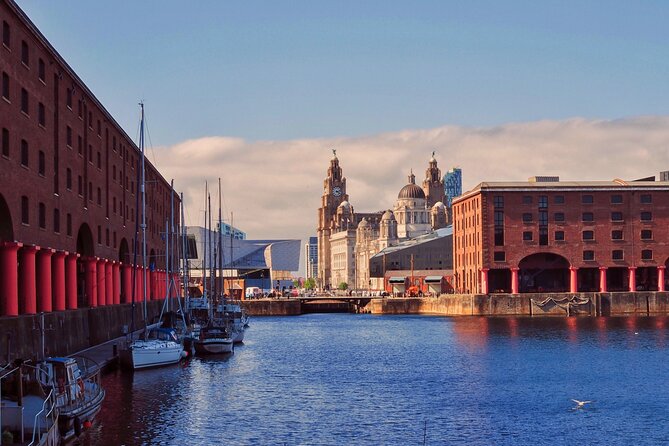
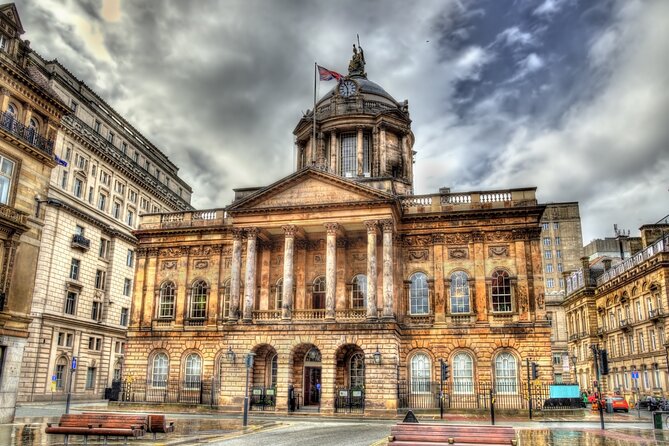
Liverpool Town Hall was built in 1749 and is presented as one of the finest surviving Georgian buildings in the United Kingdom. The stop lasts about ten minutes, with the guide linking its design and civic role to Liverpool’s growth as a port and commercial center.
You do not receive admission to the building as part of the walk, so expect an outside explanation. That is still useful because the town hall represents more than municipal business. Its presence shows how a successful port turned trade profits into civic architecture and public status.
This stop also helps connect Liverpool’s physical appearance with its economic rise. The city’s grand buildings were not random additions. They reflect the confidence of a port that had become important far beyond northwest England.
Castle Street, the old castle, and Queen Victoria Monument
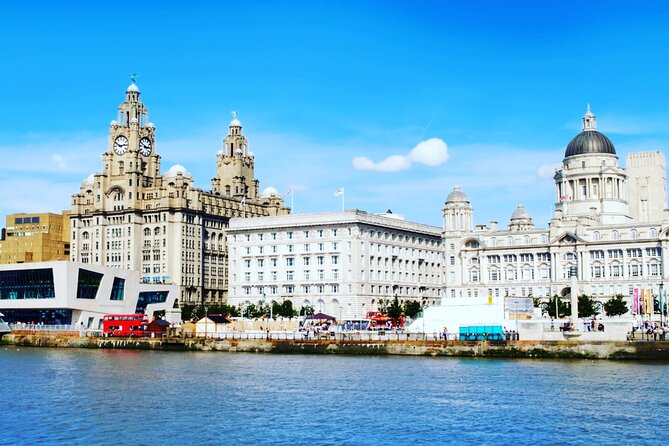
Castle Street provides one of the clearest examples of Liverpool changing over time. The buildings along the street show different stages of the city’s development, while the name recalls Liverpool Castle and the area’s earlier role.
The walk continues to the Queen Victoria Monument, where the guide explains the castle site and Liverpool’s rise toward becoming the world’s largest port for global trade by 1800. This section gives the tour a strong sense of scale. You are standing in a central city area, yet the story reaches across oceans and into the growth of international commerce.
The monument is also the stated end point for the booking information, at One Derby Square near the bottom of Castle Street. However, the route description includes later stops at the Old Dock, Royal Albert Dock, and the Three Graces before referring again to the Royal Liver Building as the final destination. Because those details do not line up perfectly, confirm the exact finishing point with the operator when you meet.
Liverpool ONE and the city’s modern reset
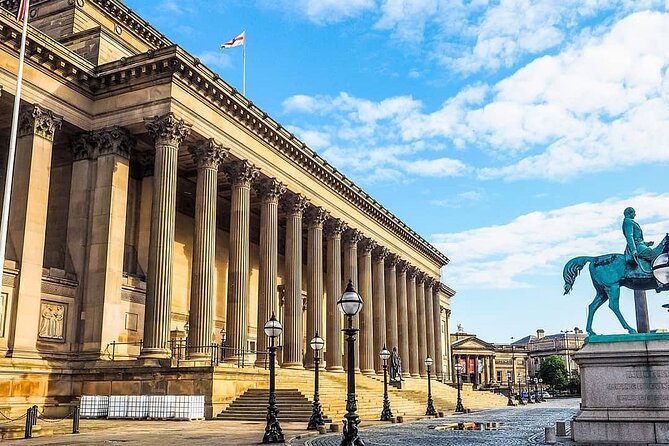
The walk passes through Liverpool ONE, the modern shopping and leisure district. The guide provides an introduction to its shops and attractions, giving you a look at a very different part of the city.
This ten-minute stop may feel less historic than the others, but it serves a purpose. Liverpool’s story did not end when the old port declined. The city has had to reshape parts of its center for new uses, and Liverpool ONE represents that modern chapter.
Do not expect a shopping tour with detailed store-by-store information. Think of this as a quick orientation to the district and its role in present-day Liverpool. If you plan to shop later, you will know where the area fits in relation to the older waterfront and Castle Street.
The Old Dock, a turning point in port history
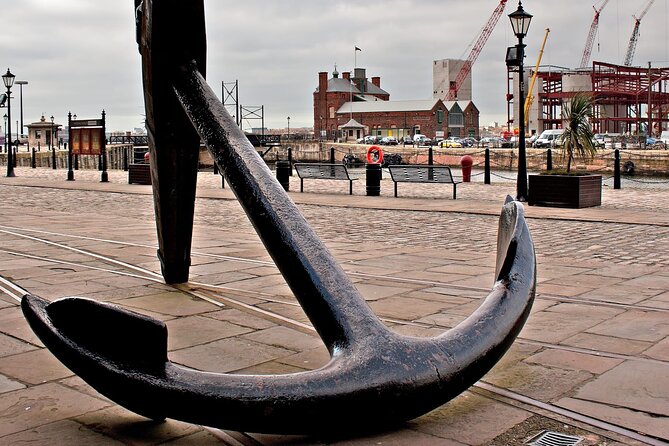
The Old Dock is one of the most valuable stops on the route. Built in 1715, it was the first commercial wet dock on the planet. The guide explains how this dock helped Liverpool handle ships and cargo more effectively and supported the city’s rise as a major port.
This is the point where Liverpool’s maritime development becomes concrete. A port is not made powerful by ships alone. It needs places to load, unload, shelter, store, and move goods. The Old Dock helped create that system.
The stop lasts roughly ten minutes and admission is free. Since the physical remains may not look as grand as the later dock warehouses, the guide’s explanation matters greatly here. Pay attention to the connection between engineering, trade, and urban growth.
Royal Albert Dock and the 19th-century waterfront
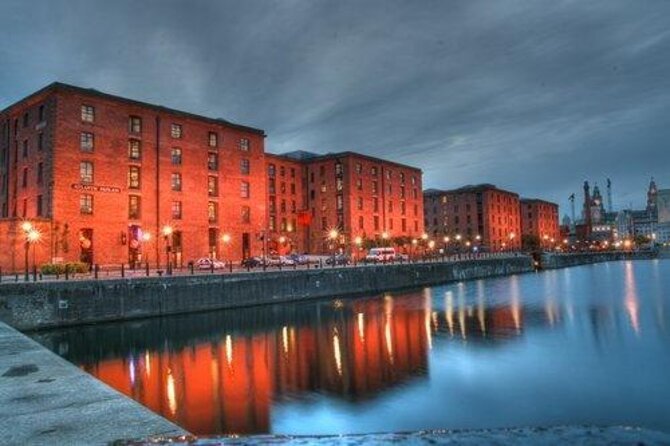
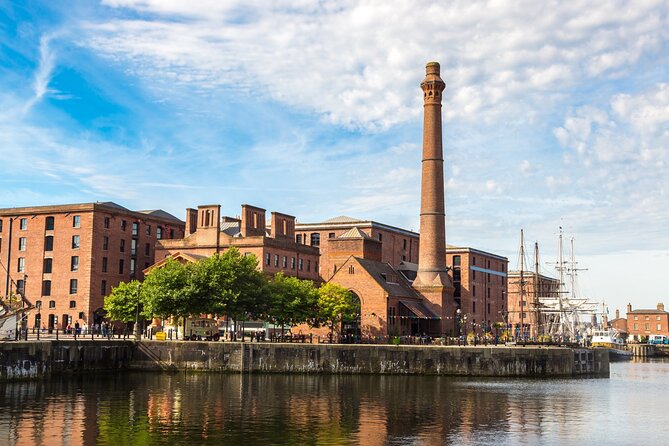
Royal Albert Dock shifts the story into the 1800s. Built in 1846, it became a major center of Liverpool’s commerce in the 19th century. The guide explains how the dock fitted into the city’s working waterfront and also covers Liverpool’s important involvement in the First and Second World Wars.
This is likely the most visually rewarding part of the walk. The dock’s buildings and open water give you a strong sense of Liverpool’s maritime character, while the historical explanation turns the setting into more than a photo stop.
The wartime material adds another layer. Liverpool’s port was important not only for trade but also for military supply and national transport. That makes the dock relevant to 20th-century history as well as the city’s commercial past.
The walk spends about ten minutes here. That is enough for a focused introduction, but not enough for a full museum visit. If you want a longer look at the dock’s museums, galleries, or other attractions, schedule them separately.
Ending with the Three Graces
The final planned explanation returns to the Three Graces and Liverpool’s waterfront. The last five minutes pull together the themes introduced at the start: civic ambition, international trade, shipping, and the city’s changing relationship with the Mersey.
A short ending works well after a route packed with facts. It gives you one last chance to place the waterfront in the wider story. The route also finishes near central sights and public transport, according to the meeting information, though the stated end points should be checked because the route description gives two different locations.
What the guide experience is like
The guide is the heart of this tour. John is the name most often associated with the walk, and his approach is energetic, detailed, and personal. He is described as passionate about Liverpool, able to answer questions, and willing to help people make the most of their time in the city.
John’s style seems to suit people who enjoy a full historical explanation rather than a quick list of dates. The material covers medieval Liverpool, civic buildings, cotton, maritime trade, slavery, docks, war, and modern redevelopment. That is a lot for less than two hours.
Julio is also praised for being engaging and clear, with one person especially appreciating the smaller group. The maximum group size is 40, so the actual feel may vary by date. A smaller group should make it easier to ask questions and stay close to the guide.
The main style warning is speed. One person found the information excellent but the delivery too fast. If you want a slower, more relaxed walk with long pauses for photos, this may not be the best match. If you like a packed talk and can stay focused, the pace may feel efficient.
Price, timing, and practical value
At $27.74 per person, this is reasonably priced for a guided city introduction lasting about 1 hour 50 minutes. You are paying for a historian-led explanation across ten stops, not for admissions or transport.
The value is strongest if you are new to Liverpool or want a framework for the rest of your stay. The walk covers enough ground to show how the medieval town, Georgian center, commercial streets, shopping district, and docks connect. You can then decide which places deserve a longer visit.
It is also a useful choice for people who want Liverpool beyond the Beatles. Music may be central to the city’s identity, but this walk focuses on the port, commerce, shipping, and international links that came first.
The activity is offered in English and uses a mobile ticket. Most people can participate, and service animals are allowed. It runs outdoors, and the experience requires good weather. Wind from the river can be unpleasant even when the forecast looks manageable, so bring a warm jacket and shoes suited to nearly two hours on foot.
The tour is often booked about 19 days ahead. That does not prove every date sells out, but it is sensible to reserve ahead if your Liverpool schedule is fixed.
Free cancellation is available up to 24 hours before the start time. If you cancel inside that window, you do not receive a refund. In the rare event of a weather cancellation, you are offered another date or a full refund.
There have been a few very late cancellations, including cancellations shortly before the start when people had already reached the meeting point. Full refunds and alternative dates were offered, but that does not replace lost time or the chance to find another tour. I would avoid booking this as the only activity tied to a tight same-day connection.
Who should book this Liverpool walk?
I would choose this tour if you want:
- A first look at Liverpool’s major central landmarks
- A clear explanation of the city’s port and commercial rise
- Medieval, Georgian, Victorian, wartime, and modern history in one outing
- A guide who can answer questions and add local stories
- An affordable orientation before exploring museums and docks on your own
I would think twice if you need a slow pace, extensive time inside buildings, or a tour focused mainly on music. The walk is heavy on commerce and maritime history, and the amount of information can be demanding.
It also suits repeat visitors surprisingly well. Liverpool locals have found the historical connections new, especially around the docks and the city’s global role. You do not need to be a history expert, but you should enjoy listening.
Should you book it?
Book this walk if you want to understand why Liverpool looks the way it does. For $27.74, you get a brisk, fact-filled route linking the waterfront, medieval city, trade streets, Old Dock, Royal Albert Dock, and modern Liverpool ONE.
My practical advice is to take it near the start of your stay, wear warm clothing, stay close enough to hear every word, and allow time afterward for any building or museum you want to enter. Confirm the finishing point because the supplied route details name both the Queen Victoria Monument and the Royal Liver Building.
If the forecast is wet or very windy, consider the weather policy and keep a backup plan. Otherwise, this is a strong-value choice for a grounded introduction to Liverpool’s past, including the parts that are impressive, complicated, and uncomfortable.
FAQ
How long does the History of Liverpool Walking Tour last?
The tour lasts approximately 1 hour 50 minutes.
Where does the tour begin?
The meeting point is the Liver Building at Pier Head, Liverpool L3 1HU.
Where does the tour end?
The booking information gives the Queen Victoria Monument at One Derby Square as the end point. The route description also refers to a final stop at the Royal Liver Building, so confirm the exact ending location with the operator.
What language is the tour offered in?
The tour is offered in English.
Are admission tickets included?
Admission is not included for the Royal Liver Building or Liverpool Town Hall. The other listed stops have free admission.
Can I cancel for a full refund?
Yes. You must cancel at least 24 hours before the experience start time for a full refund. Cancellations or changes made less than 24 hours before the start are not accepted for a refund.
Just added around Liverpool
- Half Day Welcome to Liverpool Walking Tour★ 5.0 · 17 reviews
- Fun, Flexible Treasure Hunt Around Liverpool with Cryptic Clues & Hidden Gems★ 5.0 · 141 reviews
- The Story of Liverpool 2-Hour Walking Tour★ 5.0 · 3 reviews
- LIVERPOOL: Yorkshire Adventure – Sightseeing Day Trip Tour★ 5.0 · 13 reviews
- Ultimate Ticket To Ride Beatles Half-Day Shore Excursion- Private★ 5.0 · 6 reviews
- Beatles Ticket To Ride Half Day Tour Small Groups★ 5.0 · 60 reviews
- Small-Group: Experience Local Food Tour in Liverpool★ 5.0 · 32 reviews
- Lake District from Liverpool including Lake Cruise★ 4.5 · 49 reviews
Historical Tours, compared.


Shadows of York: Ghost Walk and Horrible History.
Read our review →
Royal Historic Pubs Walking Guided Tour in London
Read our review →
Private Group: Historical Pub Walking Tour of London
Read our review →
Best Of Liverpool Heritage, History & Culture Guided Walking Tour
Read our review →
Browse the lists this tour appears in