
Reviewed · WALKING TOURS
The Story of Liverpool 2-Hour Walking Tour
Liverpool’s story comes into sharp focus at the Memorial to the Marine Engine Room Heroes of the Titanic, where you learn that every engineer aboard the ship died. From there, this walk connects Liverpool’s grand buildings with the less comfortable facts behind its wealth, including the slave trade and the goods produced by enslaved people.
I like the easy pace and the range of subjects covered in only two hours. I also like that the guide points out details you could walk past, such as the unofficial Confederate Embassy, the White Star Line balcony, and the glass window revealing Liverpool’s Old Dock.
The main drawback is the amount of ground covered. You receive a lively introduction rather than a full study of Liverpool, and the tour needs good weather. Bring a rain jacket. One booking endured pouring rain, yet the walk was still described as easy and well paced.
Key points to know before you book
- Titanic connections beyond the famous ship: Begin with the engineers’ memorial and finish near the former White Star Line headquarters.
- Liverpool’s wealth gets an honest explanation: The route addresses slave trading, plantation goods, and the merchants who funded the city’s grand buildings.
- Twelve central stops in about two hours: Expect a steady walk through the waterfront and city center, with free admission at the listed sites.
- Small group size: The tour has a maximum of 12 people, which gives the guide room to answer questions.
- A useful first look at Liverpool: The guide can suggest places to visit after the walk, including the Maritime Museum and International Slavery Museum.
- Simple point-to-point route: Start at the Titanic engineers’ memorial and finish at Thomas Steers Way, beside Liverpool’s L1 shopping complex.
Why this two-hour walk works as a Liverpool introduction
Liverpool can feel scattered when you first arrive. The waterfront, Town Hall, commercial streets, docks, and shopping center are close enough to reach on foot, but their connections are not always clear from a map.
This tour gives you that framework. You begin near the Pier Head, move through the old commercial center, return to the waterfront, and then follow the dock system toward Albert Dock and the Old Dock. You are not simply ticking off buildings. You are learning how shipping, finance, war, migration, slavery, and engineering shaped the city.
The route is also a useful choice if you have only a short stay. You see several of Liverpool’s key buildings without spending time inside attractions. That saves your museum visits for later, when you know which subjects interest you most.
The guide speaks English, and the service is led by a professional guide. Wendy is named in the available feedback as a particularly accommodating guide, though the specific guide for your date may differ. The group limit of 12 is a real advantage here. A small walking group can pause without blocking the pavement, and you have a better chance to ask about a building or story that catches your attention.
A few more Liverpool trips to weigh up
- A Walk Through Time: History of Liverpool Walking Tour
★ 5.0 · 911 reviews - Liverpool Ghost Walking Tour
★ 5.0 · 862 reviews - Beatles Famous Walking Tour Of Liverpool- Fully Guided
★ 5.0 · 751 reviews
The Titanic engineers’ memorial sets the tone
The opening stop is the Memorial to the Marine Engine Room Heroes of the Titanic on St Nicholas Place. It is a fitting place to begin because it moves the Titanic story away from film and celebrity and toward the people who kept the ship operating.
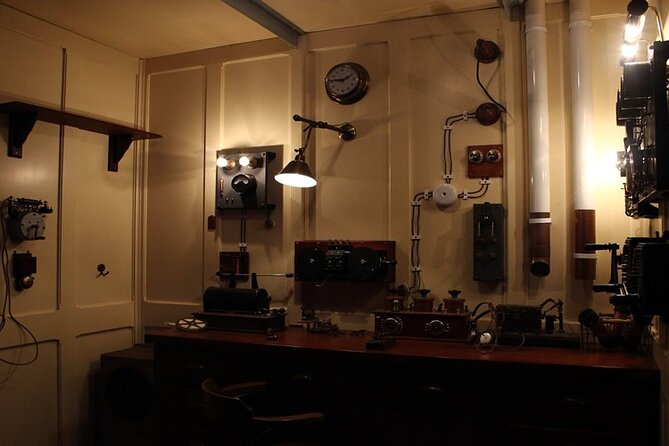
When the Titanic sank, its engines and electrical systems mattered. Power kept the wireless working until ten minutes before the ship went down, while the lights failed only two minutes before the end. None of the engineers survived.
You spend about five minutes here, so this is not a long memorial visit. The value comes from the context. It gives you a human starting point and shows how Liverpool’s identity is tied to the sea, shipping companies, and the people who worked below deck as well as those who owned the ships.
You should expect short stops rather than extended visits at each location. That keeps the walk moving, but you may want to return to the memorial later if Titanic history is a main reason for visiting Liverpool.
St Nicholas Church reveals an older Liverpool
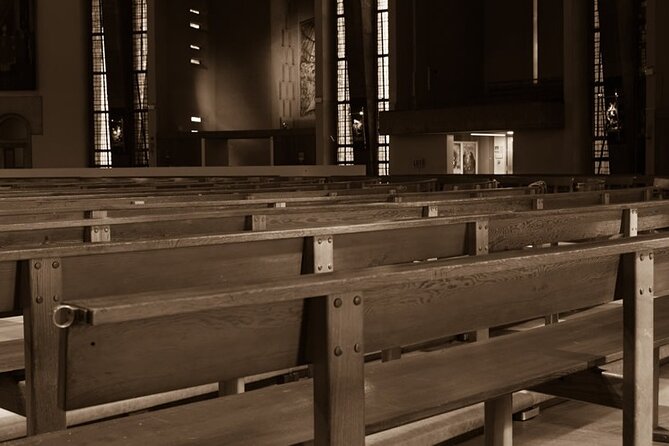
The Church of Our Lady and St Nicholas sits near the Pier Head and is one of the city’s oldest buildings. The church once stood beside water that reached its steps at high tide, before land reclamation created George’s Dock.
That detail helps you picture how much Liverpool has changed. The modern waterfront is not the original shoreline. Docks, roads, and reclaimed land altered the relationship between the city and the River Mersey.
The church also brings up Liverpool’s connection to slavery. Slave traders worshiped there, and some are buried in the church, including Bryan Blundell. This is an important part of the tour’s approach. You see impressive old buildings, but you also hear how the money and people connected to them fit into a wider Atlantic trade.
The stop lasts about ten minutes. You will learn about the church and its links to Liverpool’s merchant past, but the tour does not present it as a separate church visit with a long interior inspection.
Tithebarn Street and the Confederate connection
At Tithebarn Street, the story shifts from shipping to international politics and finance. During the American Civil War, Britain officially remained neutral, but many Liverpool merchants supported the Confederacy.
You learn about the unofficial Confederate Embassy and the company that acted as an unofficial banker for the Confederate states. It is an unusual subject, and it shows how Liverpool’s commercial relationships stretched far beyond Britain.
This is the kind of detail that makes a city walk useful. You might pass the street without knowing its connection to the American Civil War. The guide adds a layer of political and financial history that standard sightseeing routes often skip.
The stop is brief, about ten minutes. If you have a strong interest in the Civil War, treat this as an introduction and ask the guide for suggestions on where to learn more.
Same country, a completely different day out:
- Beatles Magical Mystery Tour
★ 5.0 · 9,266 reviews - Liverpool: “Blue Route” – City & Beatles Tour
★ 5.0 · 8,562 reviews - Liverpool City Sights Hop On Hop Off City Tour – 24hr Ticket
★ 4.5 · 2,555 reviews - The LFC Stadium Tour
★ 5.0 · 1,548 reviews
Liverpool Town Hall puts merchant wealth on display
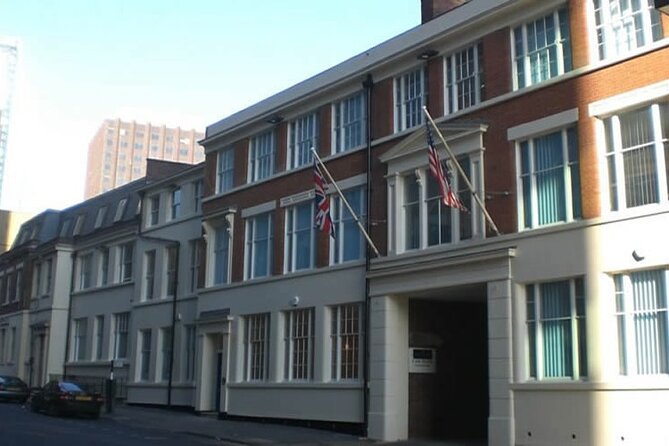
Liverpool Town Hall is one of the route’s architectural highlights. The building was funded by wealthy merchants, and its design and interior decoration were made to show power and success.
Look closely at the carvings around the frieze. They depict elements of the trade that made Liverpool wealthy, including elephants, camels, African people, ivory, plants, and animals. These are not random decorative choices. They point to the global trade network behind the city’s fortunes.
The guide’s explanation is especially useful here because a quick photograph of the Town Hall tells you little about why it looks the way it does. You get a connection between decoration and commerce, including the role of enslaved labor and colonial goods.
You spend around ten minutes at this stop. The Town Hall is worth revisiting later if you want more time with the architecture. On this walk, the emphasis is on reading the building as evidence of Liverpool’s economic past.
The Royal Liver Building and the Three Graces
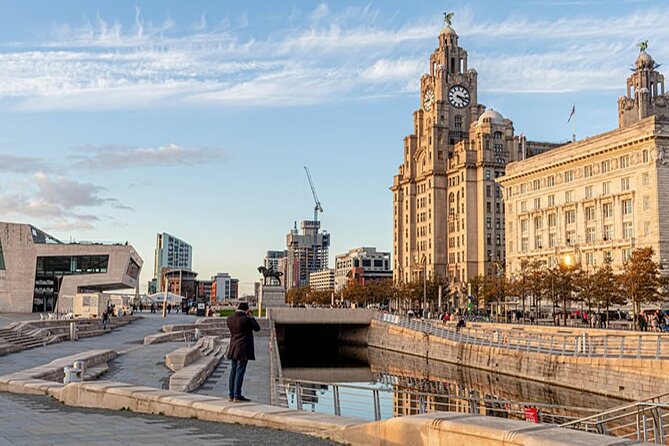
The Royal Liver Building is Liverpool’s best-known landmark and the central architectural moment of the tour. You learn how it was built and what stood on the site before it was constructed.
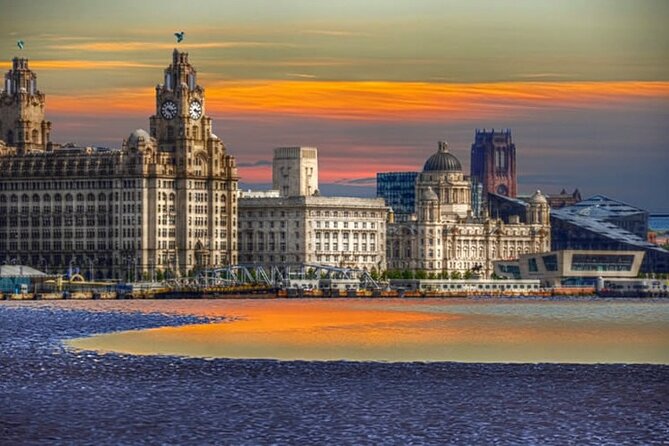
The building forms part of the Three Graces at the Pier Head, along with the Cunard Building and the Port of Liverpool Building, also called the Mersey Docks and Harbour Board building. The route later brings all three into view from the waterfront.
The Royal Liver Building works well in a walking tour because its importance is not only visual. It represents the city’s shipping and commercial identity, while its position beside the Mersey links it to the river that made Liverpool prosperous.
You have about ten minutes here. The tour does not include a stated interior visit or ticketed entry, so think of this as an architectural and historical stop from outside.
Albion House brings the Titanic story back
As you return toward the waterfront, you see Albion House, once the headquarters of the White Star Line. The building gives the Titanic story a Liverpool address.
The guide points out the balcony where White Star Line staff read the names of those who died in the sinking. If you have seen the film Titanic, the location may feel familiar, but the real value is seeing where the company handled the disaster’s human consequences.
This stop lasts about five minutes. It is short, yet it ties together several threads from the tour: Liverpool’s shipping companies, the people who worked for them, and the city’s connection to the Titanic.
Pier Head explains the engineering behind the riverfront
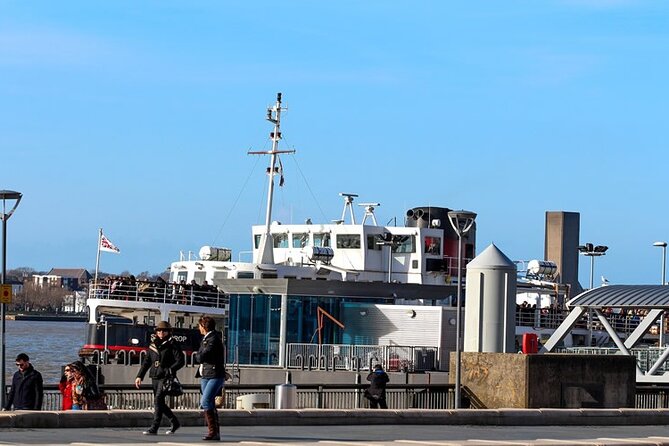
Back at the Pier Head, the guide discusses the Mersey Tunnel, an impressive engineering project that links Liverpool with the Wirral beneath the river. You then see the remaining two buildings of the Three Graces.
The Pier Head is a good place to pause because it brings the city’s public face into one view. The Royal Liver Building, Cunard Building, and Mersey Docks and Harbour Building show different parts of Liverpool’s commercial age, while the river and tunnel point to the practical engineering needed to keep the region connected.
This section takes about 15 minutes. It is one of the best photo opportunities on the walk, but the guide’s explanation gives the waterfront more meaning than a quick stop for pictures would.
Albert Dock connects trade, war, and museums
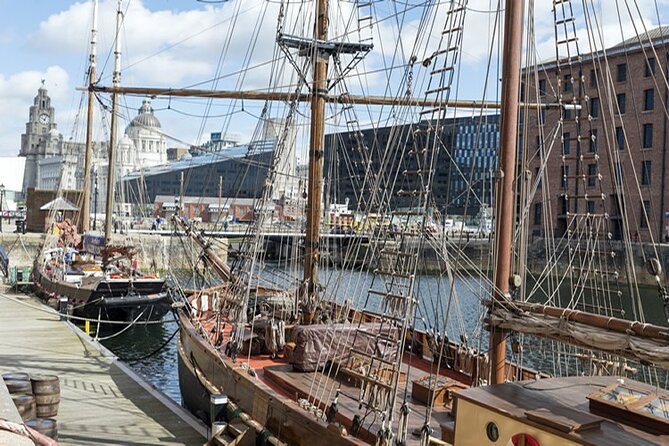
The walk continues through Albert Dock, where the guide explains how the dock was designed and built and how it was used during the Second World War.
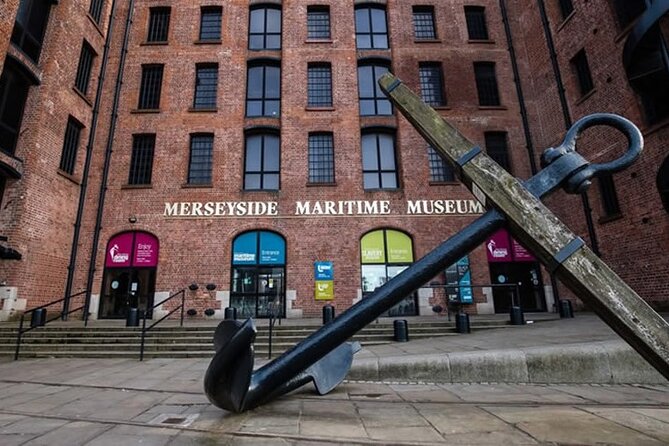
Albert Dock is also where you can plan the rest of your day. The guide points out the Tate Gallery, the Maritime Museum, and the International Slavery Museum. You do not need to decide in advance which one to visit, but the walking tour helps you choose based on the subjects that interest you.
The Maritime Museum fits naturally after the Titanic and shipping stories. The International Slavery Museum adds more context to the trade and merchant wealth discussed earlier. The Tate offers a change of pace if you want art rather than more maritime history.
You spend around 15 minutes in the dock area. That is enough to understand its role, but not enough for a proper museum visit. I would save at least part of another day for the museum or return after the tour.
Salthouse Dock and the less comfortable dockside past
At Salthouse Dock and Canning Dock, the guide points out stones from Liverpool Castle that were used in construction. You also see the Graving Docks, where slave ships were refurbished after their transatlantic voyages.
That last detail is difficult, and it should be. The ships were repaired and prepared to begin the trading cycle again, connecting Liverpool’s dock facilities directly to the machinery of the slave trade.
This is one of the most valuable parts of the route because it avoids presenting the waterfront as only a collection of handsome buildings and restored docks. You are shown both the engineering and the human cost tied to them.
The stop takes about ten minutes. The tour cannot cover every part of Liverpool’s slavery history in that time, but it gives you clear places and facts to follow up at the International Slavery Museum.
Thomas Steers Way reveals the Old Dock
The final stop is Thomas Steers Way, near Liverpool’s L1 shopping complex. In the pavement, you can see the outline of the Old Dock, and a glass viewing window lets you look at part of the original dock below ground.
This is a clever ending. The Old Dock helps explain how Liverpool developed into a major port, while the modern shopping complex shows how the city has reused and rebuilt its central areas.
The route ends here rather than returning to the starting point. That is helpful if you plan to shop, continue into the city center, or visit a museum. It also means you should be comfortable finding your way from L1 afterward.
The guide can recommend places for the rest of your time in Liverpool. That is useful on a first visit because you finish with a working map of the city rather than simply being dropped back at the start.
What the pace, price, and group size mean
The listed price is $40.22 per person. For a two-hour walk, that is not the cheapest way to see Liverpool’s streets, but the value depends on how much context you want.
You are paying for a professional guide, a compact route, and access to stories that are easy to miss on your own. The walk covers Titanic history, the slave trade, the American Civil War, banking, engineering, architecture, and the docks. If you would otherwise spend your first day piecing those subjects together from guidebooks, the price can make sense.
The tour has a maximum of 12 people. That is small enough to keep the guide’s voice within reach and to make questions practical. It is also worth noting that all listed stops have free admission, so there are no extra entry fees built into the walk.
Most people can take part, service animals are allowed, and the route is near public transportation. You should still expect a two-hour walk outdoors. Wear shoes suited to city pavements and bring protection from rain.
This experience is booked an average of 34 days ahead, so reserve early if your Liverpool dates are fixed. Free cancellation is available until 24 hours before the start time. Poor weather or failure to meet the minimum group size can lead to a new date or a full refund.
Who should book this Liverpool walking tour
I would choose this tour if you are visiting Liverpool for the first time, have limited time, or want a clear starting point before visiting museums. It is also a good fit if you prefer social and economic history alongside famous buildings.
The walk suits you especially well if you want to understand why Liverpool looks the way it does. The guide links grand architecture to trade, slavery, shipping, and finance instead of treating the waterfront as a pretty backdrop.
You may want something else if you prefer long interior visits, a single subject such as music or the Beatles, or a very slow photography walk. The tour covers a lot in two hours, so each stop is fairly short.
Rain is another real consideration. The experience requires good weather, and one reported outing included heavy rain. Liverpool weather can change quickly, so a waterproof layer is a sensible part of your plan.
Should you book The Story of Liverpool?
Book it if you want an efficient first look at the city with an honest account of both its achievements and its darker past. The easy pace, small group limit, and route through the Royal Liver Building, Albert Dock, Titanic sites, and Old Dock give you strong orientation in a short time.
I would treat it as an opening chapter, not the whole Liverpool story. Use the final recommendations to choose a museum or historic site for later, and allow extra time if a particular subject catches your attention. At $40.22, the tour is good value for that kind of guided introduction, especially on a first visit.
FAQ
How long is The Story of Liverpool walking tour?
The tour lasts approximately two hours.
How much does the tour cost?
The listed price is $40.22 per person.
What language is the tour offered in?
The tour is offered in English.
Where does the tour start?
It starts at the Memorial to the Marine Engine Room Heroes of the Titanic, at St Nicholas Place, Canada Boulevard, Liverpool L3 1QW.
Where does the tour end?
It ends at Thomas Steers Way in Liverpool L1, beside the L1 shopping complex with access to Liverpool city center.
How many people can join the tour?
The maximum group size is 12 travelers.
What happens if the weather is poor or I need to cancel?
You can cancel up to 24 hours before the start time for a full refund. If poor weather or an insufficient number of participants causes the tour to be canceled, you will be offered another date or experience, or a full refund.
Just added around Liverpool
- Half Day Welcome to Liverpool Walking Tour★ 5.0 · 17 reviews
- Fun, Flexible Treasure Hunt Around Liverpool with Cryptic Clues & Hidden Gems★ 5.0 · 141 reviews
- LIVERPOOL: Yorkshire Adventure – Sightseeing Day Trip Tour★ 5.0 · 13 reviews
- Ultimate Ticket To Ride Beatles Half-Day Shore Excursion- Private★ 5.0 · 6 reviews
- Beatles Ticket To Ride Half Day Tour Small Groups★ 5.0 · 60 reviews
- Small-Group: Experience Local Food Tour in Liverpool★ 5.0 · 32 reviews
- Lake District from Liverpool including Lake Cruise★ 4.5 · 49 reviews
- The Liverpool Pass®: All top attractions inc. Hop-On Hop-Off Bus Tour | 2-Days★ 4.5 · 11 reviews
Walking Tours, compared.

Oxford University Walking Tour With University Alumni Guide
Read our review →
Tour for Muggles The Ultimate Harry Potter Walking Tour in London
Read our review →
Cambridge University Walking Tour by Alumni™ Kings College Option
Read our review →
Blackbeard to Banksy – The Ultimate Walking Tour of Bristol
Read our review →
Air Raid Shelter + St. Nicholas Market Walking Tour
Read our review →
Walking Tour of Bath with Blue Badge Tourist Guide
Read our review →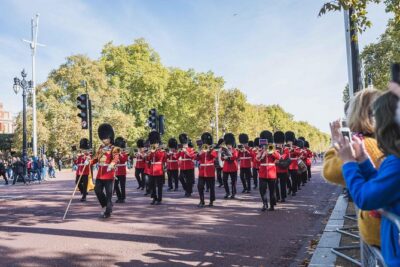
Changing of the Guard Guided Walking Tour in London
Read our review →Browse the lists this tour appears in