
Reviewed · BRITISH MUSEUM TOURS
British Museum Guided Tour
The best thing about this British Museum tour is its focus. Instead of facing thousands of rooms and centuries of objects on your own, you spend about two hours with a guide moving from Egyptian mummies and the Rosetta Stone to Greek, Roman, and other headline pieces. The Great Court’s enormous glass roof gives you a memorable architectural start.
I like the low price, about $18.02 per person, and the way a good guide turns famous objects into a clear story rather than a pile of labels. I also like that the tour ends at the museum, so you can continue exploring after the guided portion.
The catch is serious: the museum entrance is free, but the paid guide service can be hard to locate. Several bookings have gone wrong because the guide was not identifiable or did not arrive. You should treat the meeting instructions as part of the tour, not as a minor detail.
Key points to know before you book
- Two hours of museum highlights: The route is designed to show major pieces without trying to cover the entire British Museum.
- Free museum entry, paid guiding: Your $18.02 pays for the guide and arranged entry, not admission to the museum itself.
- A small group of up to 25: The group can be manageable, though 25 people may make it harder to hear in crowded galleries.
- Guides can make or break the visit: Paul, Joseph, Denise, and Christina have each been praised for clear, engaging explanations.
- Find the guide before the start time: The meeting instructions have caused confusion, and some guides have carried a Universal Tour Guide flag rather than a Viator sign.
- Free cancellation up to 24 hours ahead: Changes or cancellations inside 24 hours are not refunded.
Why a guided visit helps at the British Museum
The British Museum is free to enter, but free does not mean simple. The collection is vast, spread across galleries devoted to different places and eras. Without a plan, you can spend a long time walking, reading labels, and still miss the objects you came to see.
A two-hour guide gives you a useful first pass. You can expect attention on headline pieces from Ancient Egypt, Ancient Greece, and Ancient Rome, along with other major objects in the collection. The exact order can change, and the supplied information does not promise a fixed list of stops, but the Rosetta Stone, Egyptian mummies, and the Parthenon sculptures are among the key sights associated with the route.
That focus suits a first visit. I would not choose this tour if you want to study one period in depth or spend half a day with a single gallery. I would choose it if you want a readable introduction, a sense of the museum’s scale, and a short list of objects to revisit on your own.
There is also a practical benefit. A guide can help you get moving at the beginning, explain where to go, and keep the group on a sensible route. That matters in a museum where the building itself can be as distracting as the displays.
More British Museum Tours in London:
- British Museum London Guided Tour Semi-Private 8ppl Max
★ 5.0 · 984 reviews - The British Museum London – Exclusive Guided Museum Tour
★ 5.0 · 555 reviews - Private Guided Tour of the British Museum – Tickets Included
★ 5.0 · 193 reviews
Meeting at Great Russell Street
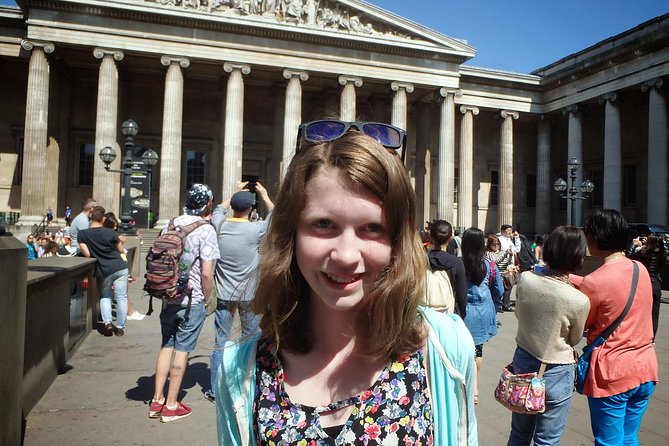
The stated starting point is the British Museum on Great Russell Street, London WC1B 3DG. The activity ends back at the meeting point, and the museum is near public transportation.
Plan to arrive early. The tour starts around the museum opening time on some departures, and security can delay entry. One serious problem reported with this experience is the mismatch between the stated location and the directions given by museum staff. Some people waited on Great Russell Street, were sent toward Montague Street, and then could not find the guide.
The museum has more than one approach, and the main entrance area can be crowded. Your confirmation should be open on your phone before you arrive. Check the exact wording, the start time, the guide’s contact details, and any message sent shortly before departure.
Do not assume a person near the stairs is your guide. Ask for the tour name and confirm the booking details. A few guides have used a flag marked Universal Tour Guide, while some people expected a Viator sign. That difference has caused needless confusion.
This is the one part of the experience where I would be unusually cautious. The museum itself is easy to reach, but the human handoff has not always been clear. If you cannot locate anyone at the appointed time, contact the operator promptly and keep records of your messages.
Entering a free museum with a paid guide
The experience is described as a skip-the-line guided tour, while museum admission itself is free. That distinction matters when you judge the price.
You are paying roughly $18.02 for an English-speaking local guide, a planned route, and help with the entry process. That is modest for a guided London activity, especially if you prefer not to prepare your own museum plan. The value drops sharply if the guide fails to appear, if instructions leave you wandering outside, or if the commentary is too soft to hear.
Security can also complicate the idea of fast entry. The museum may have an entry check, and one person reported spending about 15 minutes getting inside even after arriving at the appointed time. Arrive with enough time for that possibility. A fast-track promise does not mean you can appear at the door at the last second and glide straight through.
Once inside, the free admission policy works in your favor. After the two-hour tour, you can continue looking around without buying a second ticket. This makes the activity a useful introduction rather than a complete museum visit.
The Great Court and the museum’s scale
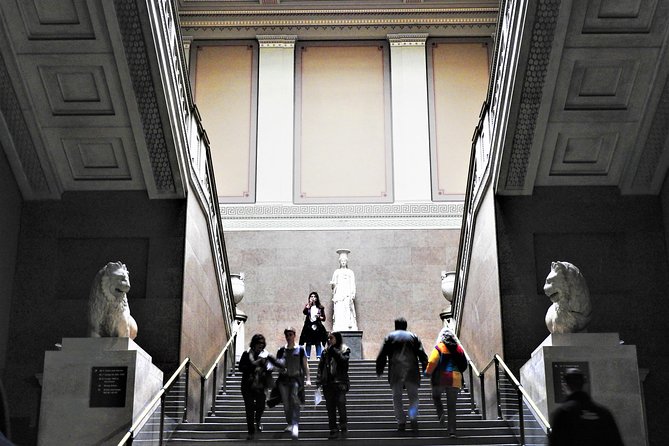
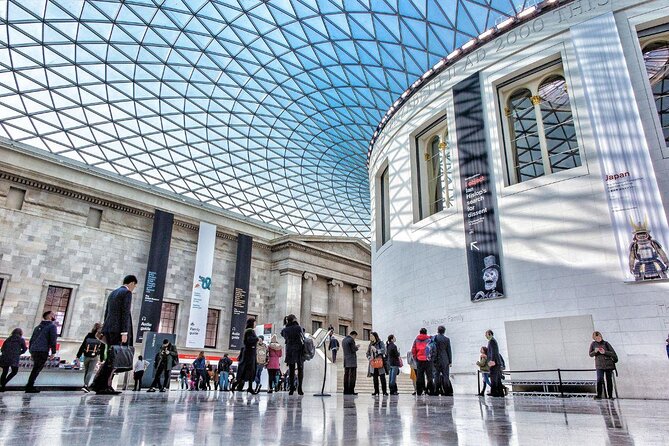
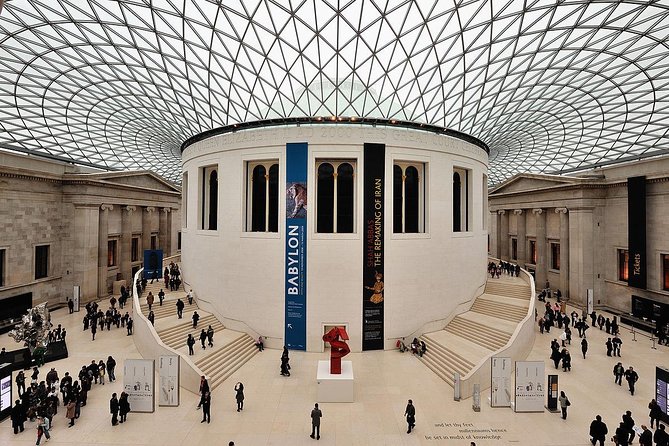
The Great Court is one of the first sights worth noticing. Its glass roof stretches over the central space, turning the interior into an open, bright gathering area. Even if architecture is not your main interest, it helps you understand the museum’s size and layout.
A guide can use this space to orient you before leading the group into the galleries. That is valuable because the British Museum can feel like several museums joined together. The collection reaches across continents and long stretches of time, so a basic map of the building helps.
Do not expect the tour to explain everything. Two hours is enough for an overview, not a full account of the museum. One guide may move briskly through the main objects, while another may spend longer on a smaller number of pieces.
That variation is normal in a guided visit, but it affects your planning. One particularly passionate guide ran well beyond two hours, which made the rest of the day difficult to manage. If you have a timed theater ticket, restaurant reservation, or another tour, leave a generous cushion.
A few more London trips to weigh up
- Tower of London and Crown Jewels Exhibition Ticket
★ 4.5 · 6,677 reviews - Chelsea FC Stadium Tours and Museum
★ 5.0 · 1,908 reviews - Official tickets: Moco Modern & Contemporary Art Museum
★ 4.5 · 1,157 reviews - The Postal Museum Admission Ticket
★ 4.5 · 347 reviews
Egyptian mummies and the Rosetta Stone
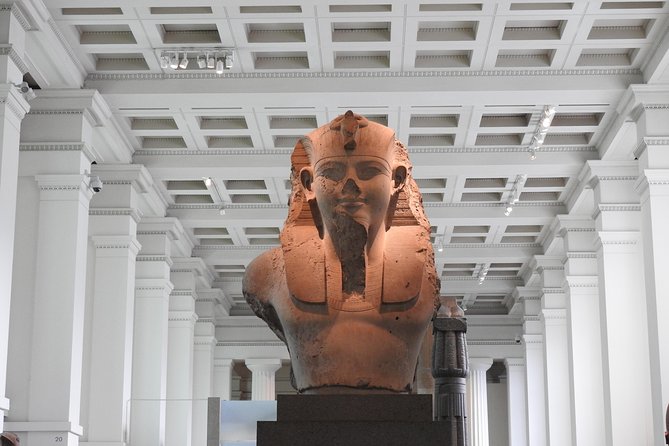
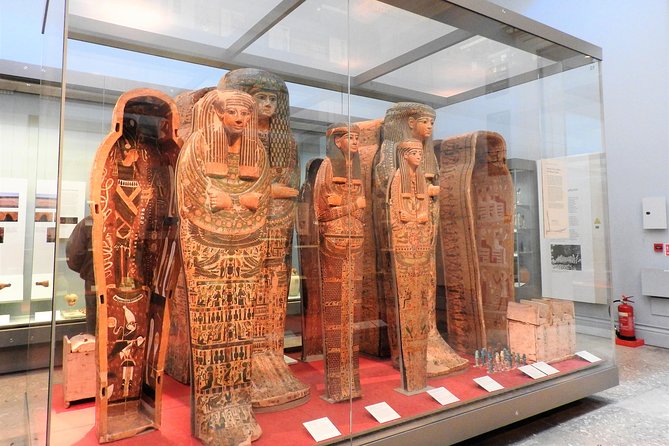
Ancient Egypt is one of the strongest reasons to take a guided route through the museum. Mummies and related objects can seem familiar from photographs, but a guide supplies the links between the objects, their use, and the people who made them.
The Rosetta Stone is another major stop. It is famous for helping scholars read Egyptian hieroglyphs, and seeing it in person gives the museum visit a clear anchor. A good guide should help you understand why the stone matters rather than merely point at it and move on.
The Egyptian galleries can attract large crowds. That makes a clear voice and good group control important. Paul was praised for moving a group through the museum without overwhelming people, and that is exactly the right approach for a short introduction.
Families may find this section especially useful. A well-paced explanation can hold a child’s attention better than a wall of text. One guide kept four children engaged for the full two hours, which suggests that the experience can work well for families when the guide adjusts the language and rhythm.
Greek and Roman antiquities
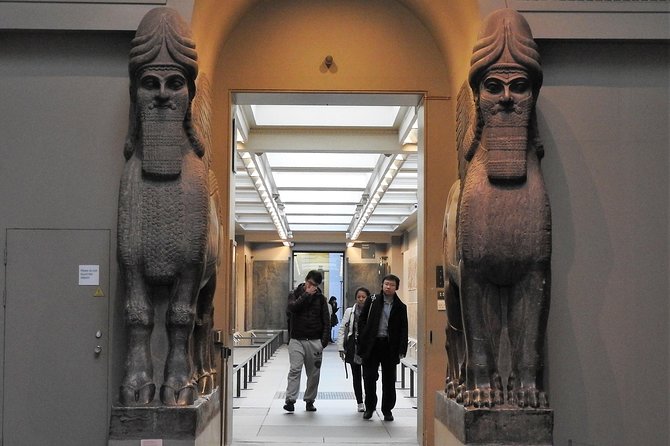
The Greek and Roman galleries add a different mood to the tour. You can expect sculptures, objects, and architectural fragments that show how these cultures shaped later European art and public life.
The Parthenon sculptures are a major draw. The displays offer a chance to look closely at pieces connected with the ancient temple in Athens, while the guide provides the basic setting and meaning. This is also where the museum’s ownership debates may enter the conversation.
That subject is not for everyone. One guide spent a substantial amount of time discussing the fact that some objects are displayed far from their places of origin. I think the issue is important, but a short tour must balance it with the objects themselves. If you mainly want art and archaeology, you may prefer a guide who keeps the discussion focused.
The best commentary gives you both: what you are looking at and why its location is debated. It should not replace the objects with an argument. Ask questions if you want more context, or return to the gallery later if you would rather examine the sculptures quietly.
How the guides shape the experience
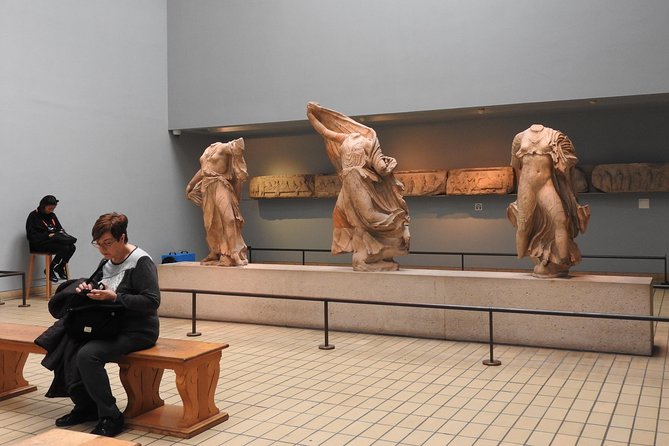
The strongest part of this tour is the guide when the match is right. Joseph was praised for arriving promptly, communicating the location clearly, and bringing strong subject knowledge. Paul was described as engaging, clear, and especially good at choosing the right amount of information.
Denise was praised for her friendly manner and enthusiasm, while Christina handled questions professionally despite being new to the job. These examples point to the kind of experience you want: clear explanations, steady movement, and answers that help rather than overwhelm.
There is a practical weakness in the group format. A guide may be soft-spoken, and background noise from other groups can make details difficult to catch. No listening receivers are listed as included. If you have hearing difficulties, ask before booking if any audio equipment is available, because you should not count on it.
The maximum group size is 25 people. That is not enormous, but it is large enough for the last person in the group to lose sight of the guide in a crowded room. Stay close, especially when moving through doorways or between galleries.
The guide’s subject knowledge also varies. Most positive feedback centers on clear, informed explanations, but one very poor experience involved a guide who seemed to know only the basics and spent too much time on personal artistic ideas. At $18.02, you are not buying a university seminar, but you should receive accurate, useful context about the collection.
Timing the rest of your museum visit
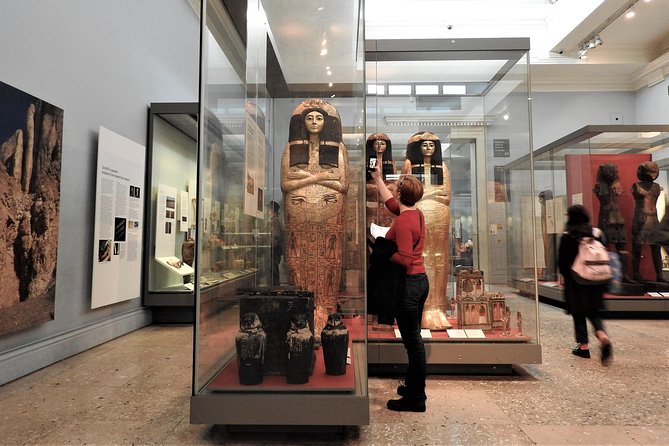
The stated duration is about two hours. Think of that as the guided portion, not the amount of time you need for the museum as a whole.
I like the structure because it gives you a starting point. After the guide leaves, you can return to the Rosetta Stone, spend longer with the Egyptian displays, or explore sections that did not fit the main route. The museum’s free entry means you can extend your visit without another admission charge.
Set aside extra time if the guide runs over. Most people will appreciate a little flexibility, but an additional 20 or 30 minutes can matter in a tightly planned London day. You should avoid placing a nonrefundable booking immediately afterward.
Food and drinks are not included. Hotel pickup and drop-off are not included either, so you make your own way to Great Russell Street and handle your own refreshment plans. That keeps the price low, but it also means this is a museum appointment, not a full-day package.
Who should book this British Museum tour?
This experience fits first-time visitors who want a quick orientation. It is also a sensible choice for families, couples, and solo visitors who prefer a human explanation over planning a museum route from scratch.
You are likely to get the most from it if you:
- Have about two hours for a guided introduction
- Want to see famous objects from Egypt, Greece, and Rome
- Prefer commentary in English
- Want to continue exploring independently afterward
- Are comfortable meeting a guide at the museum rather than using hotel pickup
I would be more cautious if you have a strict schedule, hearing difficulties, or a strong preference for independent museum time. I would also think twice if you are unwilling to spend extra time confirming the meeting location.
The current score is 3.9 out of 5 from 471 ratings. That middle-ground result makes sense. The museum is an exceptional place, and several guides have delivered memorable, well-paced visits. But the uneven meeting arrangements and occasional no-shows are not small flaws.
Final decision: good value with a meeting-point warning
Book this tour if you want a low-cost, guided introduction to the British Museum and can keep your schedule flexible. At $18.02, it can be a good bargain when the guide arrives, communicates clearly, and leads you through the major galleries with purpose.
Do not book it casually. Confirm the start point, arrive early, identify the guide before the tour begins, and keep your phone available for messages. If the operator provides a guide name or identifying flag, use it.
The museum itself is free and worth visiting on its own. The tour earns its price by saving planning time and giving you a coherent route. Its success depends heavily on the guide and the meeting process, so I recommend it for prepared visitors, not for anyone who wants a completely worry-free appointment.
FAQ
How long is the British Museum guided tour?
The tour lasts approximately two hours.
What does the tour price include?
The price includes a local expert guide. Food, drinks, hotel pickup, and hotel drop-off are not included.
Is admission to the British Museum included?
The museum entrance is free. The paid activity covers the guided tour and the arranged entry service.
Where does the tour start?
The stated meeting point is the British Museum, Great Russell Street, London WC1B 3DG, UK.
Where does the tour end?
The activity ends back at the meeting point.
What language is the tour offered in?
The tour is offered in English.
How many people can join the tour?
The maximum group size is 25 people.
Is the tour suitable for most people?
Most people can participate, according to the activity information. The museum is also near public transportation.
Is the ticket mobile?
Yes. The experience uses a mobile ticket.
Can I cancel for a full refund?
Yes, if you cancel at least 24 hours before the experience start time. Cancellations or changes made less than 24 hours before the start time are not refunded.
Just added around London
- Private The Beatles Taxi Tour in London★ 5.0 · 12 reviews
- Dinner and Jazz Cruise on the River Thames★ 4.0 · 140 reviews
- Airport Coach Service from Heathrow to Oxford★ 3.5 · 67 reviews
- The Alfred Hitchcock London Walk with Sandra Shevey★ 5.0 · 15 reviews
- Thames Beachcombing★ 4.5 · 100 reviews
- Tower of London & 30+ London Sights Walking Tour★ 4.5 · 33 reviews
- Ted Lasso London Taxi Tour★ 5.0 · 5 reviews
- Ted Lasso Tour of Richmond with Private Guide★ 5.0 · 25 reviews
British Museum Tours, compared.
British Museum London Guided Tour Semi-Private 8ppl Max
Read our review →
The British Museum London – Exclusive Guided Museum Tour
Read our review →
Private Guided Tour of the British Museum – Tickets Included
Read our review →
British Museum Guided Tour with Priority Timeslots(Small Group)
Read our review →
British Museum & National Gallery of London Semi-Private 8ppl Max
Read our review →
Explore Biblical Artifacts at the British Museum
Read our review →
British Museum Highlights Private Tour in London including the Rosetta Stone
Read our review →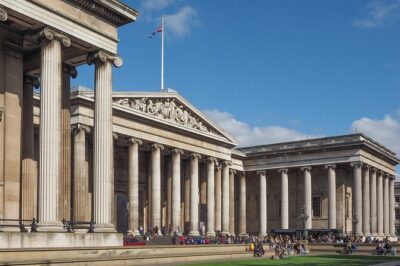
Browse the lists this tour appears in