
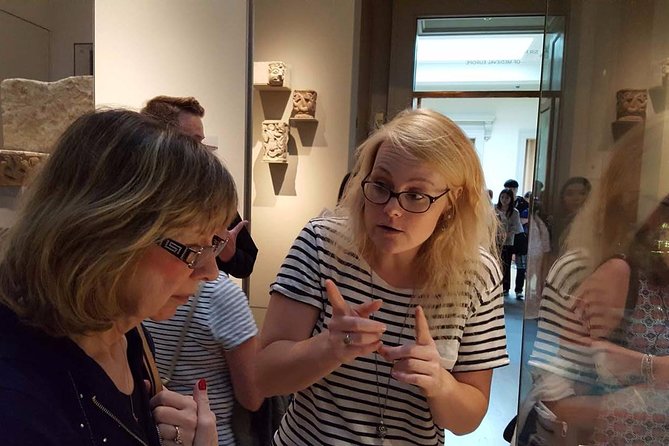
Reviewed · BRITISH MUSEUM TOURS
British Museum London Guided Tour Semi-Private 8ppl Max
The British Museum can feel like a city disguised as a building. In 2.5 hours, this small-group tour cuts through its vast collection and takes you straight to major treasures, from the Rosetta Stone to the Lewis Chessmen and Assyrian lion-hunt reliefs.
I like the group size, which never exceeds eight people, and I like the way the best guides, including Ivo, Jake, James, Laurence, Steph, Guy, and Darcy, mix facts with humor and honest discussion of how objects reached London. The main drawback is that this is a highlights tour, not a slow look at every gallery, and the museum can be crowded.
Key points to know before booking
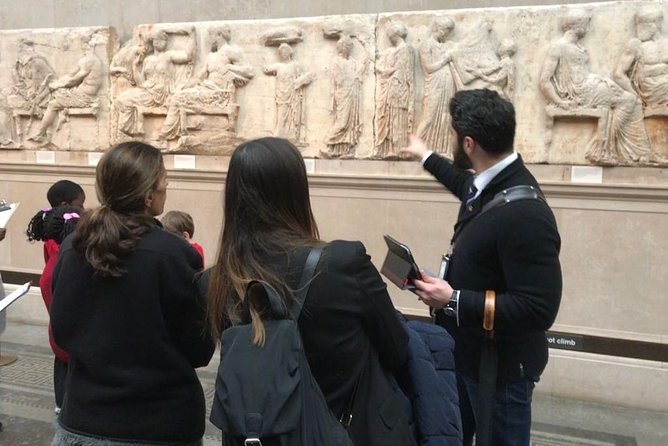
- Eight people maximum: A small group makes it easier to hear your guide, ask questions, and move through crowded rooms.
- Major treasures in limited time: The route can include the Rosetta Stone, Mummy of Katebet, Lewis Chessmen, Parthenon sculptures, and Assyrian reliefs.
- A guide adds the missing story: You get context about an object’s purpose, age, symbolism, and place in world history.
- Several start times: You can fit the tour around other London plans, though you must arrive promptly.
- Free cancellation up to 24 hours ahead: Changes or cancellations inside 24 hours are not refunded.
- Not suitable for wheelchair users: The tour requires a moderate level of fitness and plenty of walking.
Why a small group matters inside the British Museum
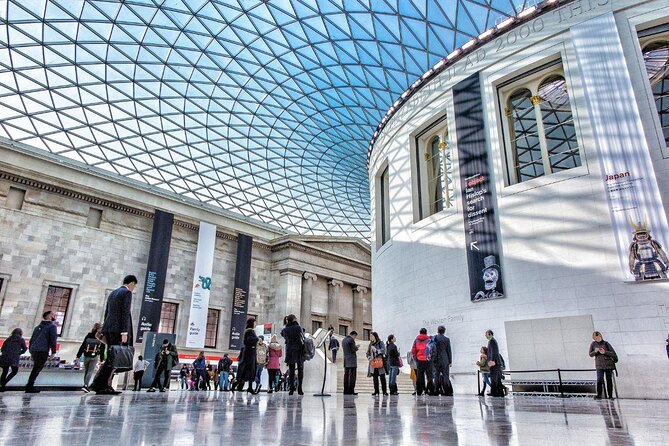
The British Museum holds about eight million objects covering 6,000 years of human history. That scale sounds impressive until you walk through the doors and realize you could spend days seeing only a fraction of it.
A self-guided visit gives you freedom, but it also leaves you to choose among thousands of objects. You may spot the famous pieces, yet miss the small carving, strange ritual object, or political detail that turns a display into a real story.
This tour gives you a route and a human voice. With no more than eight people, you are not standing behind a large flag while the guide speaks to the back row. You can usually hear the explanation, see the object being discussed, and ask about a detail that catches your eye.
The small group also helps when the museum is busy. One guide, Andy, was specifically praised for moving a family through crowded areas while still making sure they saw the points that mattered to them. That is useful at the British Museum, where popular objects can attract a steady knot of people.
A private upgrade is available if you want the guide’s full attention. The semi-private version should suit most visitors, especially couples, families, and small groups of friends who want personal interaction without paying for a fully private outing.
More British Museum Tours in London:
- The British Museum London – Exclusive Guided Museum Tour
★ 5.0 · 555 reviews - British Museum Guided Tour
★ 4.0 · 470 reviews - Private Guided Tour of the British Museum – Tickets Included
★ 5.0 · 193 reviews
Meeting at Great Russell Street
You meet your guide at the British Museum, Great Russell Street, London WC1B 3DG. The tour ends back at the same meeting point, so you are not left trying to find a distant exit or another neighborhood after the final gallery.
The museum is near public transportation. Hotel pickup and drop-off are not included, so plan to reach the museum on your own. A taxi or Uber is suggested, but public transport may also work well depending on where you are staying.
Arrive early. The start time matters, and one practical tip is simple: do not be late. Security checks can take time, particularly when the museum is busy.
Large bags and suitcases are not allowed inside. Bring only a handbag or small, thin backpack. An umbrella is also worth carrying in London, but you may need to manage it before entering the museum.
The first galleries: a fast look at 6,000 years
Your guide begins with an introduction to the museum and its enormous collection. The point is not to list every civilization represented here. It is to give you a useful frame for what follows.
The selected objects span ancient and medieval cultures, showing how people organized religion, government, warfare, trade, and daily life. You might move from Egyptian funerary customs to medieval games, then on to imperial art and ancient writing.
That range is the tour’s great strength. The British Museum is not simply a room full of old things. Each object raises questions about who made it, who used it, what it meant at the time, and how it eventually entered the museum.
Your guide also helps connect objects from different parts of the building. A piece of armor is not just a costume. A relief of a royal hunt is not just a wall decoration. A game piece can reveal how people spent leisure time and what they valued.
The exact selection can vary during the year. Some rooms or collections may be closed, and the museum can occasionally delay opening or close without much warning. If an opening is delayed by more than an hour, an alternative is offered, but refunds or discounts are not provided in those cases.
The Rosetta Stone and the power of one object
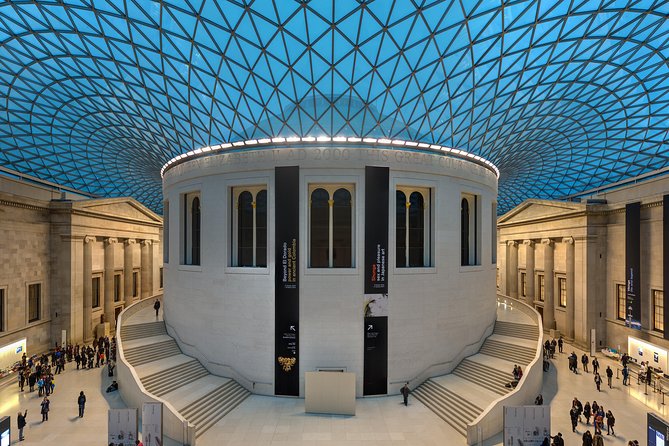
The Rosetta Stone is usually the tour’s essential stop. You will see the actual stone, not the language-learning program with a similar name.
Its importance comes from the same decree being written in three scripts. That allowed scholars to compare the known Greek text with Egyptian scripts and make major progress in reading ancient Egyptian writing.
A guide can turn this into more than a quick photograph. You learn why the stone mattered, how written language carries power, and why one damaged slab became central to the study of ancient Egypt.
The area around the Rosetta Stone can be crowded. This is one place where a small group helps. Your guide can point out the relevant markings and explain the story without requiring you to spend a long time figuring out what you are looking at.
Do not expect an extended academic lecture here. The tour keeps moving, and the guide balances the famous object with other pieces that may be less familiar.
A few more London trips to weigh up
- Tower of London and Crown Jewels Exhibition Ticket
★ 4.5 · 6,677 reviews - Chelsea FC Stadium Tours and Museum
★ 5.0 · 1,908 reviews - Official tickets: Moco Modern & Contemporary Art Museum
★ 4.5 · 1,157 reviews - The Postal Museum Admission Ticket
★ 4.5 · 347 reviews
The Mummy of Katebet and ancient Egyptian belief
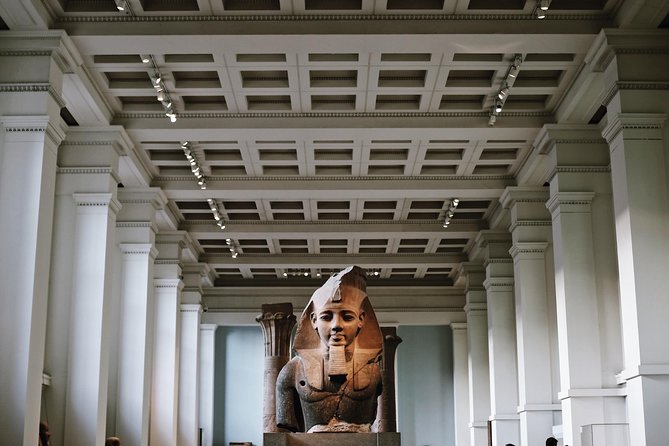
The Mummy of Katebet brings the Egyptian galleries down to a human scale. Instead of focusing only on rulers and monumental buildings, the display opens a window onto the beliefs and customs surrounding an individual woman.
Your guide explains the object’s place in Egyptian funerary practice and gives context for why mummies were prepared in particular ways. The point is not simply that the mummy is old. It is that the object was made for a purpose, tied to ideas about death, identity, and the afterlife.
This kind of stop shows why a guided visit can be worthwhile. Museum labels must be brief. A guide can explain what you are seeing, answer questions, and make connections between the case in front of you and the larger culture that produced it.
The subject may not be suitable for every young child, although the tour is designed for a general audience. Families should also remember that the pace involves standing and walking between galleries.
The Lewis Chessmen: medieval art with personality
The Lewis Chessmen are among the museum’s most appealing displays. These small medieval figures are instantly readable because they look like people, not abstract tokens. Some appear stern, worried, amused, or lost in thought.
The set makes a useful break from monumental sculpture and royal objects. You can look closely at the faces and imagine the game they were made for, while your guide explains what is known about their age, material, and cultural setting.
This is a good family stop. Teenagers who may not be thrilled by long explanations about ancient empires can connect with the chess pieces quickly. One guide, Guy, was praised for keeping teenagers interested through humor and strong storytelling, and this is exactly the sort of display where that approach works well.
The chessmen also remind you that museum collections are not only about grand achievements. Ordinary activities, games, and personal objects can tell just as much about a society as its temples and weapons.
Assyrian lion hunts and the drama of empire
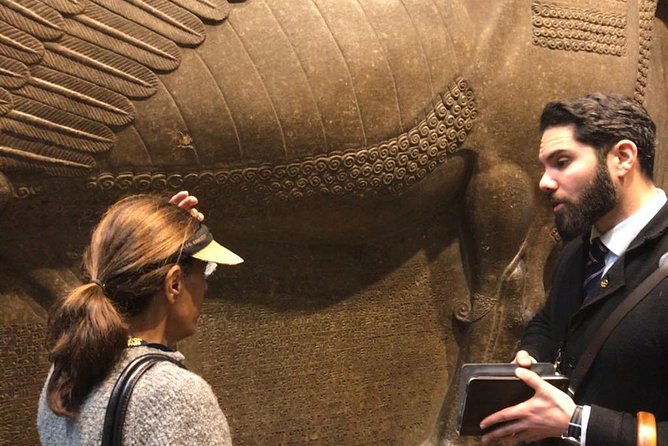
The Assyrian galleries provide some of the tour’s most powerful scenes. The lion-hunt reliefs, dating from the seventh century BC, show royal power through movement, violence, and ceremony.
Look for the way the artist handles the animals and the hunters. The reliefs are not casual snapshots. They present the ruler as brave, controlled, and capable of defeating danger, even when the scene itself is carefully staged.
This section is especially worthwhile because it may not be the first place you head on your own. The famous objects naturally attract attention, but the Assyrian reliefs reward time and explanation.
James’s tour was praised for including both the major sights and less familiar areas such as the Assyrian section. That balance is important. You get the Rosetta Stone and Parthenon sculptures, but you also see objects that give the museum a broader shape.
Parthenon sculptures and difficult museum questions
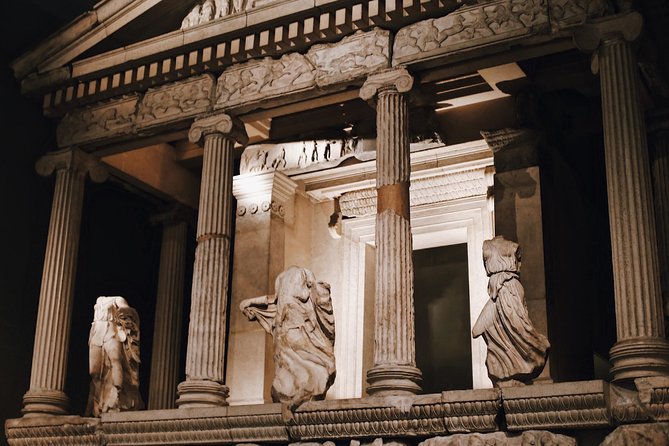
The route can include the Parthenon sculptures, among the museum’s most famous holdings. Their artistic quality is clear, but their presence in London also raises questions about ownership, removal, empire, and cultural responsibility.
A useful guide should not avoid those subjects. Jake was praised for discussing controversial issues and explaining how objects came to be part of the collection. Eleisha was also appreciated for giving direct, thoughtful answers about contested objects and the museum’s handling of material from other countries.
That approach improves the visit. You do not need a simple yes-or-no verdict to appreciate the art. You need enough background to understand why the sculptures matter and why their location remains debated.
The amount of time spent on this topic depends on the guide and the group’s questions. If repatriation and museum ethics are central interests for you, say so at the start. A semi-private tour gives you a better chance of shaping the conversation than a large group visit.
What the guides add to the experience
The guide is the deciding factor in any museum tour. The strongest reports describe guides who combine clear historical explanation with an easy manner.
Ivo is praised for bringing artifacts to life and sharing details that are easy to miss. Jake is noted for his museum knowledge and willingness to address difficult subjects. James is described as friendly, witty, and unusually well informed.
Laurence is a strong choice for visitors who want to cover a lot efficiently. His route is described as a way to see the museum’s best pieces in 2.5 hours without wasting time. Steph is noted for a captivating presentation and for sending follow-up material after the tour.
Darcy is remembered for being both entertaining and informed, while Guy is credited with holding teenagers’ attention. Matilda and Becky are also praised for making the visit lively and memorable.
You cannot choose a particular guide from the information provided, so treat these names as examples of the range of guiding styles rather than a guarantee. The common thread is a guide who answers questions, adapts when possible, and explains why an object matters instead of reciting a label.
What $108.44 buys you
At $108.44 per person, this is not a budget museum visit. The British Museum’s general admission is free, and you can see the building without paying for a tour. The fee here pays for direction, interpretation, and time saved.
I think the price makes the most sense for a first visit, a short London stay, or anyone who feels overwhelmed by huge museums. You can spend two and a half hours seeing a carefully chosen group of major objects rather than wandering until your energy runs out.
The value is also better when you have a full schedule. Several start times let you fit the tour around other plans, and the fixed route reduces the chance that you will spend half your morning searching for the Rosetta Stone.
It is less worthwhile if you already know exactly which galleries you want to study or if you prefer to read every label at your own pace. In that case, use the tour as an introduction, then return independently if time allows.
Group discounts may be available. The private option costs more, but it can be useful for a family with different interests or a small party that wants to control the pace.
Practical limits, walking, and museum rules
The tour lasts about 2 hours and 30 minutes. You should expect a moderate amount of walking and standing, so comfortable shoes are important. Reading glasses may help with labels and small details.
The activity is not available to people using wheelchairs or those with walking disabilities. If mobility is a concern, confirm suitability before booking rather than assuming the small group solves the problem.
Temporary exhibitions are not included. The tour focuses on the permanent collections and selected museum highlights.
Some rooms require quiet or restrict speaking. Your guide will explain these rules before you enter. Security lines can still form, even when a tour is advertised as having priority access, because museum security measures can change.
The museum requires appropriate dress for entry to some sites. Collections and accessible rooms may change during the year, so keep your plans flexible.
Who should book this British Museum tour?
I would choose this tour for a first-time London visitor who wants the main treasures without spending a full day indoors. It also suits families, couples, older children, and small groups who enjoy asking questions.
It is a good match for history fans who want more than dates and names. The best moments come when the guide explains purpose, power, belief, and the complicated path by which objects entered the collection.
I would skip it if you want a quiet, unhurried study visit, or if you already have a detailed personal route. I would also think twice if you cannot comfortably walk and stand for 2.5 hours.
The rating is 5 out of 5 from 984 reviews, with 99 percent recommending the experience. That is a strong record, but the practical details still matter: arrive on time, pack light, and expect crowds around the headline objects.
Should you book it?
Book this British Museum tour if you want a fast, human explanation of a famously overwhelming collection. The small group, flexible start times, and mix of famous and lesser-known objects give you a useful first look without turning the visit into a rushed checklist.
The best reason to pay is the guide’s interpretation. You can see the Rosetta Stone alone, but a good guide helps you understand why it matters, how objects were used, and what difficult questions sit behind the displays. If that sounds more useful than wandering on your own, the price is reasonable for a focused 2.5-hour visit.
FAQ
How long does the British Museum tour last?
The tour lasts approximately 2 hours and 30 minutes.
How many people can join the semi-private tour?
The group has a maximum of eight people. A fully private option is also available.
Where does the tour begin?
The meeting point is the British Museum on Great Russell Street, London WC1B 3DG.
Where does the tour end?
The activity ends back at the British Museum meeting point.
Is admission to the British Museum included?
The tour information lists the admission ticket as free. Temporary exhibitions are not included.
Which objects are included on the tour?
The selected highlights can include the Rosetta Stone, Mummy of Katebet, Lewis Chessmen, Parthenon sculptures, and Assyrian lion-hunt reliefs. Collections may vary during the year.
Is hotel pickup or drop-off included?
No. You must make your own way to and from the British Museum.
Is the tour suitable for wheelchair users?
No. The tour is not available for people using wheelchairs or those with walking disabilities, and a moderate level of physical fitness is required.
Can I cancel for a full refund?
Yes. You can cancel at least 24 hours before the experience start time for a full refund. Cancellations or changes made less than 24 hours before the start time are not accepted or refunded.
Just added around London
- Private The Beatles Taxi Tour in London★ 5.0 · 12 reviews
- Dinner and Jazz Cruise on the River Thames★ 4.0 · 140 reviews
- Airport Coach Service from Heathrow to Oxford★ 3.5 · 67 reviews
- The Alfred Hitchcock London Walk with Sandra Shevey★ 5.0 · 15 reviews
- Thames Beachcombing★ 4.5 · 100 reviews
- Tower of London & 30+ London Sights Walking Tour★ 4.5 · 33 reviews
- Ted Lasso London Taxi Tour★ 5.0 · 5 reviews
- Ted Lasso Tour of Richmond with Private Guide★ 5.0 · 25 reviews
British Museum Tours, compared.
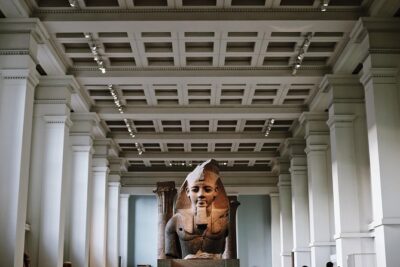
The British Museum London – Exclusive Guided Museum Tour
Read our review →
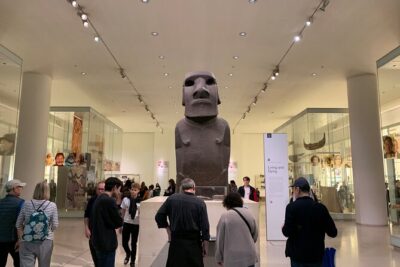
Private Guided Tour of the British Museum – Tickets Included
Read our review →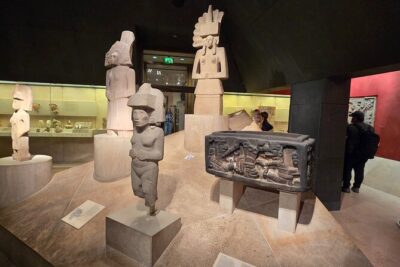
British Museum Guided Tour with Priority Timeslots(Small Group)
Read our review →
British Museum & National Gallery of London Semi-Private 8ppl Max
Read our review →
Explore Biblical Artifacts at the British Museum
Read our review →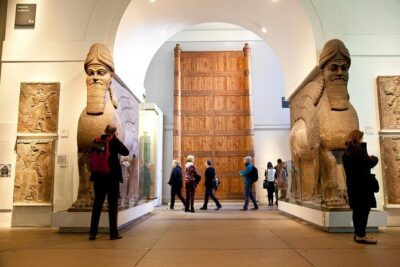
British Museum Highlights Private Tour in London including the Rosetta Stone
Read our review →
Browse the lists this tour appears in