
Reviewed · WALKING TOURS
Bristol Harbourside Self-Guided Walking Tour
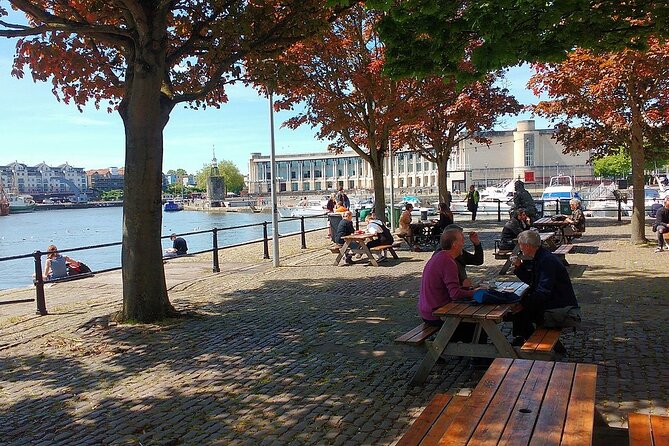
Bristol’s waterfront is a storybook of changing fortunes: medieval trade, Georgian planning, Atlantic commerce, shipbuilding, and today’s cafés and museums. This self-guided walk lets Helen’s human-narrated audio lead you from Millennium Square to the SS Great Britain, with time to pause when something catches your eye.
I like the route’s broad sweep and its mix of free public spaces, old churches, docks, bridges, and museums. I also like the three weeks of app access, which lets you split the walk or repeat parts instead of racing through it. The main caution is navigation: one user found streets hard to identify, access blocked in places, and detours long enough to abandon the walk halfway.
Key points to know before you go
- A human voice guides the route: Helen narrates the tour rather than a computer-generated voice.
- The walk links 14 named stops: You move from Millennium Square and Queen Square to Redcliffe Caves, M Shed, and SS Great Britain.
- The route takes about two to three hours: That estimate does not include long museum visits or extended stops.
- Three weeks of access adds flexibility: You can spread the route across more than one outing.
- Most stops are free to enter: The price is mainly for the audio content, route planning, and app access.
- Navigation needs attention: Use the map, GPS route, and written directions together, especially where streets or access points are unclear.
Bristol Harbour Begins at Millennium Square
The tour starts at Millennium Square, on Canon’s Marsh, where the River Frome once met the Avon. What looks like a modern city setting began as wet ground. The marsh was drained and built over in the early 18th century, a small fact that helps you read Bristol as a city shaped by water, trade, and practical engineering.
Give this stop its full ten minutes. The audio sets up the rest of the walk by showing how the waterfront changed from working dockland to public space. Since admission is free, you can linger without feeling that the clock is running on an expensive ticket.
The nearby Bristol Amphitheatre and Waterfront Square takes only about five minutes. It is a useful reminder that the harbourside is not preserved as a silent museum. Skateboarders use the amphitheatre, one of the places in Bristol where riding is allowed, while other parts of the city use anti-skateboarding design. That contrast adds a modern civic story to the older dockside tales.
A few more Bristol trips to weigh up
- Blackbeard to Banksy – The Ultimate Walking Tour of Bristol
★ 5.0 · 1,961 reviews - Air Raid Shelter + St. Nicholas Market Walking Tour
★ 5.0 · 1,950 reviews - Ghosts, Ghouls & Gallows :The Original Bristol Ghost Walk
★ 5.0 · 262 reviews
Pero’s Bridge Explains Bristol’s Wider Story
Pero’s Bridge opened in 1999 and honors an important local figure in Bristol’s past. The bridge’s horn-shaped sculptures are hard to miss, and Helen’s narration explains both the person and the unusual design.
This is a short stop, listed at five minutes, but it carries more weight than its length suggests. Bristol’s public spaces often present attractive modern structures beside difficult chapters in the city’s past. Listen closely here, then take a moment to look at the bridge rather than treating it as a simple crossing.
The route then reaches the former medieval harbour area, near the present-day fountains. During the Middle Ages, a harbour developed around the meeting point of the Avon and Frome. The exact stop is not given a number or time, but it appears to be a brief audio section with suggestions for nearby places worth visiting.
That flexible part of the route is useful if you want to make the tour your own. It also means you should not expect every point to feel like a formal attraction with a clear entrance. Some sections work best as location-based stories that you hear while standing in the public space.
College Green Brings Churches and Art Into the Walk
College Green is a popular gathering place and one of the route’s longer stops, at about 15 minutes. Here Helen points out an important abbey, artworks by a famous artist, another chapel, and a museum.
The supplied details do not name each building or artwork, so the audio guide does the important work of identifying what you are looking at. This is a good place to stop walking, look around, and let the information settle. The green gives the tour a pause from the harder waterfront theme before it returns to trade and shipping.
King Street shifts the story back toward commerce. In earlier centuries, ship captains, traders, and dock workers moved goods between boats and stores here. The stop lasts about five minutes, yet the location helps you picture a working port rather than just a handsome street.
I like this kind of stop because it asks you to imagine ordinary movement: cargo being carried, business being done, and workers passing through. You are not only collecting dates and names. You are being shown how the city functioned.
Queen Square Shows Bristol’s Georgian Ambition
Queen Square is a Georgian park edged by trees, cobbled streets, and houses. Its earlier life was far less polished. The area had been marshland used for rubbish dumping and weapons practice before building began in 1699, starting on the south side.
The contrast is the point. Bristol did not simply grow in a neat line from old to new. Land was repurposed, planned, and given a more formal urban role. The five-minute stop is short, but you may want to pause longer if you enjoy architecture and city planning.
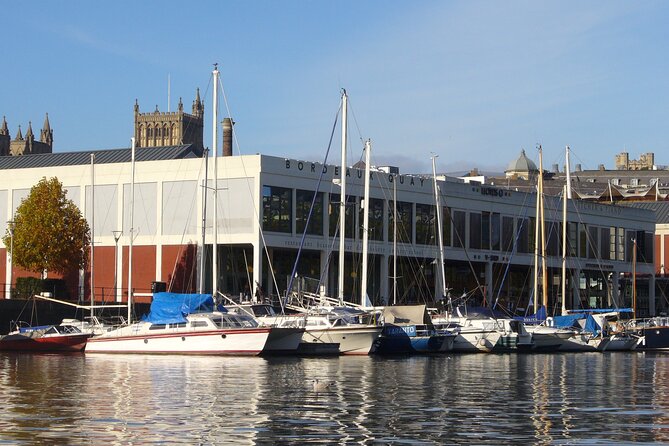
At Welsh Back, the walking story returns to the water. The name itself has a historical explanation, and the area remains active in the evening with bars, restaurants, and dining boats. The route connects today’s social waterfront with its earlier working life.
This is one of the better places to note the tour’s balance. You hear about old trade while standing in a modern entertainment district. If you are walking later in the day, the area may be useful for a meal, but the tour’s scheduled ten minutes does not include time for dining.
Same country, a completely different day out:
- (9pm) The House Magicians Comedy & Magic Show – Smoke & Mirrors
★ 5.0 · 356 reviews - West Country Games – the most popular group activity in the South West!
★ 5.0 · 315 reviews - The House Magicians’ Comedy Magic Show at Smoke & Mirrors in Bristol (Sat 7pm)
★ 5.0 · 296 reviews - The House Magicians Comedy Magic Shows
★ 5.0 · 263 reviews
Castle Park and Bristol Bridge Mark the Medieval Core
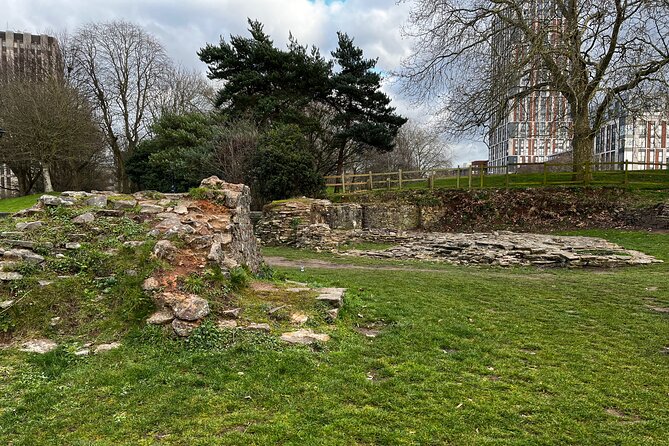
Castle Park occupies the site of Bristol’s old castle and medieval settlement. The stop lasts about five minutes, with Helen explaining the area’s past.
The park is important because it brings the route away from the polished harbourside and toward the city’s older center. You get a sense of how close Bristol’s medieval settlement was to the water and how the castle shaped the town around it.
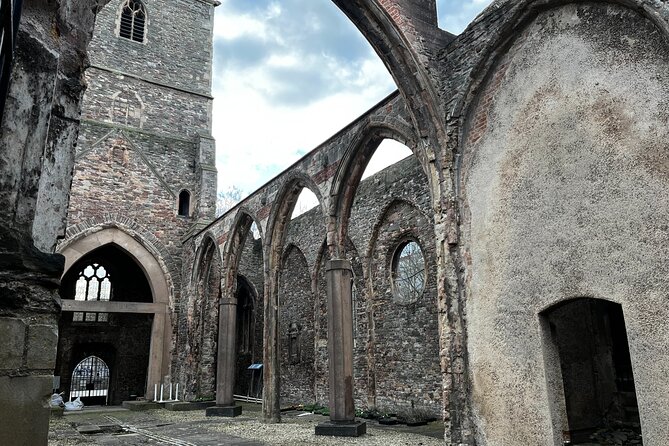
At Bridge Quay, you can look toward Bristol Bridge with St Peter’s, St Nicholas’, and St Mary Le Port churches in the background. The bridge is believed to be where Bristol’s settlement began. This is a good listening stop, especially if you prefer views that let several landmarks tell one story together.
The audio asks you to pause and watch the scene while Helen talks. That makes the stop feel less like a checklist item. You can take in the bridge and church silhouettes while hearing how the settlement began.
Redcliffe Adds Churches, Caves, and Dockside Work
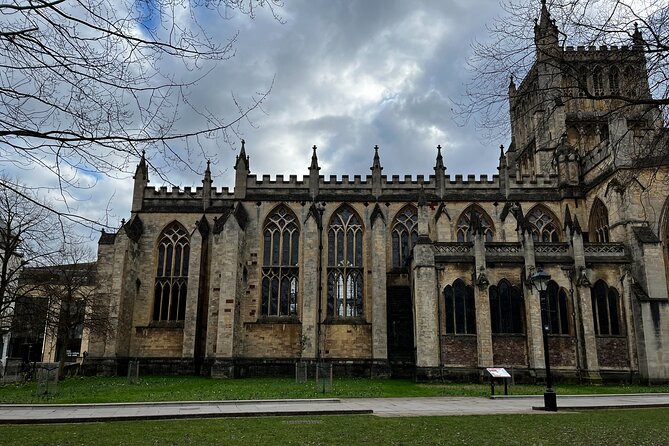
St Mary Redcliffe Church is one of the route’s key landmarks. The church you see today is not the original building. The church associated with Henry I’s time fell into disrepair and was rebuilt in the 14th century.
The listed visit is only five minutes, so do not assume that time includes a full interior visit. The value here is the setting and the historical explanation, with the option to give the church more time if your own plans allow.
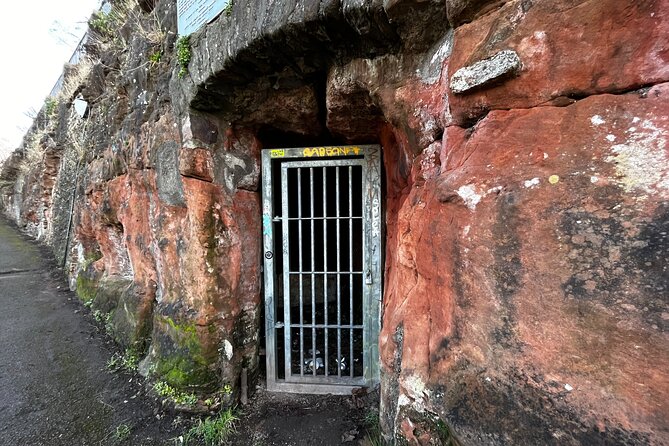
Redcliffe Caves follows with a ten-minute stop. Redcliffe takes its name from the bright red Triassic sandstone visible in the area. Houses along Redcliffe Wharf sit above a cave system that reaches toward St Mary Redcliffe Church.
This is one of the more unusual parts of the route because the story is partly hidden below the streets. The tour gives you the location and background, but the supplied details do not say that entry into the caves is included. Treat this as an outdoor viewpoint and audio stop unless the app gives you different access information on the day.
Bathurst Basin adds another short historical aside. Its water supply was lost when the New Cut was dug in 1809. The Ostrich pub, at the basin entrance, was built around 1745 and once served sailors, dock workers, and merchants.
These brief unnumbered sections are easy to miss if you focus only on the numbered stops. They are worth hearing because they fill in the working details between the larger landmarks.
Princes Wharf Reveals the Working Docks
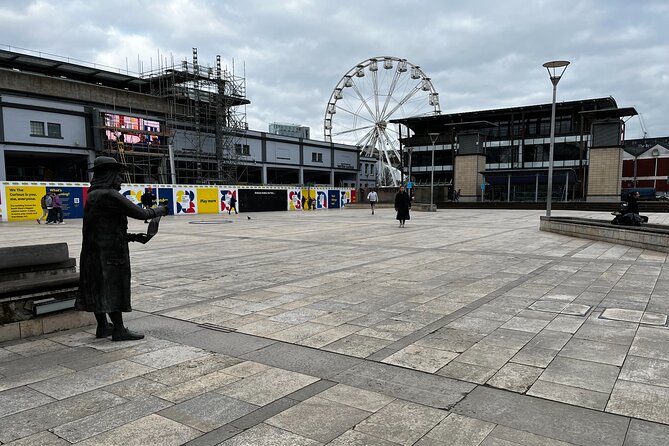
Princes Wharf shows how much Bristol’s docks have changed. Almost all of the city docks are now closed to cargo ships, but you can still find signs of their former purpose if you look closely.
The ten-minute stop encourages you to read the waterfront rather than simply admire it. Look for physical clues while listening: the route promises evidence of loading, unloading, and commercial use, though it does not list each feature in advance.
Nearby, the Matthew of Bristol recalls John Cabot’s 1497 voyage to the Americas. The ship is a replica of Cabot’s Matthew, and this replica crossed the Atlantic to Canada in 1997 for the 500th anniversary of the journey.
The detail that may surprise you is its size. The replica is described as surprisingly small, which gives you a useful sense of the scale of early Atlantic sailing. The stop works best when you compare the vessel with the large modern ideas often attached to exploration.
M Shed Gives You a Free Museum Option
M Shed is a free museum about Bristol and one of the few harbourside buildings that retains all its original features. The tour allows about 15 minutes here, but the museum is likely to reward a longer visit if you have time.
This is the clearest chance to turn the audio walk into a fuller city visit. You can hear Helen’s introduction outside or nearby, then enter on your own. Since admission is free, extending the stop does not add a ticket cost, only extra time.
The route’s two to three-hour estimate should be read with care. It fits the listed stop times and a normal walk, but a proper museum visit, church visit, meal, or repeated navigation checks will make the outing longer. The three-week access period helps here. You can walk one section now and return later instead of trying to see everything in one push.
Wapping Wharf Leads to SS Great Britain
Wapping Wharf was once used for shipbuilding and repair. In the 1800s, Bristol Docks were packed with boats loading and unloading goods, a sharp contrast with the more relaxed public setting you see today.
The five-minute stop is a final reminder that the waterfront was a workplace. It also prepares you for the ending at Brunel’s SS Great Britain.
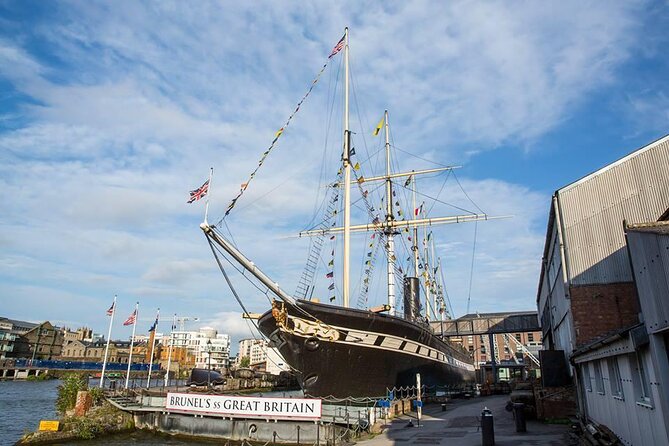
The SS Great Britain was built on this dock by Isambard Kingdom Brunel. It was the largest ship of its time and the first constructed using iron. When launched in 1843, it was called the greatest experiment since creation.
The tour ends at the Great Western Dockyard, Gas Ferry Road, at SS Great Britain. The supplied information does not say that admission to the ship is included, so plan on the audio walk ending outside the attraction unless your ticket states otherwise. The end point is also useful for continuing into the city with the recommendations provided in the app.
What the App Does Well, and Where You Need Care
The package includes a map, directions, GPS route, stop locations, audio, videos, pictures, and recommendations. Helen provides the narration, not a computer-generated voice, which gives the walk a more personal feel.
Three weeks of unlimited access is a real advantage at $12.33 per person. The price is modest for a route covering medieval Bristol, Georgian planning, churches, docks, a museum, and Brunel’s shipbuilding legacy. It is especially good value if you use the app over multiple days.
The tradeoff is that this is not a guided group walk. No in-person guide is waiting to correct your route, explain a missed turn, or find an alternative when a street is blocked. One reported experience found some streets unnamed, access points closed, and detours that made the walk much longer than expected.
I would keep the app open and use the GPS route with the written directions, not rely on memory or audio alone. Check the Before You Go section of your ticket, and allow extra time beyond the advertised two to three hours. Bristol’s waterfront has changing access and several streets with similar urban surroundings, so a little patience matters.
The activity is listed as a private tour, meaning only your group participates, but that describes the app experience rather than an in-person guide. Service animals are allowed, the route is near public transportation, and most people can take part. No detailed accessibility information is provided, so anyone concerned about surfaces, slopes, or temporary closures should check before setting out.
Who Should Choose This Bristol Walk?
I would recommend it to independent visitors who like history delivered in short pieces while they walk. It suits people who want control over pace, stops, and museum time, and it works well for a first look at the harbourside.
It is also a sensible choice if you dislike large tour groups. You can stop for photographs, pause the audio, or spend longer at M Shed without holding anyone up.
I would be more cautious if you want a perfectly managed route with live support. The navigation issue is not a minor detail for a self-guided walk. If you are uncomfortable using GPS or unwilling to add time for detours, an in-person walking tour may suit you better, though this experience does not offer one.
Should You Book the Bristol Harbourside Tour?
Book it if you want a low-cost introduction to Bristol that links the city’s water, trade, churches, squares, caves, and ships in one route. Helen’s human narration and the three-week access window give it more value than a simple download of directions.
Before paying, make sure you are comfortable navigating independently and allow more than the two to three-hour estimate. Use the map and GPS together, keep the ticket instructions handy, and treat M Shed and SS Great Britain as optional longer visits rather than included admissions. For an independent visitor with a phone and a flexible schedule, this is a useful way to get Bristol oriented without committing to a fixed group timetable.
FAQ
Where does the tour start?
It starts at 9C3VC9XX+WRRC9XX+WRR in Bristol, United Kingdom.
Where does the tour end?
The route ends at Brunel’s SS Great Britain, Great Western Dockyard, Gas Ferry Road, Bristol BS1 6TY.
How long does the walking tour take?
The estimated duration is two to three hours. Extra time may be needed for museums, longer stops, or route detours.
Is the tour guided in person?
No. It is a self-guided experience delivered through an app. Helen provides the audio narration, and there is no in-person guide.
What language is offered?
The tour is offered in English.
How long can I access the tour?
You receive three weeks of unlimited access to the self-guided tour through the app.
What does the app include?
It includes a map, directions, a GPS route, stop locations, audio narration, videos, pictures, recommendations, and other tour information.
Are the attractions included in the price?
The listed stops have free admission, but the information does not state that paid entry to attractions such as SS Great Britain is included. Check your ticket for current admission details.
Can I bring a service animal?
Yes. Service animals are allowed.
Just added around Bristol
- Wine & Cheese in the Somerset Valleys – with Michelin-star lunch!★ 5.0 · 12 reviews
- Brunel Guided Tour in Bristol★ 5.0 · 4 reviews
- Fun, Flexible Treasure Hunt Around Bristol with Cryptic Clues & Hidden Gems★ 5.0 · 101 reviews
- Guided Walking Tour Suspension Bridge Clifton Splendour & City.★ 5.0 · 100 reviews
- The Best of Bristol Bike Tour★ 5.0 · 39 reviews
- Brunel’s Bristol: A Self-Guided Tour from SS Great Britain to Clifton Bridge★ 4.5 · 11 reviews
- Sip and Paint Parties★ 5.0 · 5 reviews
- Oxford and Cotswold Small-Group Tour from Bristol★ 4.5 · 40 reviews
Walking Tours, compared.

Oxford University Walking Tour With University Alumni Guide
Read our review →
Tour for Muggles The Ultimate Harry Potter Walking Tour in London
Read our review →
Cambridge University Walking Tour by Alumni™ Kings College Option
Read our review →
Blackbeard to Banksy – The Ultimate Walking Tour of Bristol
Read our review →
Air Raid Shelter + St. Nicholas Market Walking Tour
Read our review →
Walking Tour of Bath with Blue Badge Tourist Guide
Read our review →
Changing of the Guard Guided Walking Tour in London
Read our review →Browse the lists this tour appears in