
Reviewed · CITY TOURS
3 Hours Private City Highlights Liverpool Walking Tour
Liverpool’s story comes together quickly on this private walk: the Beatles began at the Cavern Club, the Titanic’s engine-room workers are remembered near the waterfront, and the city’s grand civic buildings reveal how important its docks once were. You cover a remarkable spread of central Liverpool in about three hours, with your own guide rather than a large group.
I like the private format, which lets you ask questions and adjust the pace. I also like the range: this is not just a Beatles outing, but a walk through shipping, immigration, war, music, architecture, and civic life. The main thing to consider is that many stops last only about five minutes, and admission fees are not included, so this works best as a brisk orientation rather than a series of full museum visits.
Key points at a glance
- A private group walk for up to six people: The $342.79 price is shared by your group, not charged per person.
- Liverpool’s major stories in one route: Expect docks, Titanic memory, the American Civil War connection, Chinatown, music clubs, and grand public buildings.
- The Cavern Club is a brief exterior stop: The tour views the Beatles landmark, but entry is not included.
- A strong waterfront opening: The Museum of Liverpool, Albert Dock, the Three Graces, and the Royal Liver Building give you a quick grounding in the city.
- Guides named Martin and Dan: Martin is praised for helping ship passengers enjoy a rainy day, while Dan brings a strong interest in local history.
- A brisk finish near St George’s Hall: The route ends in the Mount Pleasant area, with the final sights including Lime Street Station and St George’s Hall.
Why this Liverpool walk works as an introduction
Liverpool can feel like several cities at once. It is a port city, a center of music, a place with grand Victorian buildings, and a city shaped by immigration and industrial work. This tour connects those pieces on foot instead of treating them as unrelated photo stops.
You begin near the Museum of Liverpool at Mann Island, close to the river. That is a sensible meeting point because you can start with the city’s origins before moving through its most famous waterfront buildings. The route then heads inland, passing civic landmarks, music sites, Chinatown, the Philharmonic, the Metropolitan Cathedral, and Lime Street.
The private setup matters here. With a maximum of six people, you can ask why a building matters, stop for a photograph, or spend a little more time on a subject that catches your interest. The published timing suggests a fast walk, but the tour is described as being taken at your own pace. Your actual route may finish in Mount Pleasant sooner or later depending on how quickly your group moves.
A few more Liverpool trips to weigh up
- A Walk Through Time: History of Liverpool Walking Tour
★ 5.0 · 911 reviews - Liverpool Ghost Walking Tour
★ 5.0 · 862 reviews - Beatles Famous Walking Tour Of Liverpool- Fully Guided
★ 5.0 · 751 reviews
From the Museum of Liverpool to the Royal Albert Dock
The Museum of Liverpool is the starting point, and the guide uses the opening 10 minutes to explain the city’s origins. Admission to the museum is not included, so you should think of this as an outdoor introduction rather than a museum visit.
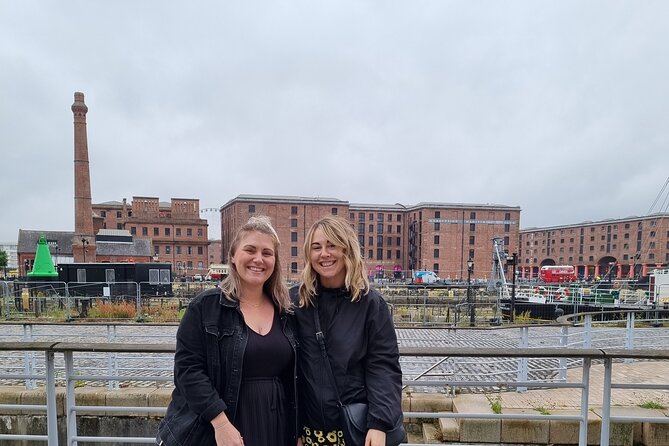
From there, you reach Royal Albert Dock. The dock was once among the busiest in the world, and its setting helps explain Liverpool’s rise as a major port. The stop is short, listed at about five minutes, so you will get a sense of the waterfront rather than a full architectural tour.
This is one place where the walk’s limits are clear. If you want time inside the Museum of Liverpool or a long circuit around Albert Dock, plan a separate visit. The value here is that your guide gives you the basic framework before the route moves on.
The Three Graces and the Titanic memorial
The Three Graces are the grand waterfront buildings that define Liverpool’s public image. Your guide explains their connection to dock life and the role the port played in England and in the city itself.
The nearby Memorial to the Engine Room Heroes of the Titanic adds a more personal note. It remembers the men who continued working in the ship’s engine room so others could survive the sinking. This is a small memorial, but it gives the waterfront a human scale. Liverpool’s maritime story was built not only by merchants and grand offices, but also by workers whose names and labor are easier to overlook.
The memorial is free to view. It is also a useful reminder that this walk is not limited to the city’s most famous buildings. You get short explanations of the people behind Liverpool’s shipping story.
The Royal Liver Building and Winslow House
At the Royal Liver Building, look up for the Liver Birds, the symbols of Liverpool. The building is one of the city’s defining sights, but admission is not included, and this tour only allows a short stop.
You then pass Winslow House, where the guide discusses Liverpool’s links to the American Civil War and its industrial past. That is an unusual subject for a city walk. It shows how Liverpool’s commercial reach extended well beyond Britain, and it gives you a story that is less familiar than the standard Beatles and football references often associated with the city.
Because the stop is listed at five minutes, expect a concise explanation. If this topic especially interests you, ask your guide for more detail while you still have the chance.
Same country, a completely different day out:
- Beatles Magical Mystery Tour
★ 5.0 · 9,266 reviews - Liverpool: “Blue Route” – City & Beatles Tour
★ 5.0 · 8,562 reviews - Liverpool City Sights Hop On Hop Off City Tour – 24hr Ticket
★ 4.5 · 2,555 reviews - The LFC Stadium Tour
★ 5.0 · 1,548 reviews
Town Hall, Castle Street, and Liverpool’s older center
Liverpool Town Hall and Castle Street shift the focus from shipping to the civic center. The guide points out aspects of modern life in the city while also introducing one of Liverpool’s oldest streets.
Castle Street preserves traces of former medieval markets. It is easy to walk past without noticing what came before the present street, so this is a good example of the tour’s main strength: the guide gives context to places you might otherwise photograph and leave.
Town Hall admission is not included. The stop is primarily about the exterior and the surrounding street. You will not get a long indoor visit as part of the three-hour walk, but you will see how the city’s commercial and political life moved inland from the docks.
The Cavern Club and Liverpool’s music story
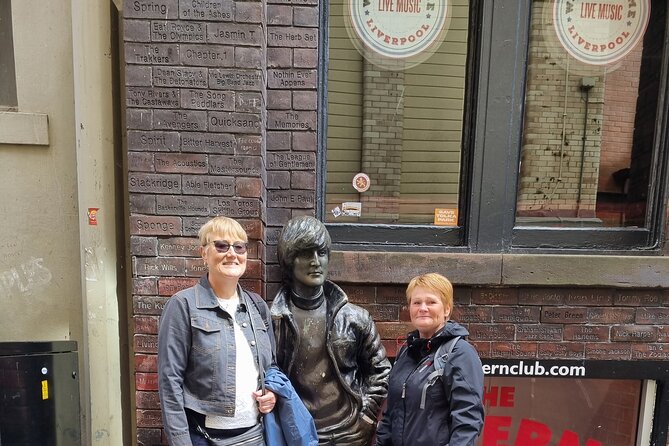
The Cavern Club is the tour’s headline stop for many people. It is associated with the Beatles’ early career and is presented as the place where the group got its start.
Keep your expectations clear. The stop is listed at five minutes, and admission is not included. That means you should expect to view the landmark and hear about its place in Liverpool’s music story, not spend a long time inside listening to music or exploring the venue.
The walk also passes the Jacaranda Club, another important music site. Together, these stops help place the Beatles within a wider Liverpool scene rather than presenting them as an isolated phenomenon. The Jacaranda gives the route another musical reference point, while the Cavern provides the instantly recognizable name.
If the Beatles are your main reason for booking, check the timing before you go and consider returning to the Cavern Club separately. This tour gives you useful orientation, but it is not a dedicated Beatles tour.
The Bridewell, Queen Victoria Monument, and St Luke’s
The Queen Victoria Monument introduces the Victorian period and sits on the site of the former Liverpool Castle. It is a compact stop, but it links the modern city to an earlier defensive and civic center.
The Bridewell offers a different kind of urban story. The old prison has been given a cheerier new use, and your guide explains that change. This is the sort of small detail that adds personality to the walk. You see how old buildings can shift roles as the city changes.
St Luke’s Bombed Out Church is one of the most striking stops in the second half of the route. The church remains partly ruined after its destruction, and the guide explains why the site has become a symbol of hope for Liverpool. Admission is not included, though the stop is primarily about seeing the remains and hearing the story from outside.
I like this section because it avoids a polished-only view of Liverpool. You get monuments and grand architecture, but also reminders of war, loss, and renewal.
Chinatown and Liverpool’s international connections
Liverpool’s Chinatown is described as one of the largest in Europe. The guide explains how people from halfway around the world came to make their home in the city.
This stop broadens the walk beyond port buildings and famous musicians. A port draws goods, work, and people, and Chinatown gives you a visible example of Liverpool’s international connections. The stop is free, and the tour offers a short introduction rather than a food-focused visit or a long cultural program.
If you want to eat in Chinatown, treat this tour as a way to get your bearings and return later. The schedule is too tight to build in a full meal, and the walk continues through several more districts.
The Philharmonic and Metropolitan Cathedral
The Liverpool Philharmonic is both a performance venue and an interesting building in its own right. Your guide points out the building’s features and explains its role as a place for concerts, comedians, productions, and films.
The Metropolitan Cathedral of Christ the King brings a very different architectural mood. Though it is a relatively recent addition to Liverpool’s skyline, it has become one of the city’s best-known buildings. The guide explains how it acquired the nickname Paddy’s Wigwam, a memorable local name that makes the stop easier to remember.
Admission is not included at either site. The short timings mean you will mainly view the exteriors unless your group makes a separate arrangement. Still, having both venues on one route helps you see how Liverpool’s cultural and religious buildings changed across different periods.
Mount Pleasant, Lime Street Station, and St George’s Hall
The route passes through Mount Pleasant, an area associated with historical figures. The tour then reaches Lime Street Railway Station, described as the oldest operating grand terminus mainline station in the world.
That station is a practical sight as well as an architectural one. If you are arriving or leaving Liverpool by train, you will understand its position in the city more clearly. The stop also helps connect the central districts you have walked through with Liverpool’s wider transport network.
The tour finishes outside St George’s Hall. Its Neoclassical design gives the walk a suitably grand ending, and your guide points out nearby landmarks and suggests other places to visit. Admission is not included, so the finish is an exterior orientation rather than an indoor tour of the hall.
The advertised end is in the Mount Pleasant area, though the exact finish can depend on your walking speed. That is worth noting if you have a fixed dinner booking, train departure, or ship departure.
What the private price really means
The price is $342.79 per group of up to six people. At six people, that works out to about $57 per person. For two people, the effective cost is much higher, so this tour makes the most financial sense for a family or small group that can share the fee.
You are paying for a private English-language guide, a tailored pace, and three hours of walking through a large set of central sights. You are not paying for museum tickets, entry to the Cavern Club, or admission to the other sites marked as not included.
I see the value most clearly when you have limited time in Liverpool, especially on a port call. A guide can connect the waterfront to the inland center without requiring you to work out the route yourself. One guide, Martin, is specifically noted for meeting a group right off a ship and making a rainy day into an engaging city outing.
The price is less appealing if you want long indoor visits. In that case, you may prefer to spend the money on one or two attractions and explore at a slower pace. This walk is best viewed as a guided introduction with many exterior stops.
Guides, pace, weather, and walking effort
The guides named in the supplied feedback are Martin and Dan. Martin is described as friendly and helpful with strong city knowledge, while Dan is presented as an energetic local with a serious interest in Liverpool’s past.
That difference matters because a walking tour depends heavily on the person leading it. The strongest feature here appears to be the human guide: the route has been thoughtfully planned, but the explanations and willingness to answer questions are what can turn a rainy day into a worthwhile one.
You should have a moderate level of physical fitness. The experience lasts about three hours and moves through central Liverpool on foot. Wear comfortable shoes and bring weather protection, especially since much of the experience takes place outdoors. Liverpool’s weather can change, and one positive note from the supplied feedback is that the guide handled a rainy day well.
The tour is offered in English. It has a mobile ticket, service animals are allowed, and the meeting area is near public transportation. Those details make it practical for a city break or a day in port.
Who should book this experience
I would choose this tour if you want a broad first look at Liverpool and prefer a private guide to a fixed large-group schedule. It suits first-time visitors, families, small friend groups, and cruise passengers with only a few hours available.
It is especially useful if your interests extend beyond the Beatles. You will hear about dock workers, the Titanic, Victorian Liverpool, the American Civil War connection, immigration, wartime damage, religion, music, and public architecture.
I would not choose it as your only activity if you want to tour several interiors. The short stops and excluded admissions make it more of a guided walk than an attraction pass. You should also allow extra time after the tour for the Cavern Club, Museum of Liverpool, St George’s Hall, or another site that catches your attention.
Free cancellation is available if you cancel at least 24 hours before the start time. Changes or cancellations made inside that window are not accepted for a refund, so keep the local cut-off time in mind when planning.
FAQ
How long does the Liverpool walking tour last?
The tour lasts approximately three hours.
How many people can join the private tour?
The private tour is for one group of up to six people.
What language is the tour offered in?
The tour is offered in English.
Where does the tour start?
The meeting point is near the Museum of Liverpool at Pier Head, Mann Island, Liverpool L3 1DG, UK.
Where does the tour end?
The tour ends in the Mount Pleasant area. The exact finishing point may depend on how quickly your group walks.
Are attraction admission fees included?
No. Admission is not included for stops such as the Museum of Liverpool, Royal Liver Building, Liverpool Town Hall, Cavern Club, St Luke’s Bombed Out Church, the Philharmonic, the Metropolitan Cathedral, Lime Street Railway Station, and St George’s Hall. Several outdoor stops are free to view.
What is the cancellation policy?
You can cancel for a full refund up to 24 hours before the experience start time. Cancellations or changes made less than 24 hours before the start time are not accepted for a refund.
Should you book the three-hour Liverpool highlights walk?
Book it if you want a private, well-paced introduction to Liverpool’s central sights, especially if you are arriving by ship or have only one day in the city. Martin and Dan bring strong local knowledge and an interest in the city’s past, and the route covers far more than the usual Beatles checklist.
Skip it if you want extended visits inside museums, churches, or the Cavern Club. For everyone else, this is a useful way to get the city’s main stories in place first, then return on your own to the places that deserve more time.
Just added around Liverpool
- Half Day Welcome to Liverpool Walking Tour★ 5.0 · 17 reviews
- Fun, Flexible Treasure Hunt Around Liverpool with Cryptic Clues & Hidden Gems★ 5.0 · 141 reviews
- The Story of Liverpool 2-Hour Walking Tour★ 5.0 · 3 reviews
- LIVERPOOL: Yorkshire Adventure – Sightseeing Day Trip Tour★ 5.0 · 13 reviews
- Ultimate Ticket To Ride Beatles Half-Day Shore Excursion- Private★ 5.0 · 6 reviews
- Beatles Ticket To Ride Half Day Tour Small Groups★ 5.0 · 60 reviews
- Small-Group: Experience Local Food Tour in Liverpool★ 5.0 · 32 reviews
- Lake District from Liverpool including Lake Cruise★ 4.5 · 49 reviews
City Tours, compared.


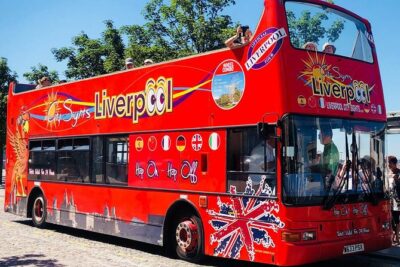
Liverpool City Sights Hop On Hop Off City Tour – 24hr Ticket
Read our review →
1.5-hour Oxford City and University Walking Tour
Read our review →
City Sightseeing London Hop-On Hop-Off Bus Tour & Bookable Extras
Read our review →
City Sightseeing Oxford Hop-On Hop-Off Bus Tour
Read our review →
Browse the lists this tour appears in