
Reviewed · SELF-GUIDED TOURS
Private Liverpool Self-Guided Tour
Liverpool’s story comes together on foot, from the grand civic buildings around St George’s Hall to the Beatles’ old stomping ground and the waterfront Three Graces. This self-guided route gives you three weeks of access, so you can spread a two-to-four-hour walk across your own schedule rather than chase a guide through the rain.
I like the human-recorded narration by Jenny, which makes the history easier to follow than a flat computer voice. I also like the mix of subjects: Beatles music, Liverpool’s port, football memory, architecture, and the city’s difficult links to slavery and empire. The trade-off is simple: you get no in-person guide, and you must sort out the app before setting off.
Key points to know before you go
- Eighteen stops from St George’s Hall to Royal Albert Dock, with the main route passing through Liverpool’s cultural quarter, Cavern Quarter, Castle Street, Pier Head, and the waterfront.
- Three weeks of unlimited access lets you pause for museums, food, rain, or another walk on a different day.
- Jenny’s audio guide includes stories, photos, videos, directions, and GPS mapping, not just a list of facts.
- The Cavern Club and museums are extra, so the $12.35 price covers the tour content, not attraction admission.
- This is best for independent explorers, solo visitors, and anyone who prefers to stop when a good photograph, pub, or museum catches the eye.
- Plan ahead for app access, since one user could not connect. The activation instructions matter, and the booking reference is not the access code.
What this $12.35 Liverpool walk actually gives you
At $12.35 per person, this is a low-cost way to get a planned introduction to central Liverpool. You are paying for the route, narration, map, GPS guidance, and three weeks of use, not for a person walking beside you.
That distinction matters. A live guide can answer questions, adjust the pace, and point out something unexpected. This app cannot. But it also does not rush you, and you can stop inside a museum, wait out a shower, or replay a section without holding up a group.
The route takes about two to four hours if you keep moving. Add time for the Cavern Club, the Museum of Liverpool, the Central Library, the World Museum, or the other waterfront museums. The walk itself is free, but some attractions mentioned along the way charge admission or may have special events with a fee.
You receive instant confirmation and an email with activation instructions. Read the Before You Go section carefully. The one clear weak point in the feedback is a connection problem, so activate the tour before you are standing in the middle of Liverpool wondering why the map will not load.
A few more Liverpool trips to weigh up
- Western Approaches Self Guided Tour
★ 5.0 · 505 reviews - Liverpool Ghost Hunt: Paranormal Detective Self-Guided Game
★ 4.5 · 26 reviews - Westminster Abbey Entrance Ticket Including Audio Guide
★ 4.0 · 661 reviews
Beginning among Liverpool’s grandest buildings
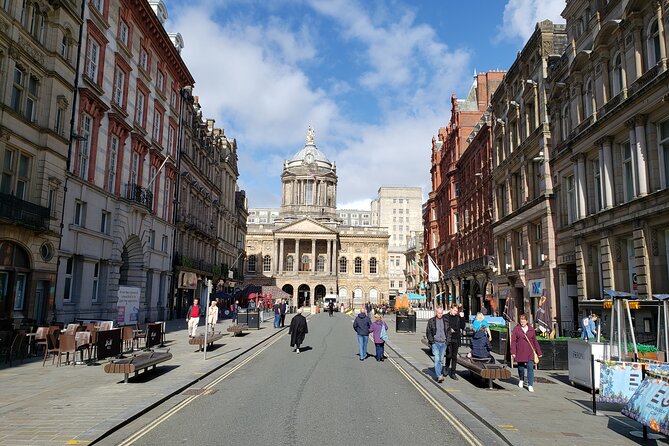
The tour starts at St George’s Hall, St George’s Place. This is a smart starting point because Liverpool’s civic story is written in stone all around you.
The opening commentary traces the city back to a tidal pool beside the River Mersey, before Liverpool became a town in the 13th century and later a major port. That gives you useful context before the route turns to music and football. Liverpool did not become famous for only one reason.
St George’s Hall is a Grade I listed building, designed with the look of an ancient temple. Its raised podium was chosen to make the building dominate the area around it. You do not need to enter to appreciate the effect, and the stop itself has no admission fee.
From here, you move along William Brown Street, one of the most impressive civic stretches in the city. Its conservation area gathers major public buildings into one cultural quarter, including the Walker Art Gallery, Central Library, World Museum Liverpool, the former County Sessions Court, the old North Western Hotel, the Empire Theatre, Steble Fountain, and the Wellington Memorial.
The narration explains William Brown’s role as a merchant, MP, and benefactor. He donated land in 1860 for cultural use, which helps explain why so many public institutions ended up here. I like this stop because it shows how a city can use one street to tell its civic story without requiring you to cross half of town.
Libraries, museums, gardens, and difficult memories
The Central Library and World Museum share a Grade II listed classical building. The tour gives you practical ideas about which parts to see and how to approach the museums, though you will need to check current opening details yourself.
The library and museum are generally free, but events can sometimes carry a charge. That makes the app’s advice useful, yet it should be treated as orientation rather than a guarantee. If you want a proper museum visit, allow more than the suggested 25 minutes.
St John’s Gardens comes next. This was once part of a heathland area called the Great Heath. Today, it is a formal park beside St George’s Hall, with flower beds, statues, and memorials.
This is also where the route addresses the Hillsborough disaster, the fatal crush at Sheffield’s Hillsborough Stadium on April 15, 1989. The subject is serious, and the commentary connects it to Liverpool’s public memory and football culture. It is not a throwaway football anecdote. Give this section your attention, even if you do not follow either Liverpool club.
The route then reaches Williamson Square, home to the Liverpool Playhouse and the Radio Tower, once called St John’s Beacon. The theatre opened in 1866 as the Star Concert Hall before becoming the Liverpool Playhouse. The audio also explains how the tower changed from a building many local people disliked into one that has been revived and appreciated.
These stops are a good reminder that Liverpool is more than Beatles souvenirs. The city’s theatre, memorials, public gardens, and changing skyline all get room in the story.
The Cavern Quarter and the Beatles connection
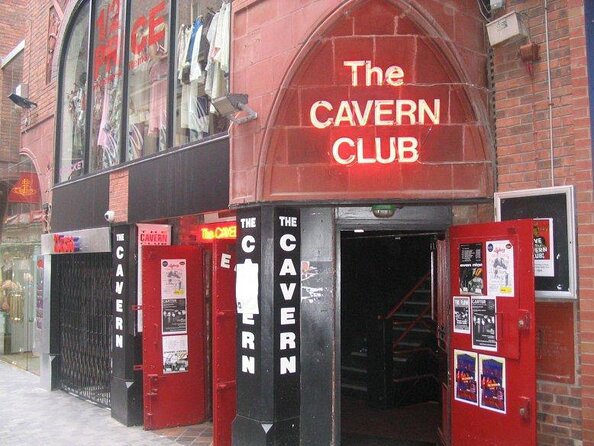
The Cavern Club is the tour’s musical centrepiece. The surrounding Cavern Quarter is made up of narrow pedestrian streets filled with pubs, clubs, restaurants, and live music venues. The area carries a strong Beatles identity, but it is also an active entertainment district rather than a frozen museum display.
The audio explains how the Cavern Club became a key rock and roll venue in Liverpool during the early 1960s. It was closely tied to Merseybeat and regularly hosted the Beatles. You get the background before reaching the club, which helps the famous name mean more than a quick photo outside.
Admission to the Cavern Club is not included. This is one of the most important practical details in the whole experience. If you plan to go inside, check the current entry arrangements and any live music schedule separately.
The app works well here because you can pause. The Cavern Quarter can invite a longer stop, especially if you want food, a drink, or live music. A fixed walking group might move on just as the neighborhood begins to feel interesting. With this tour, you decide.
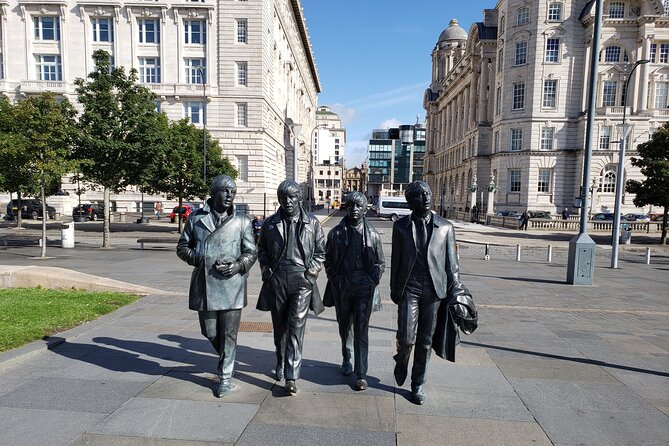
The route’s Beatles material continues at Pier Head, where you will find the Beatles monument. The commentary includes stories about the Fab Four and the Liver Birds, Liverpool’s emblematic birds perched on the Royal Liver Building.
Same country, a completely different day out:
- Beatles Magical Mystery Tour
★ 5.0 · 9,266 reviews - Liverpool: “Blue Route” – City & Beatles Tour
★ 5.0 · 8,562 reviews - Liverpool City Sights Hop On Hop Off City Tour – 24hr Ticket
★ 4.5 · 2,555 reviews - The LFC Stadium Tour
★ 5.0 · 1,548 reviews
Castle Street, commerce, and the uncomfortable past
Castle Street is one of Liverpool’s original seven ancient streets and appears on maps from the 13th century onward. It sits within the city’s historic core and is lined with important buildings.
The Town Hall and former Bank of England are Grade I listed buildings. Seventeen other buildings along the street have Grade II status. You get enough background to notice more than just the grand façades, especially if architecture interests you.
From Castle Street, the route leads to Exchange Flags Square. Here, the story turns toward commerce, war, slavery, and the people connected to Liverpool’s rise. This is one of the route’s strongest features because it does not treat the city’s port wealth as a simple success story.
The bronze Nelson monument receives special attention, including the controversy around its meaning. That kind of explanation is valuable when you are looking at a monument that might otherwise pass as a decorative object. The route encourages you to ask who was honored, why, and what the monument says about the period in which it was created.
This portion also gives the walk some needed balance. Liverpool’s maritime power helped create its grand buildings and international connections, but it was tied to war, empire, and slavery. The audio does not leave that part out.
Pier Head and the Three Graces
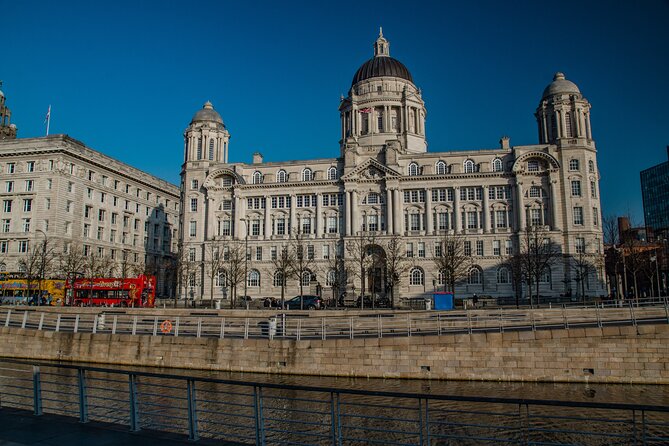
At Pier Head, the city opens toward the Mersey. The three grand waterfront buildings are the Royal Liver Building, Cunard Building, and Port of Liverpool Building.
The Royal Liver Building is famous for the two Liver Birds on its roof. The tour covers the legends around them, their place in Liverpool’s identity, and why the bird appears in the city’s coat of arms. It also explains the building’s importance as an early reinforced-concrete structure.
The Cunard Building combines Italian Renaissance and Greek Revival influences, with design ideas drawn from Italian palaces. The Port of Liverpool Building, once the Mersey Docks and Harbour Board offices, is the oldest of the Three Graces. Its architecture was meant to reflect Liverpool’s role in maintaining the British Empire.
Together, these buildings show the waterfront at its most theatrical. The tour connects their design to shipping, trade, and imperial power instead of treating them as pretty backdrops. The three buildings were part of Liverpool’s former UNESCO-listed Maritime Mercantile City.
The Pier Head Beatles monument adds a lighter musical note. You can move from the city’s port authority buildings to larger-than-life Beatles figures within a few minutes, which neatly captures Liverpool’s blend of work, memory, and popular culture.
Finishing at Royal Albert Dock
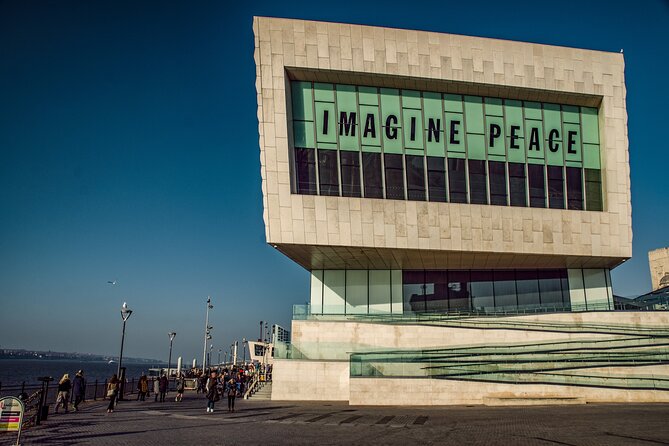
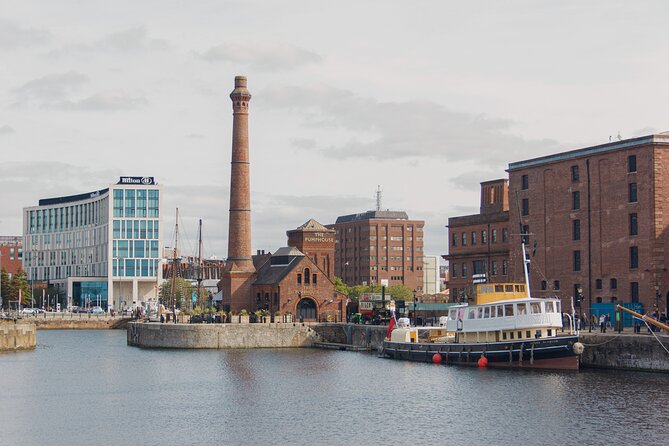
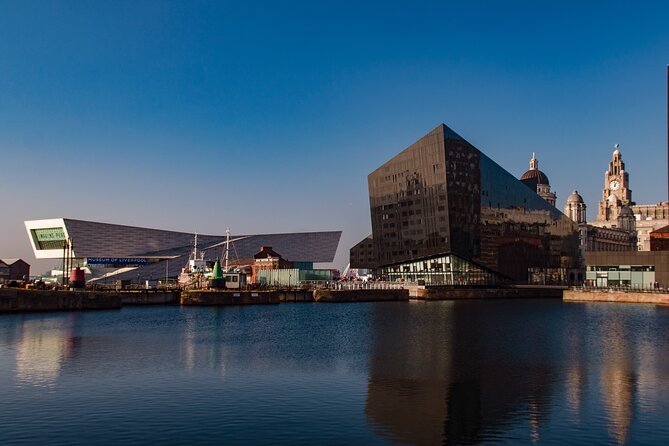
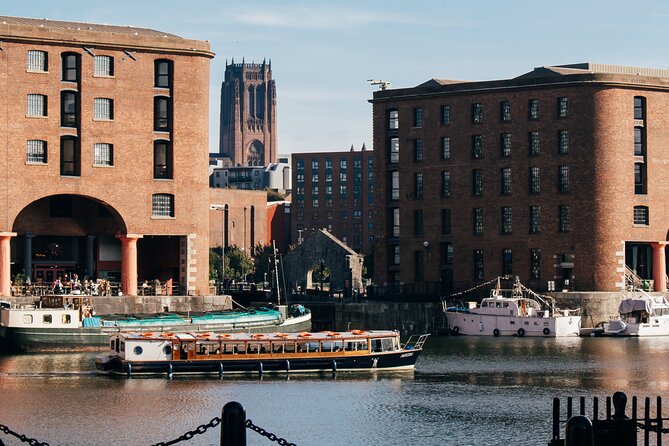
The route ends at Royal Albert Dock, where Liverpool’s maritime past meets its arts and museum scene. The dock’s large scale helped shape the waterfront, and the audio explains how it was used before and after the Second World War.
You also get the Liverpool connection to the Titanic and an explanation of why so many museums occupy this part of the city. The Museum of Liverpool, The Beatles Story, and Merseyside Maritime Museum are all nearby.
The Museum of Liverpool receives its own short stop, with guidance on what to expect and where to go inside. The commentary is not a substitute for the museum itself, but it helps you choose whether to enter now or return later.
Royal Albert Dock is a practical ending point. You can continue to museums, restaurants, and other waterfront sights without needing to retrace the whole walk. The tour also finishes with recommendations for places to visit, things to do, and places to eat.
The dock is not included as a paid attraction in the tour price, but some museums and exhibitions may charge. The route gives you a useful launch point for the rest of your day.
How the audio guide works in real life
Jenny provides the audio narration, and the package includes pictures, videos, stories, a map, directions, GPS routing, and marked stops. That combination is more useful than audio alone because you can match what you hear with what you are looking at.
You can follow the route in one session or return during the three-week access period. That flexibility is especially handy in Liverpool, where a museum visit or a spell of wet weather can change your plans.
A self-guided format also suits different walking speeds. You can linger at St George’s Hall, spend longer in the Cavern Quarter, or pause at Pier Head for photographs without a group waiting.
The downside is that you must manage the technology. One person had repeated trouble connecting and received no usable tour at the time. Support is available by phone, chat, and email around the clock, but it is still wiser to activate the experience and check the route before leaving your accommodation.
This is a private activity, meaning only your group participates. In practical terms, that means you are not sharing a live guide with strangers, but it does not mean a private person accompanies you.
Who will get the most from this tour
I would choose this tour if you want a first look at central Liverpool and prefer to control the pace. It is particularly well suited to solo visitors, couples, families with older children, and Beatles fans who also want civic and maritime history.
It is also a good rainy-day option. You can stop beneath cover, enter a museum, and restart the audio when the weather improves. One of the best features is the ability to read along with the narration, which can help if you prefer written information or want to catch a detail you missed.
You should choose a live walking tour instead if personal conversation and spontaneous questions matter most. You may also prefer a live guide if you want the route adjusted around a particular interest, such as football, architecture, or Beatles history.
The cancellation terms are strict: the experience is non-refundable and cannot be changed after booking. Since the tour is offered in English, you should also be comfortable following English audio commentary.
Should you book it?
Book this Liverpool self-guided tour if you want a cheap, flexible introduction to the city with strong coverage of the Beatles, waterfront architecture, public buildings, football memory, and Liverpool’s more complicated past.
At $12.35, the value is good if you use the three weeks of access and treat the route as a framework for exploring. The price is less appealing if you only want a short Beatles walk or if you expect admission to the Cavern Club and museums to be included.
My practical advice is to activate the app before you start, wear shoes suited to a two-to-four-hour city walk, and leave extra time for the Cavern Club or Royal Albert Dock museums. If you want Liverpool explained at your own speed, Jenny’s route is a sensible buy. If you want a person beside you telling stories and answering questions, spend more on a live guide instead.
FAQ
How long does the Liverpool self-guided tour take?
The tour takes approximately two to four hours, depending on your walking pace and how long you spend at each stop.
Where does the tour begin?
It begins at St George’s Hall, St George’s Place, Liverpool L1 1JJ, UK.
Where does the tour finish?
It finishes at Royal Albert Dock, Liverpool L3 4AD, UK, near museums and restaurants.
How long can I access the tour?
You receive three weeks of unlimited access to the self-guided tour through the app.
Is an in-person guide included?
No. This is a self-guided activity. Jenny provides the audio narration through the app.
Are attraction admission fees included?
No. Admission to attractions mentioned during the tour is not included. The Cavern Club, museums, and certain events may require separate payment.
Is the tour refundable if I cancel?
No. The experience is non-refundable and cannot be changed for any reason after booking.
Just added around Liverpool
- Half Day Welcome to Liverpool Walking Tour★ 5.0 · 17 reviews
- Fun, Flexible Treasure Hunt Around Liverpool with Cryptic Clues & Hidden Gems★ 5.0 · 141 reviews
- The Story of Liverpool 2-Hour Walking Tour★ 5.0 · 3 reviews
- LIVERPOOL: Yorkshire Adventure – Sightseeing Day Trip Tour★ 5.0 · 13 reviews
- Ultimate Ticket To Ride Beatles Half-Day Shore Excursion- Private★ 5.0 · 6 reviews
- Beatles Ticket To Ride Half Day Tour Small Groups★ 5.0 · 60 reviews
- Small-Group: Experience Local Food Tour in Liverpool★ 5.0 · 32 reviews
- Lake District from Liverpool including Lake Cruise★ 4.5 · 49 reviews
Self-Guided Tours, compared.
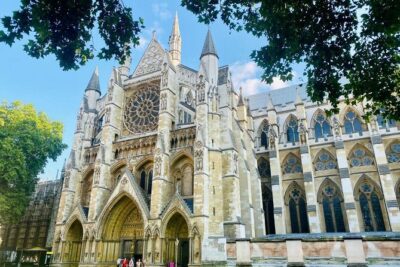
Westminster Abbey Entrance Ticket Including Audio Guide
Read our review →
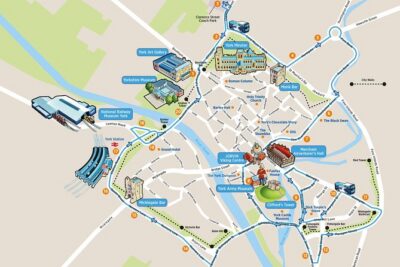
Golden Tours York Hop-on Hop-off Open Top Bus Tour with Audio Guide
Read our review →
Windsor Castle Tour from London with Transportation & Audio Guide
Read our review →
London Panoramic Open Top Bus Tour with Audio Guide
Read our review →
Emirates Stadium and Arsenal Museum Entrance Ticket Including Audio Guide
Read our review →
Private Self-Guided Dinky Door Hunt in Cambridge
Read our review →
Buckingham Palace: Walking Tour with Entry & Audio Guide
Read our review →Browse the lists this tour appears in