
Reviewed · BRITISH MUSEUM TOURS
British Museum Private Tour: Ancient Daemons and Timeless Beauty
The British Museum can feel like several museums packed under one roof. This private tour gives you a clear path through its great objects, from the Rosetta Stone and Egyptian mummies to the Lewis chessmen and Shiva Nataraja. The art specialist guide turns a huge collection into a story you can follow.
I like the private format, which lets your group ask questions and shape the visit around its interests. I also like the human touch: guides including Richard and Yuliya Ousarenko have been praised for clear storytelling, flexibility, and even adding extra time when a group arrived late or wanted more.
The main drawback is simple: two hours cannot cover a museum with more than 8 million objects. Also check the group limit before booking, since the information gives both up to six and up to eight people.
Key Points
- A focused route through a giant museum: See major objects without spending your first hour wondering where to begin.
- Private guide for your group: You can ask questions freely and request more time in areas that interest you.
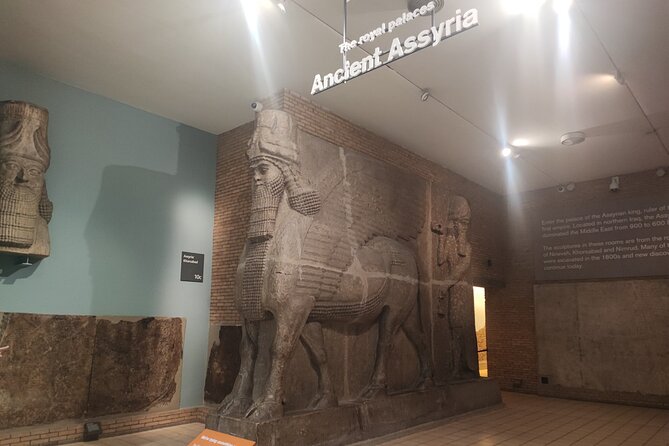
- Strong mix of civilizations: The route links Egypt, Greece, Anglo-Saxon England, India, and other cultures.
- Story-led explanations: The guide connects objects to language, belief, power, beauty, war, and daily life.
- Useful for first-time visitors: Fast track entry and a planned route help you get your bearings quickly.
- Flexible style: Guides such as Richard and Yuliya Ousarenko have tailored tours to individual interests.
Why a Private British Museum Tour Helps
The British Museum is free to enter, but free does not mean easy. Its collection covers thousands of years and many parts of the world. You can walk through impressive rooms for a long time and still miss the objects that matter most.
That is where this tour earns its keep. You are not paying for admission to the museum itself. You are paying for direction, interpretation, and time saved. A good guide helps you understand why an object matters, not just what it is called.
The private setup is especially useful for families, couples, and small groups with different levels of interest. You can stop to ask why a script was important, how a burial object was used, or what a sculpture says about beauty in its own culture.
The advertised price is $203.65 per group, rather than per person, for up to eight people. The highlights also describe the tour as being for up to six guests, so confirm the permitted group size before you pay. For a full group, the cost can be sensible compared with several separate guided admissions elsewhere, though the value depends on how much you want expert help inside a free museum.
More British Museum Tours in London:
- British Museum London Guided Tour Semi-Private 8ppl Max
★ 5.0 · 984 reviews - The British Museum London – Exclusive Guided Museum Tour
★ 5.0 · 555 reviews - British Museum Guided Tour
★ 4.0 · 470 reviews
Starting at Montague Place
The meeting point is Montague Place, London. The activity ends back at the same meeting point, which keeps the arrangement simple.
You receive confirmation when you book, and the museum is near public transportation. The tour is offered in English and uses a mobile ticket. Those details matter in central London, where a clear meeting location and a phone-ready ticket can prevent small delays.
The entry is described as fast track. Since the British Museum itself has free admission, the benefit here is a quicker, more organized start rather than a paid museum ticket. You should still arrive ready to meet your guide at the agreed time. The cancellation rule is generous if your plans shift: cancel at least 24 hours before the start for a full refund.
Under Norman Foster’s Glass Canopy
Your first impression is the building itself. The museum’s central Great Court is covered by a sweeping glass roof designed by Norman Foster. It gives the entrance a bright, open feel and provides a dramatic setting before the galleries begin.
From here, your guide helps you move from architecture to objects. That transition is useful because the British Museum can overwhelm you at the start. Instead of trying to select from thousands of rooms, you begin with a planned sequence.
The tour lasts about two hours according to the included details, while the overall duration is described as roughly two to three hours. One itinerary section gives three hours for the museum visit. Treat the timing as flexible within that range, but confirm the exact schedule when booking.
The Rosetta Stone and Forgotten Languages
The Rosetta Stone is one of the tour’s natural anchors. It is not simply an old stone with writing on it. It represents a breakthrough in the study of ancient Egyptian script because the same decree appears in more than one form of writing.
Your guide can use it to explain how scholars compare scripts and how a single object can help open up a lost language. That makes the stop work well for adults and children alike. You do not need prior study to see why it matters.
The stone also sets the tone for the rest of the visit. Again and again, the objects here are not just beautiful things. They are evidence. They show how people governed, worshipped, traded, buried their dead, played games, and recorded ideas.
A few more London trips to weigh up
- Tower of London and Crown Jewels Exhibition Ticket
★ 4.5 · 6,677 reviews - Chelsea FC Stadium Tours and Museum
★ 5.0 · 1,908 reviews - Official tickets: Moco Modern & Contemporary Art Museum
★ 4.5 · 1,157 reviews - The Postal Museum Admission Ticket
★ 4.5 · 347 reviews
Egyptian Mummies and the Quiet Work of Death
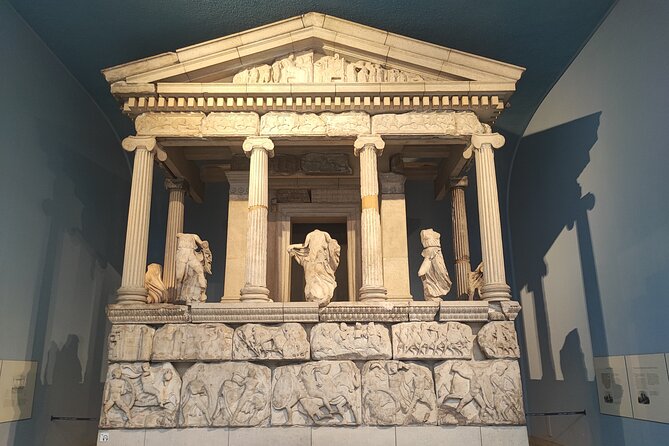
The Egyptian galleries bring a different mood. Mummies rest in silence, surrounded by objects linked to burial and belief. The experience is less about spectacle than about facing the care ancient Egyptians gave to death and the next life.
This section can be especially valuable with a guide because the objects may look familiar from photographs, yet their meaning is not always obvious. A well-paced explanation can connect the mummy to wider Egyptian ideas about the body, identity, and survival after death.
The drawback is that museum displays can never reproduce the full setting in which these objects were first used. You see individual pieces in galleries, not an entire ancient burial environment. A guide helps bridge that gap, but the interpretation remains essential.
The Parthenon Marbles and Imperial Power
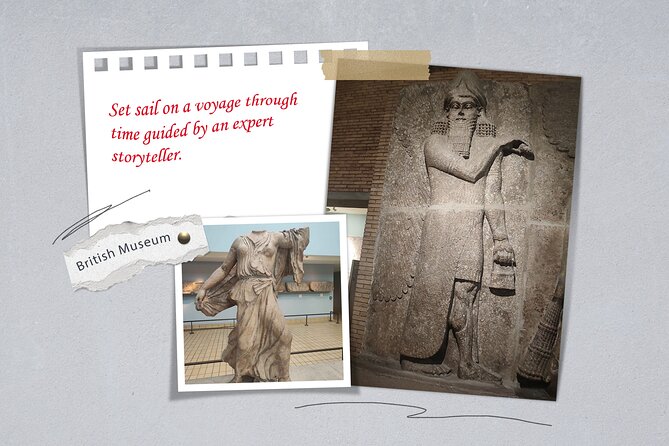
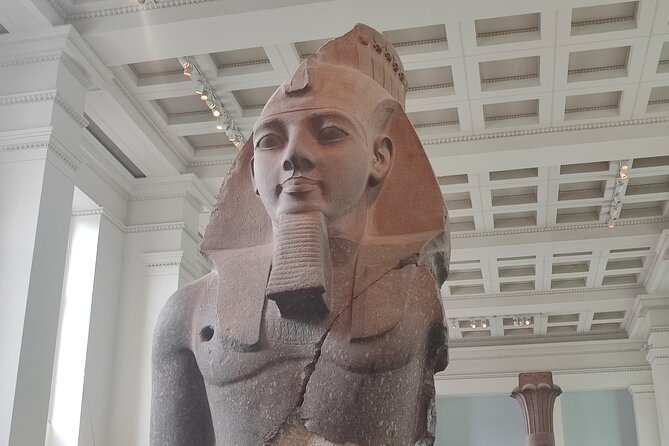
The Parthenon Marbles bring ancient Greece into the route. They are famous for their sculpture and for the questions they raise about empire, ownership, and the movement of cultural objects.
The tour description frames them as a way to recall the power of past empires. That is a useful angle. Rather than treating the marbles only as examples of idealized bodies and fine carving, you can consider what they say about political ambition and the way later institutions display ancient art.
This is also one place where a short guided explanation can prevent the visit from becoming a quick look at impressive stone. Your guide can point out how the figures once formed part of a larger architectural program and how the surviving pieces relate to the ancient world.
Sutton Hoo and the Last Voyage of an Anglo-Saxon Warrior
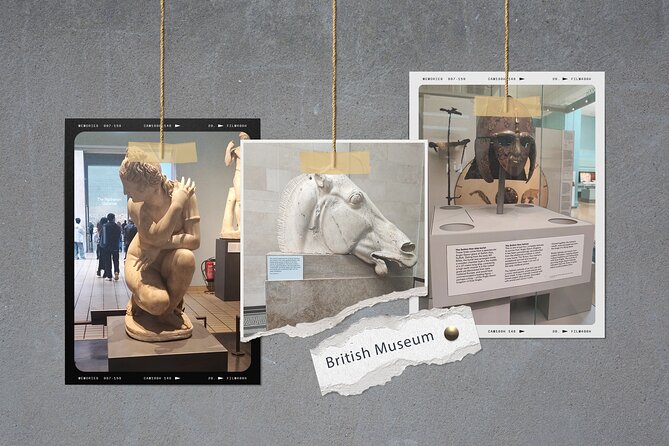
Sutton Hoo shifts the story from the Mediterranean to Anglo-Saxon England. The objects are linked to the burial of a high-status warrior and the remains of a ship burial.
The phrase last voyage captures the emotional pull of this display. You are looking at evidence of rank, ceremony, belief, and craftsmanship, all connected to a burial that has helped shape modern ideas about early English society.
This stop is a good reminder that the museum is not organized around one civilization. The route crosses time and place, and the guide’s job is to show the connections without making every culture seem the same.
The Lewis Chessmen and Human Strategy
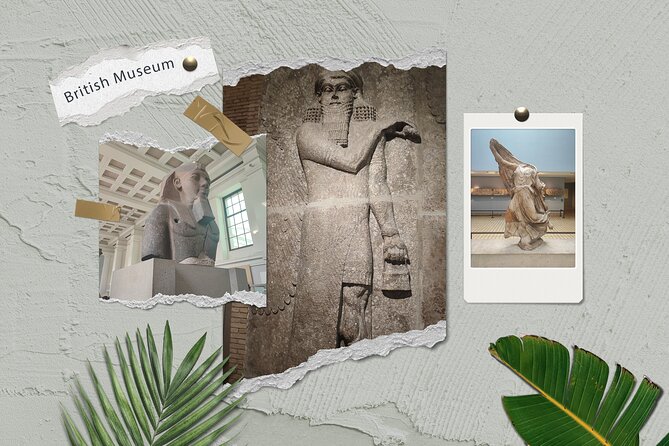
The Lewis chessmen offer a lighter moment, though they carry plenty of historical interest. Their small carved figures make strategy and personality visible. Kings, queens, bishops, knights, and other pieces appear as characters rather than anonymous game counters.
Your guide can use them to talk about play, status, craft, and the movement of objects across cultures. The chessmen also give younger members of a group something immediate to recognize.
This is one reason a theme-led tour works better than a random walk through the museum. The route can move from monumental sculpture and royal burials to a set of objects that reveal ordinary human habits, including the pleasure of playing a game.
Shiva Nataraja and the Cosmic Dance
The image of Shiva Nataraja introduces a powerful Hindu religious idea. Shiva appears in a cosmic dance tied to creation and destruction, giving the object movement and energy even though it is a sculpture.
This stop can open a discussion about how religious images carry several meanings at once. It also broadens the tour beyond the usual Egypt, Greece, and Rome focus that many first-time museum visits follow.
You may appreciate the way this object changes the pace. After stone reliefs, burial displays, and small carved figures, the dancing form asks you to think about time, transformation, and the cycle of the universe.
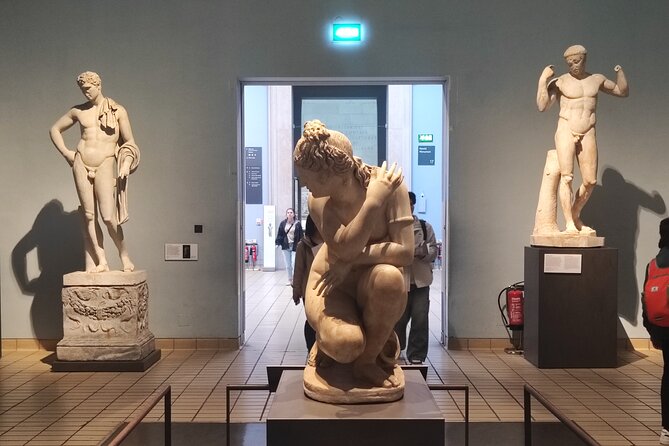
Ancient Sculpture and Changing Ideas of Beauty
The tour also looks at how standards of beauty change. Ancient sculptures are a useful way to see that beauty is not one fixed rule shared by every society.
A guide can point out choices in proportion, posture, clothing, hairstyle, and idealized form. You may begin by admiring the workmanship, then notice that the sculpture also reflects ideas about gender, status, youth, power, and the human body.
This theme makes the museum feel more personal. You are not only studying distant cultures. You are comparing their visual values with your own, and perhaps noticing how modern taste has borrowed from or rejected ancient models.
A Storyteller, Not Just a Sign Reader
The strongest feature of this experience is the guide. The tour is led by an art specialist storyteller, and the named guides connected with past bookings include Richard and Yuliya Ousarenko.
Richard has been praised for answering many questions, adapting the route, and extending one tour by half an hour at no extra charge. That extra time should not be treated as guaranteed, but it shows the sort of flexibility you should ask about if your group needs it.
Yuliya Ousarenko has also been praised for detailed explanations, kindness, and keeping the experience comfortable when a group arrived a little late. Again, guide assignments can vary, so you should not assume a particular person unless you request and receive confirmation.
The key benefit is not simply knowing dates and names. It is having someone choose the right detail at the right moment. A guide can explain enough to make an object meaningful without turning every stop into a lecture.
What Two Hours Can and Cannot Do
Plan on a highlights tour, not a complete survey. The British Museum’s size makes that unavoidable. You will see selected objects from several civilizations, but you will not cover every gallery or collection.
I would choose this tour if you want a strong first visit, have limited time in London, or prefer a story with a beginning and an end. It also suits families and groups where one person wants art, another wants archaeology, and someone else mainly wants the famous objects.
You may prefer exploring alone if you already know the museum well or want to spend an entire afternoon in one department. A private guide gives you focus, but focus means leaving many rooms for another day.
Wear comfortable shoes and keep your expectations realistic. The tour involves moving through a large museum, and the experience is built around looking, listening, and asking questions rather than sitting in one place.
Who Gets the Best Value
The price makes the most sense when divided among a full small group. Six or eight people sharing $203.65 can receive a private explanation of major objects for less than the cost of booking several separate private experiences. The exact value drops if only one or two people attend.
You also gain the ability to shape the visit. The guides have tailored routes to areas of greatest interest, so tell your guide early if you care most about Egypt, ancient Greece, Asian art, Anglo-Saxon England, sculpture, or another subject.
The tour is offered in English only, based on the supplied details. Most people can participate, and the museum is close to public transportation. Food and drinks are not included, so plan those separately before or after the visit.
Should You Book Ancient Daemons and Timeless Beauty?
Book it if the British Museum feels too large to tackle alone, if you want the famous objects placed in context, or if your group values questions and personal attention. Richard and Yuliya Ousarenko are names worth requesting, though availability is not stated.
Skip it if you want a slow, self-guided day in one specialist gallery or if you are mainly seeking admission to the museum, since entry itself is free. For most first-time visitors with two or three hours, the private format offers a practical way to see major treasures without wandering in circles.
FAQ
Where does the British Museum private tour start?
The tour starts at Montague Place, London, UK.
Where does the activity finish?
The activity finishes back at the meeting point.
How long does the tour last?
The tour lasts approximately two to three hours. The included details describe the guided museum tour as about two hours, while the itinerary gives three hours for the museum visit.
Is admission to the British Museum included?
The guided tour and fast track entry are included. The museum admission is listed as free.
How many people can join the private tour?
The price is listed for a group of up to eight people, while the highlights describe a group of up to six guests. Confirm the exact limit before booking.
Is the tour offered in English?
Yes. The experience is offered in English.
Are food and drinks included?
No. Snacks, food, and drinks are not included.
Can I cancel for a full refund?
Yes, if you cancel at least 24 hours before the experience start time. Cancellations or changes made less than 24 hours in advance are not accepted for a refund.
Just added around London
- Private The Beatles Taxi Tour in London★ 5.0 · 12 reviews
- The Alfred Hitchcock London Walk with Sandra Shevey★ 5.0 · 15 reviews
- Dinner and Jazz Cruise on the River Thames★ 4.0 · 140 reviews
- Airport Coach Service from Heathrow to Oxford★ 3.5 · 67 reviews
- Tower of London & 30+ London Sights Walking Tour★ 4.5 · 33 reviews
- Thames Beachcombing★ 4.5 · 100 reviews
- Ted Lasso London Taxi Tour★ 5.0 · 5 reviews
- Ted Lasso Tour of Richmond with Private Guide★ 5.0 · 25 reviews
British Museum Tours, compared.
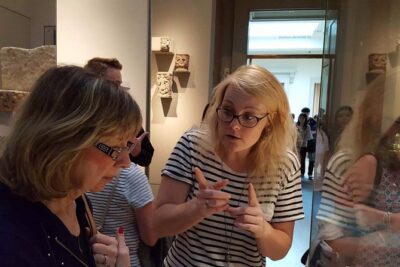
British Museum London Guided Tour Semi-Private 8ppl Max
Read our review →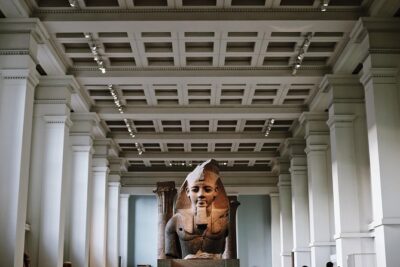
The British Museum London – Exclusive Guided Museum Tour
Read our review →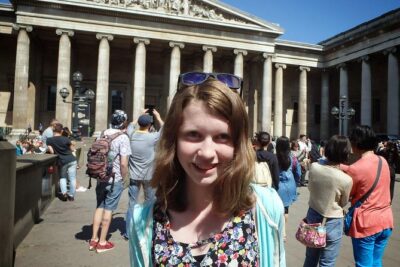
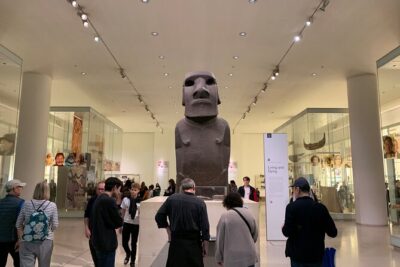
Private Guided Tour of the British Museum – Tickets Included
Read our review →
British Museum Guided Tour with Priority Timeslots(Small Group)
Read our review →
British Museum & National Gallery of London Semi-Private 8ppl Max
Read our review →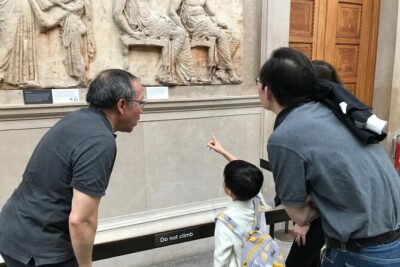
Explore Biblical Artifacts at the British Museum
Read our review →
British Museum Highlights Private Tour in London including the Rosetta Stone
Read our review →Browse the lists this tour appears in