
Reviewed · HISTORICAL TOURS
Curious Cambridge – The History Tour that’s FUN!!!
Cambridge has plenty of grand stone buildings, but this tour’s best feature is the human-sized storytelling. In 90 minutes, you move from an old port road and medieval churches to college pranks, rooftop climbers, town-and-gown fights, and the famous creature eating time beneath the Corpus Clock. It makes a complicated city easy to follow.
I like the route’s two clear strengths: you see many famous sights without paying college admission, and the guides keep the tone light enough for families. Peter, Ben, Simon, Chuck, and Chris have each been praised for adapting stories to the group, including younger children and teenagers. The main drawback is that you only see the colleges from outside, and a late guide cancellation is possible, though it appears unusual.
Key things to know before booking
- The route connects two useful points: Start at Jesus Green Lock House and finish opposite King’s College at the Corpus Clock.
- The stories are the main attraction: Expect Cambridge facts mixed with pranks, rivalries, strange customs, and local characters.
- You see famous college exteriors: The walk passes Magdalene, St. John’s, Trinity, Trinity Hall, and Gonville and Caius.
- Cambridge’s oldest building is included: St Bene’t’s Church gives the tour a physical link to the city’s earliest surviving architecture.
- The walk reaches beyond the postcard center: Castle Hill explains where Cambridge began, with Roman, Viking, and Norman connections.
- It suits mixed-age groups: The storytelling has been shaped to work for adults, children, and teenagers.
Why this Cambridge walk works so well
Many city walks give you a string of dates and names, then leave you to sort them out later. Curious Cambridge takes a different route. It uses odd details to make the facts stick. A lane once known as Pisspot Lane is easier to remember than a dry note about medieval sanitation. A founder’s strange instruction or a college prank gives you a handle for the larger story.
That approach is useful in Cambridge because the city can feel like two places at once. You have a working market town, an ancient university, old churches, scientific breakthroughs, and a long-running quarrel between townspeople and students. The walk ties those pieces together instead of treating the colleges as isolated monuments.
The advertised price is $27.74 per person. For a 90-minute guided walk, that is fair value if you want context rather than only photographs. You are not paying for entry to college chapels, libraries, or grounds, but you are getting a route, a local guide, and an organized explanation of sights that can otherwise seem disconnected.
I would think of this as an orientation walk for your first day in Cambridge. You can then decide which interiors deserve another visit, using the guide’s suggestions about chapels, libraries, and museums. If you already know the city well, the unusual stories may still appeal, but the value is less about access and more about interpretation.
A few more Cambridge trips to weigh up
- Cambridge’s History & Secrets with Self-Guided Walking Tours
★ 4.5 · 9 reviews - London Small Group Tour of Historical Pubs
★ 5.0 · 10,422 reviews - Soho Music & Historic Pubs Tour
★ 5.0 · 1,993 reviews
Starting at Jesus Green Lock House

The meeting point is Jesus Green Lock House, Cambridge CB4 3AX. The tour then works toward the historic center, ending at the Corpus Clock on Trumpington Street. This direction matters: you finish near King’s College, one of Cambridge’s most recognizable sights, rather than being left in an outlying meeting area.
The opening Cambridge section is brief, so do not expect a long formal introduction before walking. The guide can adjust the emphasis depending on questions and group interest. That flexibility is helpful if your group wants more on university life, local history, science, or unusual Cambridge characters.
You should arrive ready to walk for about an hour and a half. The tour is near public transportation, and most people can take part, but the supplied details do not promise a particular surface type or a fully step-free route. If mobility access is important to you, ask before booking.
Magdalene College and Cambridge’s old port road
The first substantial stop is Magdalene Street and Bridge, beside Magdalene College. This is more than a pretty approach to a college. The road was once tied to the port of Cambridge, and the guide uses it to explain how the city functioned before the university became its defining image.
That is a smart early stop. It reminds you that Cambridge was not created only for scholars. It grew around movement, trade, water, and the bridge that helped connect the settlement to the wider region. As you look toward the college buildings, you get both the academic facade and the older town beneath it.
You will not enter Magdalene College. That limitation is clear, and it keeps the tour within its stated price and time. If you want college interiors, you will need to make separate plans.
St. John’s College and the Round Church
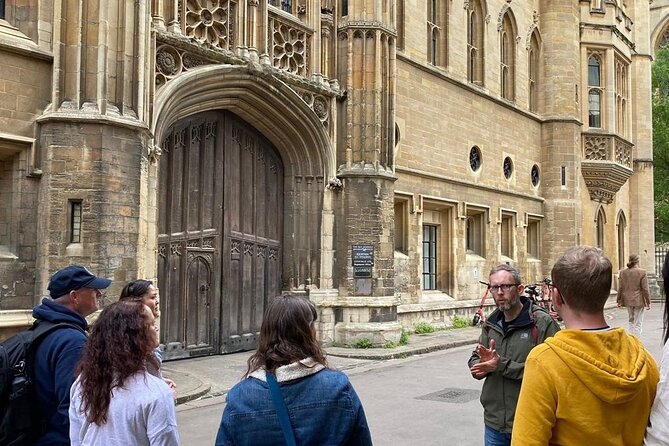
The walk continues toward St. John’s College and the Round Church. The church is linked to the early development of the university, making this stop useful for understanding how Cambridge’s academic life took root.
The Round Church also gives the group a change of pace. Instead of looking only at college walls, you pause at a religious building tied to the city’s early institutions. The guide can place the university in its medieval setting and show why Cambridge’s identity grew around both church and college.
St. John’s is one of the names people expect to hear in Cambridge, but this tour does not promise entry. You are seeing the exterior and learning the story around it. That is enough for a first pass, though you may want more time later if architecture or college history is your main interest.
Same country, a completely different day out:
- Cambridge University Walking Tour by Alumni™ Kings College Option
★ 5.0 · 2,336 reviews - Cambridge University With Alumni: Optional Kings College Entrance
★ 5.0 · 1,987 reviews - Punting Tour in Cambridge
★ 4.5 · 1,690 reviews - Shared Guided Punting Tour of Cambridge
★ 5.0 · 787 reviews
Trinity College, Newton, and a famous prank
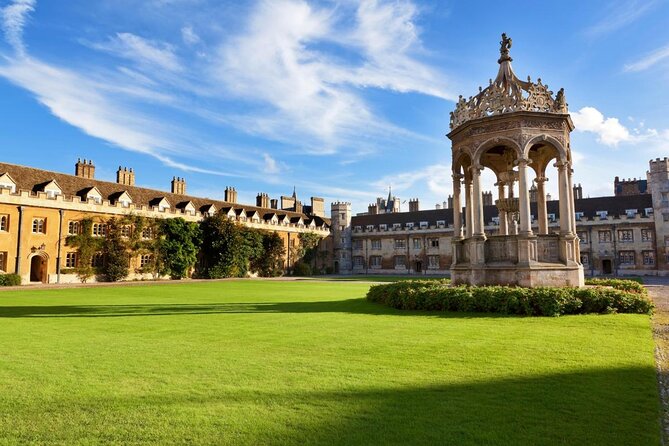
Trinity College receives a lively treatment. It is described as the wealthiest college in Oxford or Cambridge and as the home of Isaac Newton. Those facts alone would make it a major stop, but the guide also brings in one of Cambridge’s longest pranks.
This combination captures the appeal of the tour. You get institutional power, a major scientific figure, and the irreverent student culture that keeps Cambridge from feeling like a museum. The exact prank story may vary with the guide and the questions from the group, but you can expect the building to be discussed as both an academic institution and a place shaped by generations of students.
If you are interested in Newton, this stop gives you a starting point rather than a full biography. The same is true for Trinity’s architecture. The walk is designed to keep moving, so use it to note what you want to investigate later.
Trinity Lane and the less polished past
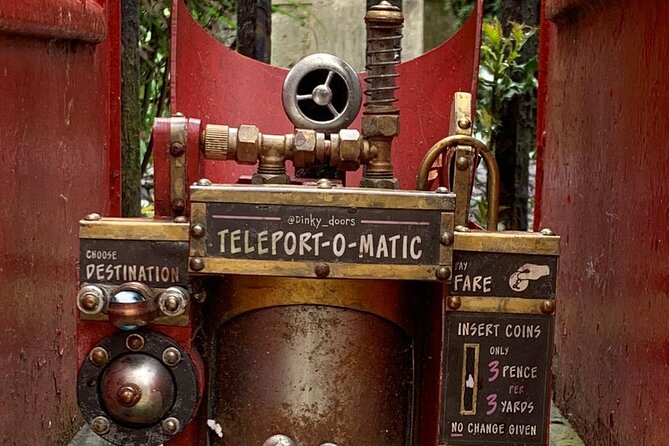
At Trinity Lane, the tone turns earthy. The lane was once called Pisspot Lane, an unglamorous name that says more about daily life than a polished university brochure ever could.
This is the kind of detail that makes the city easier to remember. Cambridge’s famous colleges were not always surrounded by tidy, carefully managed streets. The guide uses the old name to show how ordinary life, waste, travel, and student habits once shaped the center.
The stop is also a reminder that historic streets are not automatically grand. Some are narrow, practical, and a little awkward. You should expect a walking tour rather than a sequence of formal viewing platforms. Keep close to the guide and be prepared for regular pedestrian movement in the center.
Gonville and Caius and the Nightclimbers
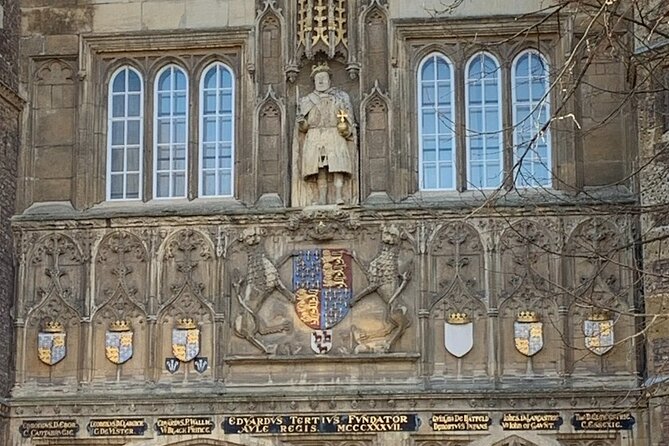
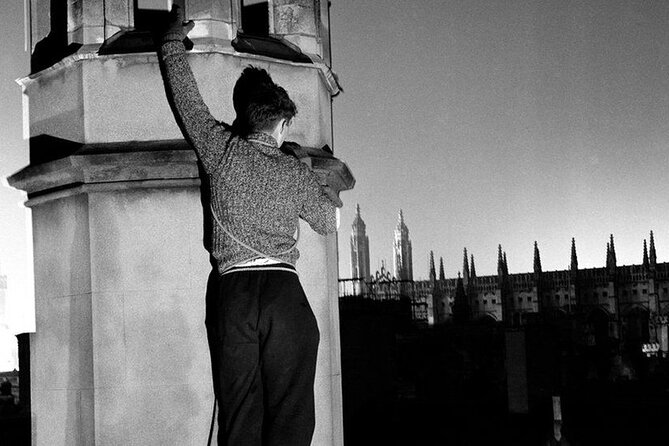
Gonville and Caius College brings one of the tour’s stranger stories: the Nightclimbers. The name refers to a famous tradition of climbing Cambridge’s buildings after dark. The stop also covers an unusual instruction from the college’s founder.
These details appeal to anyone who finds institutional history too stiff. Colleges may look disciplined from the outside, but their past includes daring students, odd rules, and behavior that would not fit neatly into an official prospectus.
The guide’s job here is to connect the story to the building in front of you. That is more useful than hearing a random anecdote with no sense of place. You can look at the college facade while imagining the risks and rituals attached to it.
Again, there is no college admission included. Treat this as an exterior history stop, not a substitute for a paid visit inside.
Market Square and town versus gown

Cambridge Market Square shifts the focus back to the town. It is associated with one of England’s oldest markets, famous bell chimes, and the sometimes rough relationship between local residents and university students.
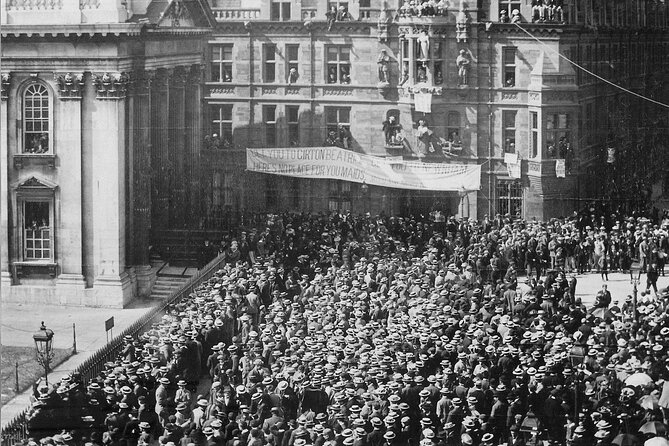
The phrase town versus gown describes the long tension between Cambridge’s townspeople and its university community. The tour includes stories of physical clashes, or what the schedule calls Cambridge punch-ups. That gives you a sharper sense of how much power, money, and identity were tied up in the university.
The market also helps you see Cambridge as a living city rather than a college display. Depending on the time and day, the square can be an active public place, so the guide may need to position the group carefully. The tour has a maximum of 25 people, which is small enough to remain manageable but not necessarily intimate.
The bell-chime detail may sound like a throwaway fact, yet it adds local color. It is the sort of information you can notice again while exploring independently.
St Bene’t’s Church and Cambridge’s oldest building
St Bene’t’s Church on Benet Street is one of the strongest stops for anyone interested in early Cambridge. The church is identified as the oldest building in Cambridge, giving you a direct connection to the city’s earliest surviving fabric.
This is an important counterweight to the university colleges. Cambridge’s story did not begin with Trinity or St. John’s. St Bene’t’s helps place the later university buildings within a settlement that was already old.
The stop also reaches into modern science. Nearby is the laboratory connected with the discovery of the structure of DNA, described here as the place where someone found the secret of life. The story continues at the pub where the discovery was announced over a pint. That pairing of major science and ordinary pub life is exactly the sort of contrast this walk handles well.
You also see the Corpus Clock, a modern Cambridge icon with a grim little creature called the Chronophage. The name means time eater, and the clock’s design gives the tour a memorable finish. It is not simply a clock face. It turns time into a creature, a warning, and a piece of public art.
Castle Hill and the place Cambridge began
The final major stop is Castle Hill. This takes you away from the compact college center and points to the origins of Cambridge itself. Romans, Vikings, and Normans all appear in the story, along with the importance of the last bridge before the sea.
Castle Hill is valuable because it broadens your sense of location. The university center can make Cambridge seem like a self-contained academic world, but this viewpoint connects the city to conquest, transport, defense, and the river.
The walk’s route and timing mean you should not expect a long archaeological visit. You are getting the story and the setting, not a full museum treatment. Still, the stop gives the tour a proper beginning-and-end shape: you start with the city’s early development and finish by seeing how Cambridge became the place you recognize today.
Guides, group size, and the family question
The guide makes or breaks a walking tour, and this experience has received especially strong praise for its presentation. Peter has been described as tailoring the material to a group’s background and interests, with pictures that help identify landmarks and suggestions for chapels, libraries, and museums.
Ben is associated with a gentle, entertaining walk built around ancient and recent facts. Simon has been praised for enthusiasm and storytelling, including a tour enjoyed by a 15-year-old. Chuck and Chris have also led well-received walks, with Chris noted for handling different ages in the same group and keeping a nine-year-old interested.
Guide assignments can change, so you should not book expecting a specific person unless the provider confirms it. The important point is the style: expect a host who tells stories, answers questions, and adjusts the emphasis rather than delivering a fixed lecture.
Families are a particularly good match. The material includes enough odd and funny details to hold a child’s attention, while the historical framework gives adults something solid to take away. A teenager who dislikes formal sightseeing may respond better to pranks, night climbers, rivalries, and science stories than to a long list of dates.
What you pay for, and what you do not
At $27.74, the tour gives you a guided 90-minute introduction to central Cambridge and Castle Hill. That price includes the guide’s commentary and the planned walking route, but not entry into the colleges. The provider also offers access to partner offers from Cambridge tourism businesses through its website.
I see the price as good value for first-time visitors who want a clear framework. You will see the outside of several major colleges, learn how the town and university developed together, and finish near King’s College. You also save time by getting the main sights in one organized circuit.
The value is weaker if you want interiors, long photo stops, or a slow architectural study. Since each stop is planned at about ten minutes, the guide must keep moving. You can always return later to the places that catch your eye.
Booking demand averages about 15 days in advance, so it is sensible to reserve ahead if your Cambridge dates are fixed. Confirmation arrives at booking, mobile tickets are accepted, and the tour is offered in English. Free cancellation is available up to 24 hours before the start time. A late cancellation by the provider is possible if a guide is ill or the minimum group size is not met. In that case, you are offered another date or experience, or a full refund.
Is Curious Cambridge right for you?
Book this tour if you want a lively first look at Cambridge, especially if you enjoy local oddities, university stories, and a guide who can make children and adults listen. It is also a good choice if you want to see the major college exteriors before deciding which paid interiors deserve your time.
Think twice if your priority is entering Trinity, St. John’s, Magdalene, or Gonville and Caius. Those visits are not included. You should also allow extra time afterward for photographs, museums, chapels, or a closer look at the Corpus Clock, since the walk keeps to its 90-minute schedule.
For most first-time visitors, I would book it near the start of a Cambridge stay. The route gives you a useful mental map, and the stories make the city easier to remember. You leave with more than a checklist of buildings: you understand why Cambridge is part medieval town, part university, part scientific landmark, and part long-running student joke.
FAQ
How long does Curious Cambridge last?
The tour lasts approximately 1 hour and 30 minutes.
Where does the tour start?
It starts at Jesus Green Lock House, Cambridge CB4 3AX, UK.
Where does the tour finish?
It ends at the Corpus Clock at 58 Trumpington Street, opposite King’s College.
Does the tour enter the Cambridge colleges?
No. You see colleges from the outside, but college entry is not included for time and cost reasons.
Which colleges are included on the route?
The route passes Magdalene College, St. John’s College, Trinity College, Trinity Hall, and Gonville and Caius College.
Is the tour offered in English?
Yes. The tour is offered in English and uses a mobile ticket.
What is the cancellation policy?
You can cancel for a full refund up to 24 hours before the experience begins. Cancellations or changes made less than 24 hours before the start time are not accepted for a refund.
Just added around Cambridge
- Tangential Cambridge: Group Walking Tour of Sights and Highlights★ 5.0 · 79 reviews
- Scholars & Secrets of Cambridge: Self-Guided Puzzle Adventure★ 3.5 · 19 reviews
- Town Food Tour in Saffron Walden★ 5.0 · 32 reviews
- Explore Cambridge Student Life & Top Colleges Walking Tour★ 3.5 · 18 reviews
- Cambridge University Ghost Tour by Alumni™★ 5.0 · 117 reviews
- Fun, Flexible Treasure Hunt Around Cambridge with Cryptic Clues & Hidden Gems★ 5.0 · 142 reviews
- Private Chauffeur Punt Tour★ 5.0 · 106 reviews
- Private | Cambridge University Colleges Guided Punting Tour★ 4.5 · 13 reviews
Historical Tours, compared.

Shadows of York: Ghost Walk and Horrible History.
Read our review →
A Walk Through Time: History of Liverpool Walking Tour
Read our review →
Royal Historic Pubs Walking Guided Tour in London
Read our review →
Private Group: Historical Pub Walking Tour of London
Read our review →
Best Of Liverpool Heritage, History & Culture Guided Walking Tour
Read our review →Browse the lists this tour appears in