
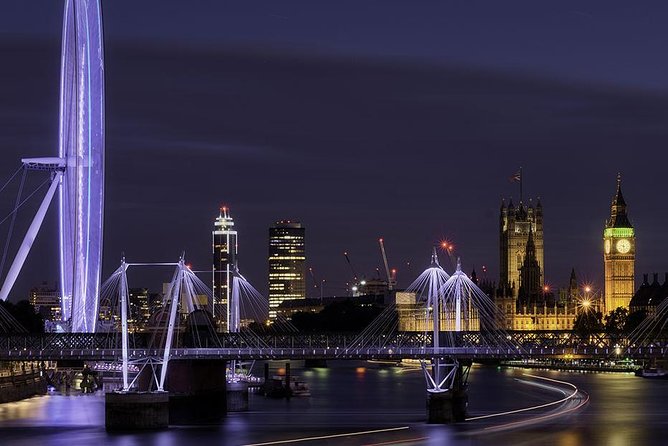
Reviewed · HISTORICAL TOURS
London’s Alternative History: A Self-Guided Audio Tour
Covent Garden is more than a place for shops, street performers, and packed restaurants. This self-guided walk uses the area as a launch point for London’s stranger stories, leading you past theatres, courts, bridges, riverside buildings, and the Savoy. You’ll hear why Covent Garden began as a convent garden, where London’s first recorded punch-up took place, and how sewer gas once powered a street lamp.
I like the GPS-guided directions, which tell you where to turn and where to look instead of leaving you to wrestle with a phone map. I also like the freedom to pause, wander, or take longer than the advertised hour. The main drawback is that this is an audio walk, not a live guide, so you’ll need a charged smartphone and must pay attention to the route.
Key points at a glance
- Start in Covent Garden: Begin at The Piazza and trace the district’s medieval origins before moving toward London’s theatre quarter.
- Hear unusual stories: The walk covers actors, ghostly theatre tales, curious trials, sewer gas, and early electric lighting.
- Use your own pace: The stated duration is about one to one and a half hours, but you can pause the audio whenever you like.
- Follow the route offline: The VoiceMap app includes audio, maps, and geodata without requiring a live data connection once downloaded.
- Finish at the Savoy: End near one of London’s grandest hotels, after crossing Waterloo Bridge and passing several memorable landmarks.
- Pay a modest one-time price: At $9.99 per person, lifetime access makes this useful beyond a single afternoon in London.
A London walk built around odd facts
This tour is best understood as a story-led stroll through central London. You are not being taken inside a series of attractions, and you are not paying for museum admissions. Instead, the route points out places you might otherwise pass without a second thought, then gives each one a surprising backstory.
The walk begins in Covent Garden and ends at the Savoy Strand. That makes practical sense for a half-day sightseeing plan. You can start near the West End, see several major landmarks from the outside, and finish close to the Thames, the Strand, and nearby transport links.
The route is private in the simple sense that only your group uses it. Still, there is no human guide walking beside you. The narrator’s name is not provided, but the audio is described as soothing and carefully paced. That matters on a walk like this. You want enough time to look up at a building, find the next turn, and listen without feeling hurried.
A few more London trips to weigh up
- London Small Group Tour of Historical Pubs
★ 5.0 · 10,422 reviews - Soho Music & Historic Pubs Tour
★ 5.0 · 1,993 reviews - Royal Historic Pubs Walking Guided Tour in London
★ 5.0 · 803 reviews
Covent Garden and the name behind the market
The first stop explores the market area and the origin of its name. Covent Garden comes from Convent Garden, a reminder that this lively district began as land connected with a medieval convent.
That small fact changes how you see the Piazza. The area is now associated with shops, food, performers, and theatre crowds, but the audio brings you back to an earlier London, before the district became a major entertainment center. It is a good opening because you begin with a familiar place and quickly learn that its name carries a much older story.
The Piazza can be crowded, so give yourself a moment to get oriented before pressing ahead. The walk is self-paced, but this opening stop works best if you are willing to pause and look around rather than simply follow the blue dot on your screen.
The Actors’ Church and an early London brawl
The next stop is the church known as the Actors’ Church. Many famous actors have been memorialized there, making it a fitting stop in this part of London. You also hear about the city’s first recorded punch-up, an appropriately rowdy detail for a district shaped by performance and nightlife.
This is one of the tour’s strengths. It does not treat history as a list of dates and royal names. Instead, it uses small human incidents to make the street feel lived-in. The story of a fight can tell you as much about the character of old London as a formal description of a church.
You will appreciate this stop if you enjoy theatrical history but do not want a full lecture on the West End. It is short, local, and tied to the building in front of you.
Drury Lane and the Man in Grey
The route continues to London’s oldest theatre site, a place with centuries of performances and tales of ghostly appearances. The most famous spirit here is the Man in Grey.
The theatre stop adds a touch of mystery without turning the whole walk into a ghost tour. You learn how a performance venue can carry stories from one generation to the next, even as the building and productions change. The mention of the Man in Grey gives you something memorable to attach to the site.
Because the audio is linked to your location, you can listen while standing near the theatre rather than trying to match a general city commentary to the correct building. That is useful in the West End, where several theatres sit close together and signs can be easy to miss.
Same country, a completely different day out:
- Stonehenge, Windsor Castle, and Bath from London
★ 4.5 · 18,662 reviews - London Big Bus Hop-On Hop-Off Tour with Optional River Cruise
★ 3.5 · 10,803 reviews - Stonehenge, Windsor Castle and Bath with Pub Lunch in Lacock
★ 4.5 · 7,402 reviews - Tower of London and Crown Jewels Exhibition Ticket
★ 4.5 · 6,677 reviews
London’s legal oddities and famous trials
Another stop examines intriguing cases and well-known trials, showing the less tidy side of London’s legal past. The emphasis here is on unusual stories rather than a dry explanation of court procedure.
This section may appeal most to anyone who likes London’s darker and quirkier corners. It also gives the route some variety. You move from actors and ghosts to the law, then back to the performing arts. That change keeps the walk from feeling like a single-topic theatre tour.
The supplied route information does not promise entry into a court or museum, so expect to hear the story from outside. You should also remember that central London streets can be noisy. Earbuds make the audio easier to follow, but keep the volume low enough to hear traffic and other people around you.
The Lion King and theatre powered by electricity
A theatre famous for productions including The Lion King appears later on the route. This stop also connects the venue with the early use of electricity for stage lighting.
That combination is particularly useful because it links a current cultural landmark with a major change in how theatre worked. Modern audiences take electric lighting for granted. In the early days, however, new lighting technology affected what could happen on stage and how audiences experienced a performance.
You do not need to buy a theatre ticket to benefit from this stop. The audio is designed to be enjoyed as part of the walk, although the route does not include admission to attractions along the way. If you are already planning a West End show, this commentary can give the theatre more meaning before curtain time.
Somerset House, from Tudor palace to Navy office
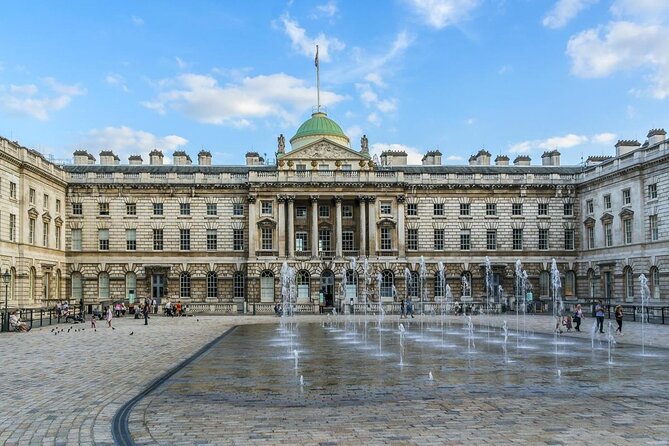
Somerset House is one of the route’s most useful stops for understanding how London buildings change purpose. The audio traces its transformation from a Tudor palace into a Navy office and connects the site with the development of the British postal system.
That is a lot of change for one address. It also gives you a reason to look beyond the building’s current appearance. Grand London architecture often hides layers of government work, royal use, and practical administration, and this stop focuses on those changes.
A useful tip is to allow extra time here if you want to examine the setting. The walk’s audio may take only a few minutes, but you can pause it and look around. One person using the tour noted that the route included a Dickens flat and Somerset House, even after visiting Somerset House separately the day before. That makes the pause function especially valuable: you can spend more time at places that catch your interest without losing your place.
Victoria Embankment and the Thames moved aside
The route then reaches the riverside promenade. You hear how its construction involved diverting the River Thames and uncovering secrets along the river’s edge.
This is where the walk shifts from entertainment and institutions to the physical making of modern London. A riverside promenade can look permanent and natural, but its construction required major changes to the river and the city. The story helps you notice the embankment as an engineering project, not just a pleasant place for a walk.
The riverside also gives you a welcome change of pace. After narrow streets and busy theatre areas, you have more room to look outward. If the weather is good, this may be one of the nicest sections for simply pausing the audio and taking in the view.
Waterloo Bridge, the Ladies’ Bridge
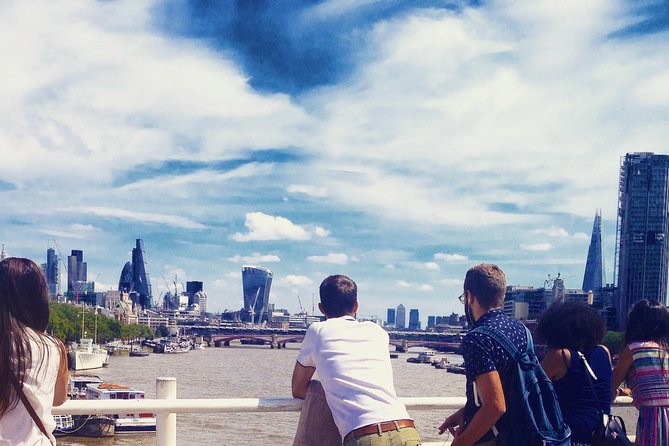
The route crosses Waterloo Bridge, known here as the Ladies’ Bridge because women carried out much of its construction during World War II. The bridge offers broad views across London, making it one of the walk’s natural high points.
This stop combines a social story with a strong visual payoff. The bridge is not just a crossing between two points. It also represents wartime labor and the contribution of women to major construction work when many men were away serving.
Take your time on the bridge. The advertised duration allows for a fairly direct walk, but the views are a good reason to pause. You may also want to stop the audio before reaching the middle, then restart it when you are ready. The app allows this kind of flexibility, and you will get more from the bridge if you are not trying to walk, listen, take photographs, and watch the surroundings all at once.
The sewer-gas lamp on Carting Lane
One of the most unusual stops concerns London’s last remaining Victorian gas lamp, powered by sewer gas. It earned the nickname The Lamp that Lights Itself.
This is exactly the sort of detail that gives the tour its character. You might walk past a small lamp without guessing that it has such an odd connection to London’s underground systems. The story is brief but memorable, and it rewards careful attention to the street rather than just the major landmarks.
It also shows why a self-guided audio tour can work well in London. A live guide cannot stop every group at every small curiosity, while a phone-based route can point out minor features that have no formal entrance or visitor center.
The Savoy and London’s electric age
The final stop is the Savoy, a grand hotel linked to early electric lighting. It was the first public building in the world to be lit entirely by electricity, and its story includes luxurious guests and infamous parties.
This ending brings several threads together. You have heard about theatre lighting, the sewer-gas lamp, and the changing systems that helped modern London function. The Savoy gives the route a polished finish, but the audio also reminds you that technological change and high society have long shared the same address.
The walk ends at The Savoy Strand, London WC2R 0EZ. That is convenient if you want to continue along the Strand or toward the river after the audio ends. It also gives you a clear endpoint, which is helpful on a self-guided route.
Why the VoiceMap format works
The VoiceMap application supplies the audio, map, and geodata. Once downloaded, the content can be used offline, so you do not have to depend on a strong mobile signal while walking.
The GPS feature is the key benefit. The commentary is tagged to locations, and the directions tell you where to turn and what to look for. One user who finds ordinary Google walking directions difficult found this format much easier to use. That is a meaningful advantage if you want the structure of a guided walk without joining a scheduled group.
You should still prepare before leaving. Download the VoiceMap app and offline material, charge your phone, and bring headphones if you prefer not to hold your device for the whole walk. The tour does not provide a smartphone, transportation, meals, or admission tickets.
The audio is offered in English. Most people can take part, and service animals are allowed. The route is near public transportation, but no specific transport service is included.
Timing, pace, and the $9.99 price
The walk is advertised at roughly one hour to one and a half hours. That is a reasonable estimate for following the route without long stops, but you should not treat it as a strict schedule. You can pause the audio to talk, take pictures, visit a nearby place, or simply walk more slowly.
One group took longer than an hour and enjoyed doing so. That is the right way to use this tour. The audio does not punish you for stopping. If you have two spare hours before dinner or a show, it can fill that gap without forcing you into a fixed departure time.
At $9.99 per person, the value is strongest if you like independent sightseeing. A live private guide would offer more conversation and personal recommendations, but it would also cost far more. This tour gives you a planned route, spoken stories, and navigation for the price of a casual London snack, then lets you use it again because access lasts for life.
Lifetime access is more useful than it may first sound. You can pause the walk and return another day, or replay it on a later London visit. You can also use the route as a first pass, then return to Somerset House, the theatres, or the riverside with more time.
Cancellation is free if you cancel at least 24 hours before the experience start time. Changes or cancellations within 24 hours are not refunded.
Who should choose this walk
I would recommend it to you if you want to see several central London sights while learning odd facts that are easy to remember. It works particularly well for independent visitors, couples, families with older children, and anyone with a spare afternoon near Covent Garden.
It is also a good choice if you dislike large groups. You can walk only with your own party, set your own speed, and pause whenever you want. The audio format keeps the cost low while still giving the outing a clear shape.
You may prefer a live guide if you want to ask questions, hear personal recommendations, or adjust the route on the spot. You should also look elsewhere if you want attraction admissions included, since this experience covers the audio walk only.
Should you book London’s Alternative History?
Book it if you value odd local stories, simple navigation, and complete control over your timing. The route covers enough major places to feel worthwhile, but its real appeal is the small details: a convent’s garden, a theatre ghost, a wartime bridge, a self-lighting lamp, and a hotel tied to electric history.
Skip it if you need a live person, a tightly timed group excursion, or entry into the buildings along the way. For $9.99, though, it is a sensible way to turn a walk between Covent Garden and the Savoy into a more memorable piece of London sightseeing.
FAQ
Where does London’s Alternative History tour start?
The tour starts at The Piazza, 1-7 Covent Garden, London WC2E 8HD, UK.
Where does the tour end?
It ends at The Savoy Strand, London WC2R 0EZ, UK.
How long does the audio walk take?
The stated duration is approximately one hour to one hour and 30 minutes. You can take longer by pausing the audio or stopping along the route.
What language is the tour offered in?
The tour is offered in English.
Do I need a smartphone and internet access?
You need to provide your own smartphone. The VoiceMap app includes offline access to the audio, maps, and geodata, so you can use the downloaded material without relying on an active connection.
What does the price include?
The $9.99 price includes lifetime access to London’s Alternative History Tour, the VoiceMap application, and offline audio, maps, and geodata. It does not include a smartphone, transportation, food, drinks, or entrance fees.
More Audio Tours in London
- Westminster Abbey Entrance Ticket Including Audio Guide
★ 4.0 · 661 reviews - Windsor Castle Tour from London with Transportation & Audio Guide
★ 3.5 · 222 reviews - London Panoramic Open Top Bus Tour with Audio Guide
★ 4.0 · 209 reviews - Emirates Stadium and Arsenal Museum Entrance Ticket Including Audio Guide
★ 4.5 · 113 reviews
Just added around London
- Private The Beatles Taxi Tour in London★ 5.0 · 12 reviews
- Dinner and Jazz Cruise on the River Thames★ 4.0 · 140 reviews
- Airport Coach Service from Heathrow to Oxford★ 3.5 · 67 reviews
- The Alfred Hitchcock London Walk with Sandra Shevey★ 5.0 · 15 reviews
- Thames Beachcombing★ 4.5 · 100 reviews
- Tower of London & 30+ London Sights Walking Tour★ 4.5 · 33 reviews
- Ted Lasso London Taxi Tour★ 5.0 · 5 reviews
- Ted Lasso Tour of Richmond with Private Guide★ 5.0 · 25 reviews
Historical Tours, compared.

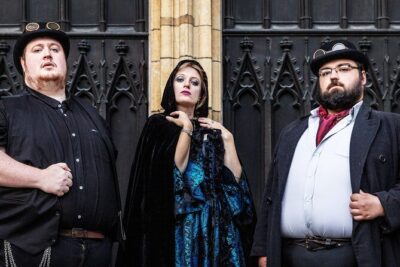
Shadows of York: Ghost Walk and Horrible History.
Read our review →
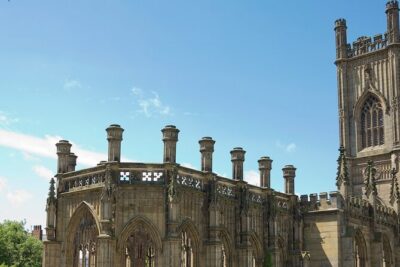
A Walk Through Time: History of Liverpool Walking Tour
Read our review →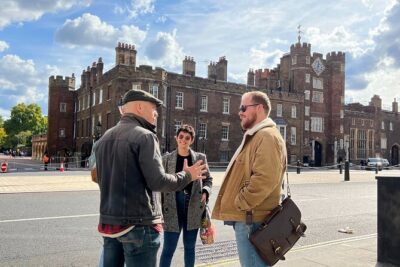
Royal Historic Pubs Walking Guided Tour in London
Read our review →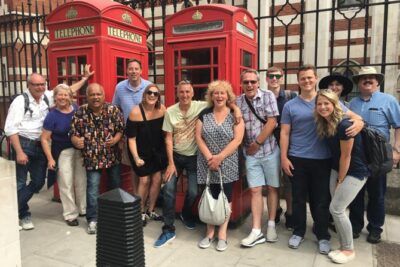
Private Group: Historical Pub Walking Tour of London
Read our review →
Best Of Liverpool Heritage, History & Culture Guided Walking Tour
Read our review →Browse the lists this tour appears in