
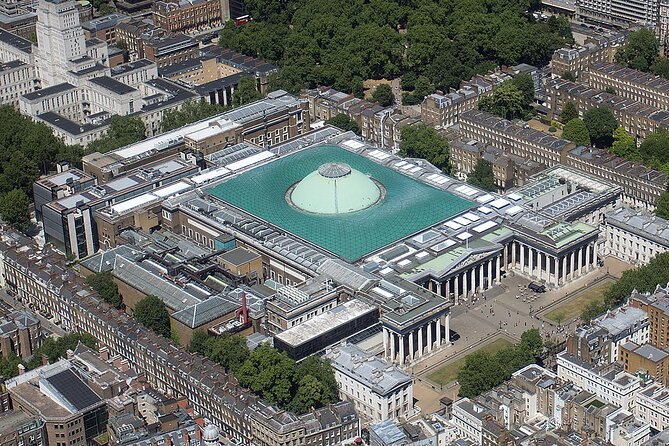
Reviewed · BRITISH MUSEUM TOURS
Marvels at the British Museum: Rosetta Stone, Parthenon, Mummies
The Rosetta Stone and Parthenon sculptures give this British Museum tour a strong start. Instead of trying to cover eight million objects, your guide focuses on the pieces that shaped our understanding of ancient Egypt, Greece, Rome, Mesopotamia, and Britain.
I like the two-hour focus, which suits a short London visit, and I like having a guide explain the stories behind the objects rather than leaving you with only a wall label. The main drawback is the price, $102.43 per person, and the fact that a priority queue is still a shared fast queue, not instant entry.
Key points to know before booking
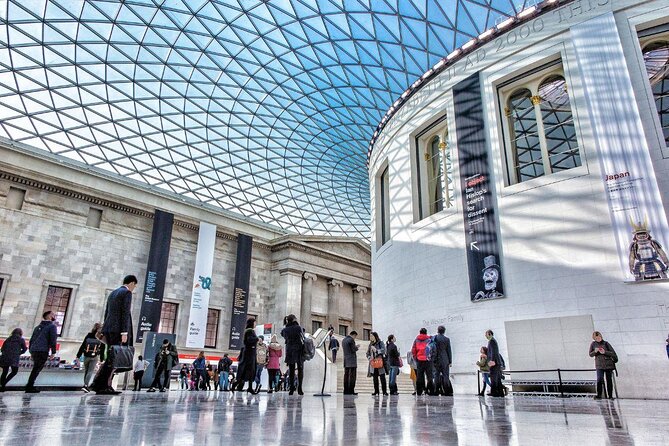
- Rosetta Stone and Parthenon sculptures: See two of the museum’s most famous objects, along with major Egyptian and ancient-world displays.
- A focused two-hour route: The tour selects headline pieces instead of attempting the entire British Museum.
- Guide-led storytelling: Ask questions and hear context that may not fit on a standard gallery label.
- Priority queue access: You use a faster entrance line, though other priority-entry customers may be in the same queue.
- Groups of up to 25: This is a shared walking tour, not a private visit.
- Plan for plenty of walking: Comfortable shoes matter, and you should arrive at least 15 minutes early.
Why this British Museum tour works for a short London visit
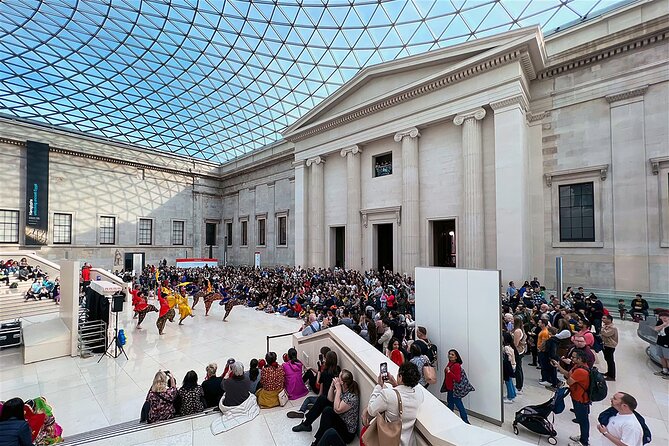
The British Museum can swallow an entire day. Its collection covers some eight million objects, spread across galleries devoted to many cultures and periods. That scale is thrilling, but it can also leave you wandering without a clear sense of what matters most.
This tour takes a different approach. In roughly two hours, you follow a guide to selected highlights from ancient Egypt, Mesopotamia, Greece, Rome, and Britain. You will not see everything, and that is the point. You get a short, directed visit built around famous objects and the stories that make them meaningful.
I find this format especially useful at the start of a London trip. You get your bearings inside one of the city’s biggest museums without spending half a day deciding which room to enter next. Afterward, you can return on your own if one section catches your interest.
The experience is entirely on foot. You should expect regular movement through large museum spaces, time spent standing, and enough walking to make comfortable shoes a sensible choice. The museum is huge, so even a two-hour route can feel active rather than relaxed.
More British Museum Tours in London:
- British Museum London Guided Tour Semi-Private 8ppl Max
★ 5.0 · 984 reviews - The British Museum London – Exclusive Guided Museum Tour
★ 5.0 · 555 reviews - British Museum Guided Tour
★ 4.0 · 470 reviews
Starting at Great Russell Street
The meeting point is the British Museum on Great Russell Street, London WC1B 3DG. You need to arrive at least 15 minutes before the scheduled start time. That buffer matters because the group must gather, deal with entry, and begin together.
Your ticket is mobile, so you can keep it on your phone rather than arranging a paper voucher. Online support is available at the time of boarding the tour, which is useful if you need help finding the meeting point or confirming the starting details.
The tour does not include hotel pickup. You make your own way to the museum, but the location is near public transportation. Since the tour ends back at the meeting point, you can plan a nearby lunch, another museum visit, or a walk through central London afterward.
The operator warns that a chosen time may be shifted to another available time on the same day. For example, a requested 10:00 start could be moved to 14:00 if the original slot is not available. Check your final time carefully before setting out.
Priority entry, with one important qualification
The phrase skip the line needs a little translation. You do not simply walk through every queue. Instead, you use a priority queue shared with other people who have selected priority entry.
That can save time when the regular entrance is long, especially at a major London museum. Still, the fast queue may not be empty, and entry can involve a short wait. Think of this feature as a practical time-saving measure, not a guarantee of immediate access.
Arriving early remains important. A priority ticket does not remove the need to be at the correct entrance at the required time. If you arrive late, the group may already have gone inside.
The Rosetta Stone and the ancient Egyptian story
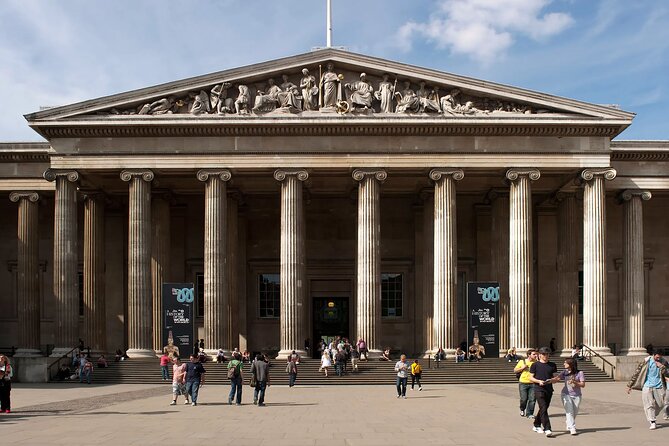
The Rosetta Stone is the obvious headline. Its importance comes from the inscriptions written in more than one script, which helped scholars make progress in reading Egyptian hieroglyphs. Seeing it in person gives the tour a clear anchor: this is not simply a large carved stone, but an object tied to the way modern people began to understand ancient Egyptian writing.
The Egyptian section also gives the guide room to discuss objects connected with daily life, belief, death, and royal power. The experience is titled around mummies, and Egyptian mummies and related material form part of the ancient-world focus. Your guide’s job is to connect these objects instead of presenting each one as an isolated display.
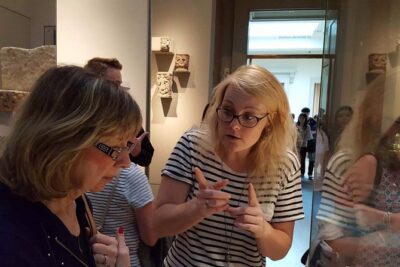
This is where the guided format earns its keep. Museum labels need to be short and direct. A guide can explain why an object matters, point out details you might miss, and answer questions as they come up. The tour specifically encourages you to test the guide with your own questions, so this is a good choice if you prefer conversation to a silent walk through the galleries.
One caution: two hours is not enough for a full study of Egyptian collections. You get selected highlights, not a complete account of Egyptian art, burial customs, or archaeology. If mummies are your main reason for visiting, ask your guide how much time the route allows for that section.
A few more London trips to weigh up
- Tower of London and Crown Jewels Exhibition Ticket
★ 4.5 · 6,677 reviews - Chelsea FC Stadium Tours and Museum
★ 5.0 · 1,908 reviews - Official tickets: Moco Modern & Contemporary Art Museum
★ 4.5 · 1,157 reviews - The Postal Museum Admission Ticket
★ 4.5 · 347 reviews
Greek sculpture and the Parthenon material
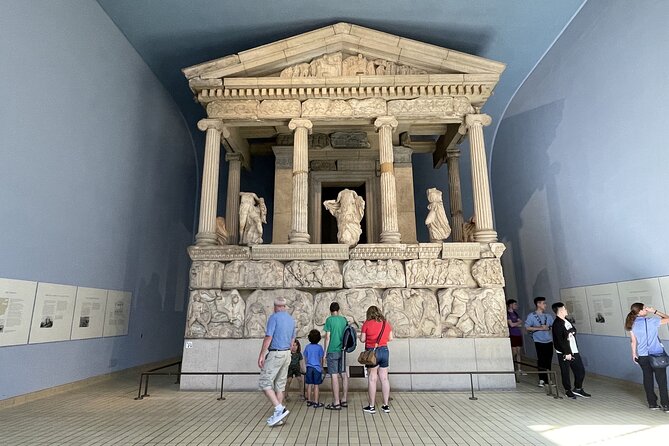
The Parthenon sculptures provide the tour’s other major landmark. These works once formed part of the Parthenon in Athens, and their presence in London raises questions about archaeology, ownership, cultural heritage, and museum practice.
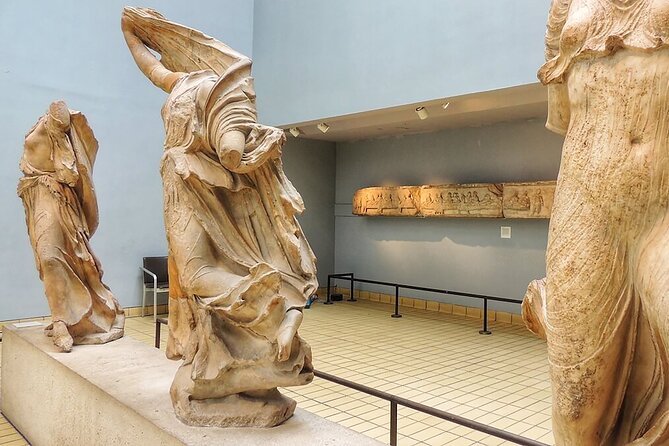
A guide can give you the basic artistic and historical setting while also helping you look closely at the surviving carvings. The sculptures are not just impressive pieces of marble. They show how ancient Greek artists represented bodies, movement, clothing, and mythological scenes.
The supplied tour details also refer to Parthenon marble pieces and tiles. Exact stops can depend on the guide, museum conditions, and the route used that day, so you should treat this as a highlights visit rather than a promise to examine every Parthenon-related object.
The short format works well here. You can understand why the sculptures matter without getting lost in a long sequence of rooms. If you want an extended discussion of the Parthenon collection, you may need a separate museum visit after the tour.
Mesopotamia, Rome, and the wider ancient world
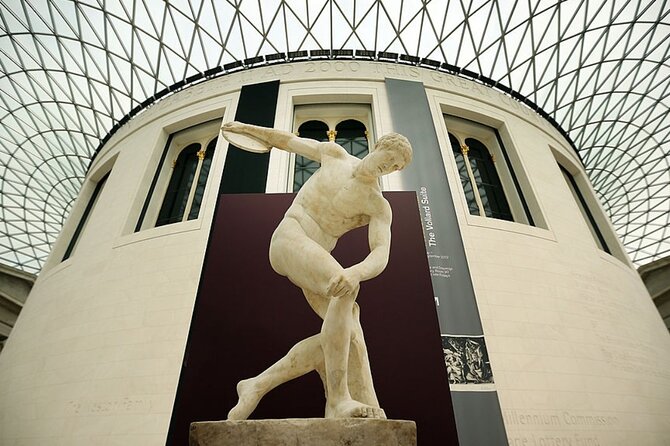
The route also reaches beyond Egypt and Greece. The museum’s collection includes objects from Mesopotamia, Rome, and other major civilizations. That wider sweep helps you compare different cultures rather than seeing each gallery as a separate stop.
Mesopotamian objects can place early writing, kingship, religion, and urban life into a wider human story. Roman material adds another layer, showing how ancient societies influenced one another across a large part of Europe and the Mediterranean.
The guide-led route is valuable here because you have limited time. You may find that a quick explanation makes an unfamiliar object easier to understand than several minutes spent reading labels. You can also ask why one piece is considered important, how it was used, or how it reached the museum.
Do not expect a complete tour of every civilization represented in the building. The British Museum contains far more than any two-hour visit can cover. The strength of this experience is selection and explanation, not total coverage.
From ancient cultures to Anglo-Saxon Britain
The tour summary also includes Anglo-Saxon material, giving the route a link to Britain’s own past. That transition helps keep the visit from becoming only a tour of Egypt, Greece, and Rome.
Anglo-Saxon objects can feel very different from the grand stone sculpture and monumental Egyptian displays. Their value often comes from the clues they provide about craftsmanship, status, burial, belief, and everyday life in Britain. A guide can help you make that shift without treating the collection as a pile of unrelated treasures.
The exact order of the stops is not specified, and the guide may adjust the path to fit museum conditions. That flexibility is normal in a working museum. It also means you should listen for the key themes instead of expecting a rigid room-by-room itinerary.
What the guide adds to the visit

The most important part of this experience is the person leading it. The tour is designed to go beyond display text, with stories and explanations about the museum’s most important ancient objects.
One named guide connected with the experience is Joe, who has led a small group through crowded museum spaces and focused on the major Egyptian and Greek pieces. That detail matters because crowd management is part of the job here. A good guide has to keep the group together, move through busy galleries, and still give you time to look.
Guide quality can vary on any shared tour, so I would not book solely on the expectation that Joe will lead your date. Still, the format gives you a chance to ask questions and get more than a prepared speech. If you have a particular interest in Egyptian writing, mummies, Greek sculpture, or Anglo-Saxon Britain, raise it early.
The group size can reach 25 people. That is small enough to be manageable inside a large museum, but it is not an intimate private tour. You may not hear every word if the group spreads out, so stay close to the guide and keep an eye on the meeting point within each gallery.
Is $102.43 a fair price?
At $102.43 per person, this is not a cheap museum visit. The value depends on what you want from your time in London.
If you already know the British Museum well, enjoy reading labels, and have several hours to explore alone, you may find the price hard to justify. The museum experience itself is not replaced by a paid guide, and this tour covers only a small part of the collection.
The price makes more sense if you have limited time, want help choosing the best objects, or feel uneasy tackling a very large museum on your own. You are paying for a guide, a planned route, priority queue access, and the chance to ask questions. For a first visit during a tightly scheduled London trip, those services can prevent a lot of wasted time.
The two-hour length also helps with value. You are not committing an entire day, and the tour leaves room for other sights. On the other hand, the short visit means you may want to return independently, which adds time to your museum plans.
Food, drinks, and hotel pickup are not included. These are minor concerns for most people because the museum is near public transport and the tour ends where it begins, but include your own meal and transport costs when planning the day.
Who should book this experience?
I would recommend this tour to a first-time British Museum visitor who wants the main ancient highlights without trying to master the whole collection. It also suits families and mixed-interest groups, since a guide can keep the visit moving and explain unfamiliar objects in plain language.
It is a good fit for you if:
- You have only two or three hours for the museum.
- You want to see the Rosetta Stone and Parthenon material.
- You prefer explanations and stories to independent label reading.
- You want to ask questions during the visit.
- You are comfortable walking and standing for about two hours.
I would be more cautious if you want a private experience, a slow photography visit, or a detailed study of one collection. A group of up to 25 cannot give every person unlimited time at every object.
Last-minute booking also carries a risk. If there are no places, a same-day or next-day booking may be moved to the following day. Book earlier if your London schedule is fixed. The experience is commonly booked about 60 days ahead, which suggests that planning early is sensible.
Cancellation and practical planning
You can cancel for a full refund up to 24 hours before the local start time. Cancellations or changes made less than 24 hours before the tour are not accepted for a refund.
Use the mobile ticket, arrive 15 minutes early, and wear comfortable shoes. Keep your schedule flexible around the assigned start time, since the requested slot can be changed to another time on the same day if needed.
The experience is not private, and the maximum group size is 25. Most people can participate, but the tour is on foot inside a very large museum, so anyone who needs frequent rest should consider the walking demands before booking.
Should you book the British Museum highlights tour?
Book it if you want a clear two-hour introduction to the museum’s most famous ancient objects, especially the Rosetta Stone, Parthenon sculptures, and Egyptian material. The guide-led storytelling and chance to ask questions are the strongest reasons to pay for it.
Skip it if you have plenty of time, prefer exploring alone, or want a private and highly specialized visit. For a short first visit, though, the focused route and priority queue can make $102.43 worthwhile, as long as you understand that you are buying a guided sample of a vast museum, not the complete collection.
FAQ
How long does the British Museum tour last?
The tour lasts approximately two hours.
What objects are included in the tour?
The focus includes the Rosetta Stone, Parthenon sculptures and marble pieces, Egyptian artifacts and mummies, plus selected objects connected with Mesopotamia, Rome, and Anglo-Saxon Britain.
Is admission to the British Museum included?
Yes. Admission to the British Museum and the guided tour are included.
Does skip the line mean immediate entry?
No. Skip the line means you use a priority queue instead of the normal long queue. Other people with priority entry may be in the same line.
How large is the tour group?
The tour can include a maximum of 25 people.
Where does the tour start and finish?
It starts at the British Museum on Great Russell Street in London and finishes back at the meeting point.
What happens if my selected time is unavailable?
You may be moved to another available time on the same day. For last-minute bookings, if no place is available, you may be placed on the following day.
Just added around London
- Private The Beatles Taxi Tour in London★ 5.0 · 12 reviews
- Dinner and Jazz Cruise on the River Thames★ 4.0 · 140 reviews
- Airport Coach Service from Heathrow to Oxford★ 3.5 · 67 reviews
- The Alfred Hitchcock London Walk with Sandra Shevey★ 5.0 · 15 reviews
- Tower of London & 30+ London Sights Walking Tour★ 4.5 · 33 reviews
- Thames Beachcombing★ 4.5 · 100 reviews
- Ted Lasso London Taxi Tour★ 5.0 · 5 reviews
- Ted Lasso Tour of Richmond with Private Guide★ 5.0 · 25 reviews
British Museum Tours, compared.
British Museum London Guided Tour Semi-Private 8ppl Max
Read our review →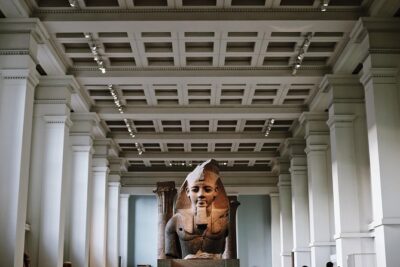
The British Museum London – Exclusive Guided Museum Tour
Read our review →
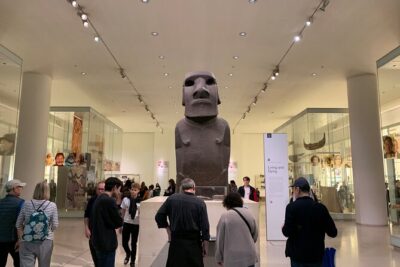
Private Guided Tour of the British Museum – Tickets Included
Read our review →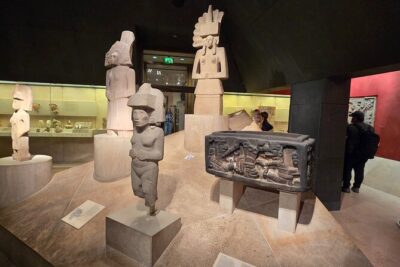
British Museum Guided Tour with Priority Timeslots(Small Group)
Read our review →
British Museum & National Gallery of London Semi-Private 8ppl Max
Read our review →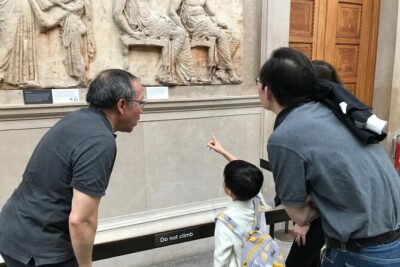
Explore Biblical Artifacts at the British Museum
Read our review →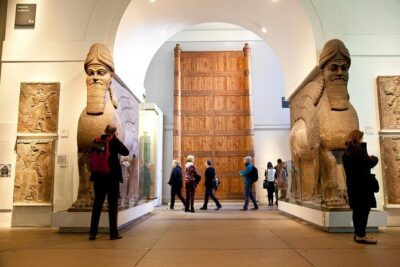
British Museum Highlights Private Tour in London including the Rosetta Stone
Read our review →Browse the lists this tour appears in