
Reviewed · HISTORICAL TOURS
The History of London City Center Tour Semi-Private 12ppl Max
London’s grand story unfolds on foot here, from Covent Garden and Trafalgar Square to the royal palaces and political heart of Westminster. In about two and a half hours, you see the places tied to monarchs, prime ministers, naval victories, and Winston Churchill.
I like the 12-person maximum, which gives your guide room to answer questions and adjust the talk to your interests. I also like the route itself: it links major sights in a sensible walk, making this a useful first look at central London. The main drawback is that it is a brisk outdoor tour, with no hotel pickup and limited interior visits.
Key points to know before booking
- Twelve people is the hard maximum: The semi-private format is small enough for easier questions and clearer guiding.
- The route covers central London’s greatest hits: Covent Garden, Trafalgar Square, Whitehall, Downing Street, St. James’s, Buckingham Palace, Big Ben, Parliament, and Westminster Abbey all fit into one walk.
- History is the main event: Expect stories about Roman London, monarchs, government, the Napoleonic Wars, and Churchill.
- This is an active outing: You walk for roughly two and a half hours, rain or shine, so comfortable shoes matter.
- The guide makes the difference: Guides named in the feedback include Matilda, Guy, Andrew, Gerg, Andy, Jake, Alexandra, Becky, and Becca. The strongest praise centers on friendly, lively, well-informed guiding.
- Check the Westminster Abbey details carefully: The tour ends outside the abbey, and a note says entry tickets may be provided, but the itinerary also says interior entry is not included. Confirm what applies to your booking.
A compact walk through London’s royal and political center
This tour is designed as an introduction, not a series of long museum visits. You move from one landmark to the next while your guide explains how London developed from Roman beginnings into the center of a modern monarchy and government.
The route begins at 10 a.m. in Covent Garden and finishes at Westminster Abbey. That point-to-point design is useful. You do not return to your starting place, and you finish near one of London’s most important historic buildings, with central transport links nearby.
I would think of this as a big-picture walk. You will not spend an hour inside the Churchill War Rooms or Buckingham Palace. Instead, you get the setting, the stories, and the visual connections between places that can otherwise feel scattered when visited on your own.
The small group helps. A twelve-person limit is not the same as a private walk, but it is far more manageable than a large coach group. You can usually hear the guide more easily, ask questions without holding up dozens of people, and stay connected while crossing busy streets.
A few more London trips to weigh up
- London Small Group Tour of Historical Pubs
★ 5.0 · 10,422 reviews - Soho Music & Historic Pubs Tour
★ 5.0 · 1,993 reviews - Royal Historic Pubs Walking Guided Tour in London
★ 5.0 · 803 reviews
Covent Garden sets the historical clock
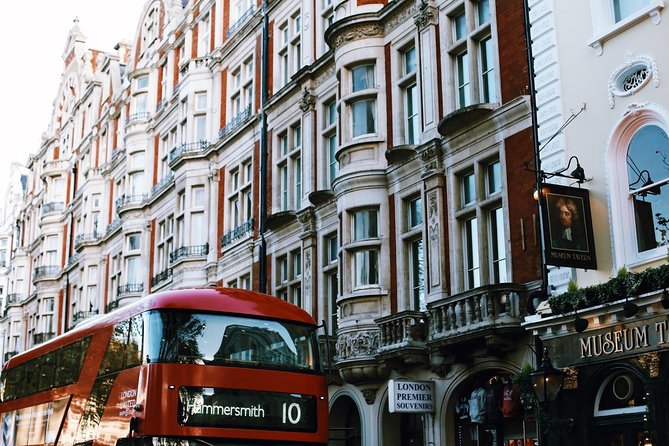
Covent Garden is more than a convenient meeting point. Its story reaches back to a Saxon settlement in the seventh century, and today it combines shops, restaurants, bars, theaters, and cultural attractions.
Your guide uses the area to begin the wider story of London. That is a smart opening because Covent Garden gives you an immediate mix of old and new. You start in a lively district, then move toward the ceremonial and governmental center of the city.
The scheduled stop is about 10 minutes. That is enough for orientation and context, but not enough for shopping, a market visit, or a proper meal. If Covent Garden is high on your list, arrive early or return after the tour.
Trafalgar Square and Nelson’s Column
From Covent Garden, the walk continues to Trafalgar Square, one of London’s best-known public spaces. The square commemorates the British naval victory at the Battle of Trafalgar during the Napoleonic Wars, when Britain defeated the fleets of France and Spain.
This is a good place to see how national memory works in London. The square is not only a setting for statues and grand buildings. It has also been used for protests and demonstrations, and your guide can connect the monument to both military history and modern public life.
Nelson’s Column gives the story a personal focus. Admiral Horatio Nelson died at Trafalgar in 1805, and the column honors him at the center of the square. The stop is short, about 10 minutes, so expect an explanation rather than a detailed monument study.
I like this part of the route because the guide can help you read the square as more than a photo stop. If you visit alone, it is easy to admire the fountains and column without grasping why this particular space matters.
Admiralty Arch and the road toward power
Admiralty Arch connects Trafalgar Square with The Mall, the ceremonial road leading toward Buckingham Palace. The building was commissioned by King Edward VII in memory of his mother, Queen Victoria.
The walk here is less about entering a landmark and more about understanding movement through the city. Roads, arches, squares, and government buildings line up to create a formal route between the monarch’s residence and the center of government.
Again, the stop lasts about 10 minutes. That pace keeps the tour moving, but it also means you should not expect extended time for photographs at every site. Bring your camera, but listen first. The value comes from the explanation of how these places fit together.
Same country, a completely different day out:
- Stonehenge, Windsor Castle, and Bath from London
★ 4.5 · 18,662 reviews - London Big Bus Hop-On Hop-Off Tour with Optional River Cruise
★ 3.5 · 10,803 reviews - Stonehenge, Windsor Castle and Bath with Pub Lunch in Lacock
★ 4.5 · 7,402 reviews - Tower of London and Crown Jewels Exhibition Ticket
★ 4.5 · 6,677 reviews
Whitehall and 10 Downing Street
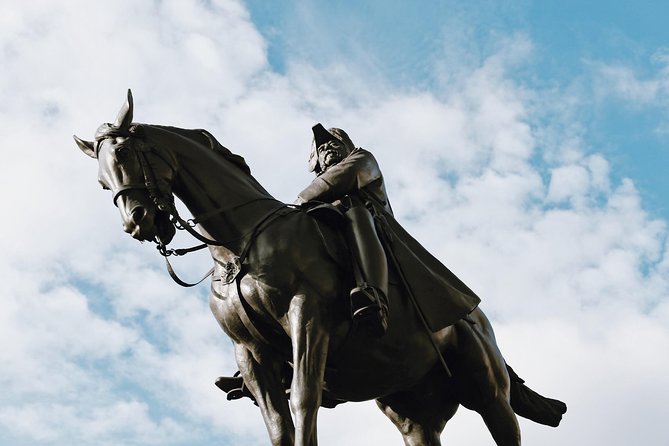
Whitehall carries you into the heart of British government. The street runs between Charing Cross and the Houses of Parliament, while the wider Whitehall area includes government buildings, smaller streets, and squares.
Its connection with national government dates to Henry VIII’s court at Whitehall Palace in the 1530s. That gives your guide a useful bridge from Tudor power to the modern British state.
At 10 Downing Street, you see the official residence and office of the UK prime minister. The street was built in the 1680s, but its political meaning is much more recent and familiar. This is one of the places where a short explanation adds real value, since security restrictions mean you should not expect an ordinary house visit.
The tour’s format works well here. Rather than pausing at one building for too long, you keep walking through the zone where British decisions have been made. Guides can also connect Downing Street with the monarchs and wartime leaders discussed later in the route.
St. James’s Palace and Buckingham Palace
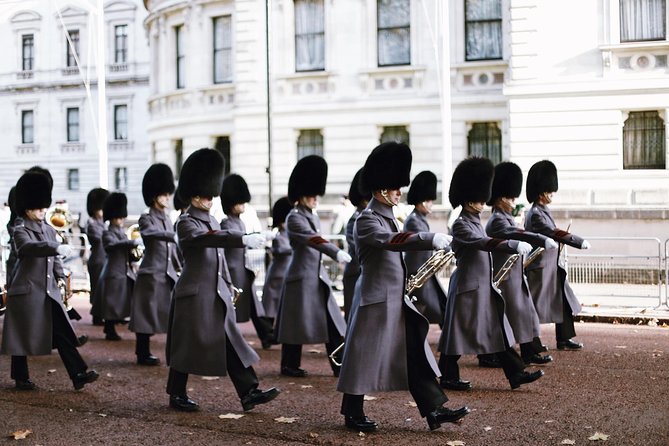
The royal section begins with St. James’s Palace, described as the most senior royal palace in the United Kingdom. It served as a royal residence for more than 300 years and has hosted important events in British royal history.
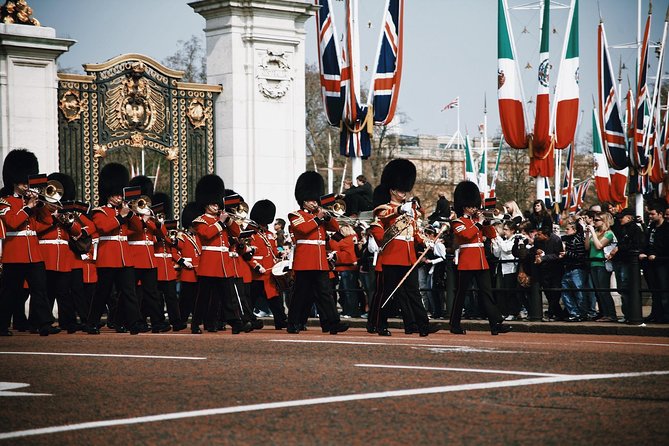
You then continue toward Buckingham Palace, the official London residence of the UK’s sovereigns since 1827. The palace is still a working building, not simply a grand monument. It also serves as the administrative headquarters of the monarch.
These stops are especially useful if you want a clear introduction to the British royal family. Your guide may discuss figures such as Queen Elizabeth II and explain how royal residences have changed in purpose over time.
The tour does not promise an interior visit to either palace. You see the exteriors and hear the stories while walking. That is a strength for a short city orientation, but a limitation if your main goal is to explore royal rooms. You would need a separate palace visit for that.
One particularly useful possibility is catching a ceremonial event during the walk. Andy’s route, for example, coincided with the changing of the guards and service bands. This is not guaranteed, and the tour details do not promise it, but the small-group guide can help you understand what you are seeing if timing allows.
Churchill War Rooms and wartime London
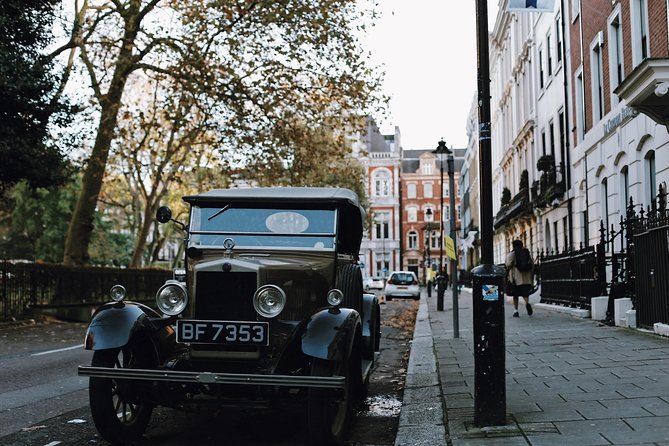
The Churchill War Rooms are included as an exterior stop rather than an interior museum visit. The museum includes the underground Cabinet War Rooms, where the British government’s command center operated during the Second World War, and the Churchill Museum, devoted to Winston Churchill’s life.
For many people, this is one of the most meaningful points on the route. The surrounding streets look formal and open, while the wartime decisions associated with the underground rooms were made under intense pressure. A guide can give you the setting before you decide if the full museum deserves part of your own schedule.
The admission ticket is not listed as included for this stop. If you want to visit inside, plan that as a separate activity and allow considerably more time than the 10-minute exterior stop.
The tour’s history coverage is not limited to royal anecdotes. Several guides were praised for explaining political and wartime history, which is important here. I would choose this walk over a purely ceremonial sightseeing tour if Churchill, government, and modern British history are priorities.
Big Ben, Parliament, and Westminster Abbey
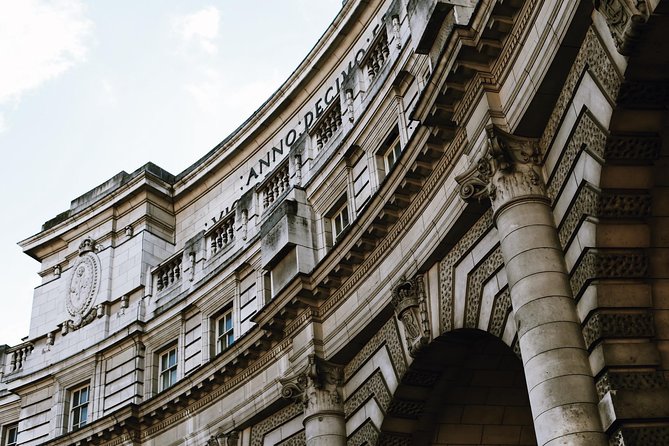
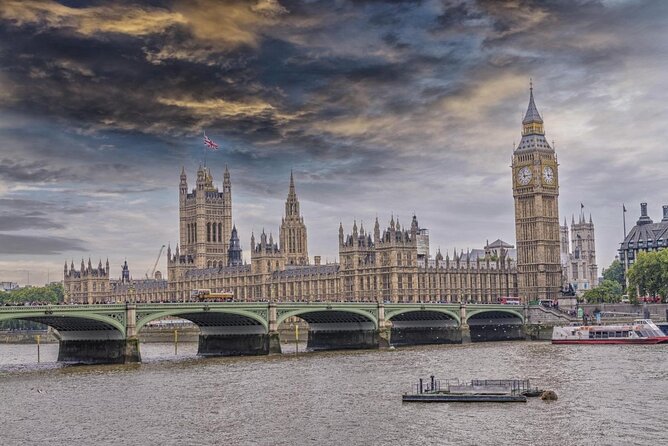
The final section brings you to Big Ben and the Palace of Westminster. Big Ben is the familiar clock landmark at the end of the palace, while the Houses of Parliament are home to the House of Commons and the House of Lords.
The palace is a Gothic building with a history stretching back more than 900 years. Seeing it after walking through Whitehall helps you understand the physical relationship between government offices, Parliament, and the royal route.
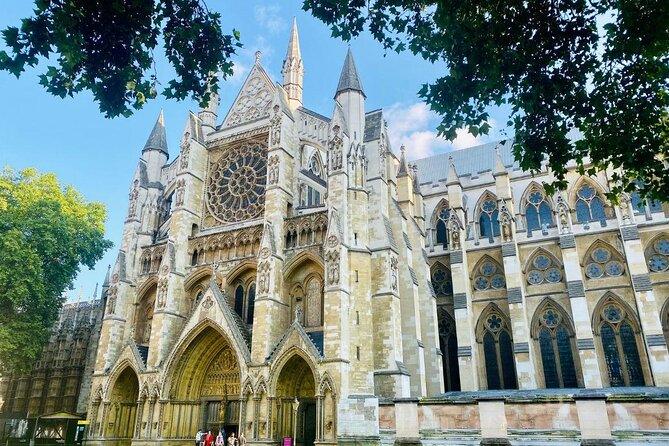
The tour ends at Westminster Abbey, usually viewed from the exterior. The abbey is one of London’s essential historic sights, but do not assume that a guided interior visit is part of this experience.
There is an important wording issue in the tour details. One note says the experience finishes with entry tickets to Westminster Abbey, with an unguided interior visit on your own. The itinerary says entry and an interior tour are not included. Since those statements do not fully agree, confirm the current arrangement before booking, especially if abbey admission is a major reason for choosing the tour.
Even if you only receive the exterior portion, the ending is practical. You can continue exploring Westminster, visit the abbey if tickets are arranged separately, or use public transport from the area.
What the guides add to the walk
The guide is the central variable in any history walk, and the feedback here points to a consistent strength: guides are friendly, lively, and attentive to individual interests.
Matilda is described as easygoing, perceptive, and full of information about London. Guy is praised for his upbeat manner and broad knowledge, with the memorable nickname the animal whisperer. Andrew is noted for being friendly and covering the sights visitors wanted to see.
Gerg receives praise for being considerate, while Andy is singled out for adjusting the experience to his group’s interests and explaining political and wartime history clearly. Jake is described as an excellent first-day guide, which is exactly how I would use this tour.
Alexandra guided a group shortly after its arrival in London, helping them get oriented despite jet lag. Becky is praised for making the conversation both fun and informative, while Becca is described as bringing the city to life and speaking comfortably about British history, art, the city, and the royal family.
These are useful details because they show the kind of guiding this experience aims for. You are not simply following a flag through a list of monuments. You can expect a conversational walk where questions are welcome, though the exact tone will depend on the guide assigned to your date.
Is $59.28 a fair price?
At $59.28 per person, this is not the cheapest way to see central London. You can walk through many of these areas for free on your own. The price pays for structure, interpretation, and a small group, not for a long list of interior admissions.
I think the value is strongest on your first day in London. The route gives you a working map of the center, introduces the monarchy and government, and helps you decide which places deserve a return visit. A family or first-time visitor may get more from this than someone who already knows central London well.
The private upgrade may suit you if you want the guide to focus closely on your interests. The semi-private version is the better value for most people who want personal attention without paying for a fully private experience.
Group discounts may also affect the final cost. Gratuities are not included, and hotel pickup or drop-off is not provided, so plan your own way to Covent Garden and away from Westminster Abbey.
Timing, walking, and practical preparation
The tour begins at 10 a.m. and lasts about two and a half hours. Each listed stop is roughly 10 minutes, though the actual walking time and guide’s explanations shape the day.
You need a moderate level of fitness. The operator says the tour is not available to people with walking disabilities or wheelchair users, so contact the provider before booking if mobility is a concern.
Wear comfortable shoes and bring water. The tour runs in rain or shine, so an umbrella is sensible, while a hat helps in summer. Large bags and suitcases are not allowed, which matters if you are arriving from a hotel or train station.
The route may change during national celebrations. You should still see the main highlights, but the operator says it cannot offer refunds or discounts when an alternative route is required.
The tour needs at least two participants to operate. If that minimum is not met, you are offered another date or a full refund. Cancellation is free up to 24 hours before the local start time. Changes or cancellations inside that window are not accepted for a refund.
Who should book this London walk?
I would recommend it to first-time visitors, families, and active visitors who want a clear introduction to London without spending half a day inside one museum. It is also a good choice if you want royal, political, and wartime history in one compact route.
The tour suits you especially well if you like asking questions. The small group makes that easier, and the guides are expected to adapt their explanations to group interests.
I would hesitate if you want substantial interior sightseeing. The route passes the Churchill War Rooms, Buckingham Palace, Parliament, and Westminster Abbey, but the core experience is walking past these places and learning about them. You should plan separate admissions where needed.
Should you book it?
Book this tour if you want an efficient first look at central London, prefer a small group, and enjoy history delivered through stories and streets rather than long museum visits. The strongest reason to choose it is the combination of a 12-person limit and a route that covers the city’s major royal and political landmarks.
Skip it if you dislike walking in uncertain weather or already know Westminster and the royal district well. Before paying, confirm the Westminster Abbey admission details, then bring good shoes, arrive at Covent Garden before 10 a.m., and treat the tour as your orientation to London, not your complete sightseeing plan.
FAQ
How long is The History of London City Center Tour?
The tour lasts approximately two and a half hours.
Where does the tour begin?
The meeting point is Covent Garden in central London.
Where does the tour finish?
The tour finishes at Westminster Abbey, at London SW1H 0NE.
What time does the tour start?
The scheduled start time is 10 a.m.
How large is the group?
The semi-private tour has a maximum of 12 people. A private tour upgrade is available.
Is hotel pickup included?
No. Hotel pickup and drop-off are not included. You need to make your own way to Covent Garden and from Westminster Abbey.
Does the tour enter Westminster Abbey?
The details say the tour ends at Westminster Abbey, and the interior guided visit is not included. Another note says entry tickets may be provided for an unguided visit, so confirm the current admission arrangement before booking.
Is the Churchill War Rooms admission included?
No. The Churchill War Rooms stop lists admission as not included.
Can I cancel for a full refund?
Yes, if you cancel at least 24 hours before the experience start time. Cancellations or changes made less than 24 hours before the start are not accepted for a refund.
Just added around London
- Private The Beatles Taxi Tour in London★ 5.0 · 12 reviews
- Dinner and Jazz Cruise on the River Thames★ 4.0 · 140 reviews
- Airport Coach Service from Heathrow to Oxford★ 3.5 · 67 reviews
- The Alfred Hitchcock London Walk with Sandra Shevey★ 5.0 · 15 reviews
- Tower of London & 30+ London Sights Walking Tour★ 4.5 · 33 reviews
- Thames Beachcombing★ 4.5 · 100 reviews
- Ted Lasso London Taxi Tour★ 5.0 · 5 reviews
- Ted Lasso Tour of Richmond with Private Guide★ 5.0 · 25 reviews
Historical Tours, compared.

Shadows of York: Ghost Walk and Horrible History.
Read our review →
A Walk Through Time: History of Liverpool Walking Tour
Read our review →
Royal Historic Pubs Walking Guided Tour in London
Read our review →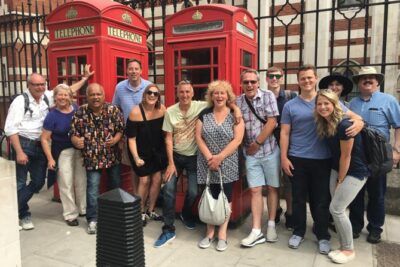
Private Group: Historical Pub Walking Tour of London
Read our review →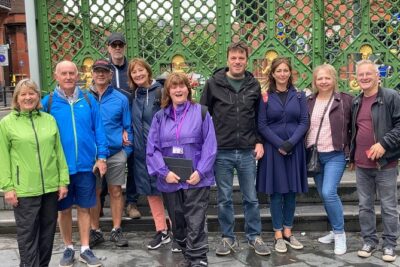
Best Of Liverpool Heritage, History & Culture Guided Walking Tour
Read our review →Browse the lists this tour appears in