
Reviewed · HISTORICAL TOURS
Walkabout Durham History Tour
Durham’s best introduction may be a walk that links its bridges, river, castle, and cathedral in one tidy route. Guide Peter leads you from the Market Place through old lanes and university grounds, using local stories to explain why this small city matters.
I like the friendly, question-friendly style and the way the walk gives you useful bearings for the rest of your stay. I also like the final approach to Durham Cathedral, where the city’s history comes together in one grand view. The main drawback is the terrain: Durham is hilly, and the tour does not include entry to the cathedral or its tower.
Key points to know before you book
- Peter’s local storytelling: Expect history, legends, myths, and personal local detail rather than a dry list of dates.
- A strong 90-minute route: Market Place, Framwellgate Bridge, the riverside, South Bailey, Palace Green, and Durham Cathedral fit into one compact walk.
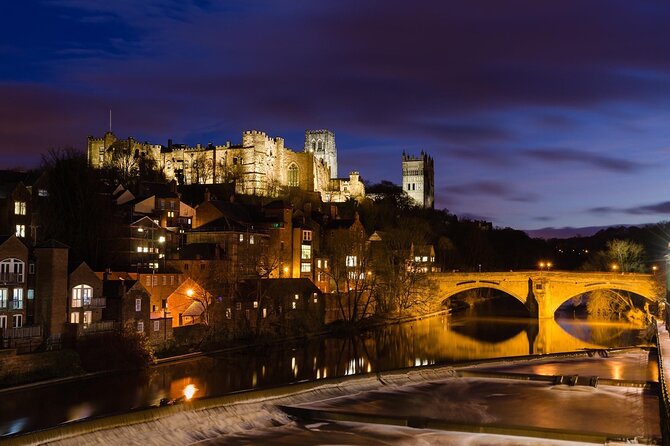
- Excellent cathedral views: Framwellgate Bridge and Prebends Bridge offer some of the finest outside views of Durham Cathedral.
- Small-group feel: The group is capped at 20 people, so you have a reasonable chance to hear the guide and ask questions.
- Dog-friendly and family-friendly: Dogs are welcome, service animals are allowed, and all ages can join.
- Good first activity in Durham: The walk ends at the cathedral doors and gives you practical ideas for what to see next.
Why this walk works as a first look at Durham
Durham can feel confusing when you first arrive. The city rises around a tight loop of river, with the cathedral and castle on high ground, the university occupying old medieval buildings, and bridges leading you through different parts of the center.
This tour makes that layout easier to understand. You begin in the Market Place, cross toward the river, follow the banks, enter the historic Bailey, and finish on Palace Green. By the end, you know where the cathedral is, how the bridges connect, and which streets are worth revisiting.
I especially like the order of the route. You do not simply walk from one famous building to another. Instead, the story builds gradually. First come the civic figures and city institutions. Then you see the cathedral from below, learn about the Prince Bishops, walk past the old university colleges, and finally reach the cathedral itself.
Peter’s approach appears to be conversational and open to questions. He brings in local anecdotes, myths, and stories alongside the larger events. That matters in a city such as Durham, where legends about saints, miracles, battles, and royal power are part of the place’s character.
The walk is conducted in English and uses a mobile ticket. Admission to each stop is listed as free, though this is an outdoor walking tour rather than a paid visit inside the cathedral or other buildings.
A few more England trips to weigh up
- London Small Group Tour of Historical Pubs
★ 5.0 · 10,422 reviews - Soho Music & Historic Pubs Tour
★ 5.0 · 1,993 reviews - Shadows of York: Ghost Walk and Horrible History.
★ 5.0 · 1,403 reviews
Market Place and the civic story
The tour begins at Durham Market Place, at DH1 3NJ. This is a sensible meeting point because it places you in the city center, among some of Durham’s key civic buildings.
Here you see the 19th-century Town Hall and Guildhall, St. Nicolas’ Church, and statues linked to the city’s past. Peter sets the scene by explaining the people who shaped Durham and the wider county.
This opening section lasts about 20 minutes. It is not just a warm-up. It gives you a useful contrast between Durham as a working civic center and Durham as a medieval religious stronghold.
The Market Place is also a practical place to begin if you have only a short stay. You can reach it using nearby public transport, and the tour does not ask you to find a remote meeting point. Arrive ready to walk, though. The route soon leaves the central square and starts moving downhill and toward the river.
Framwellgate Bridge and the first cathedral view
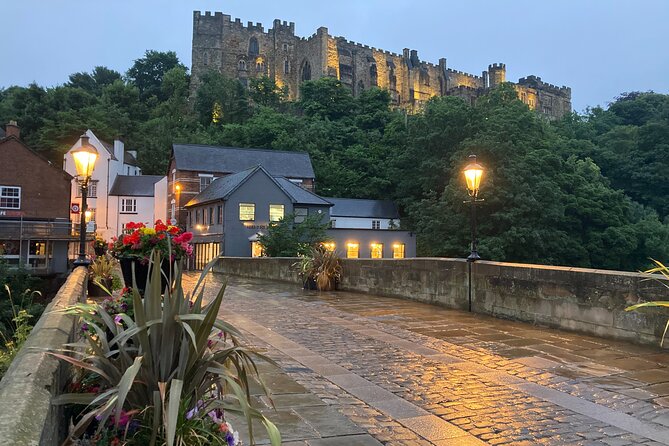
From the Market Place, you walk to Framwellgate Bridge, the oldest of Durham’s bridges. This is one of the strongest parts of the route because the bridge gives you a fine view of Durham Castle and Cathedral above the River Wear.
You spend about 15 minutes here learning about the castle and the famous Prince Bishops of Durham. These churchmen held unusual political power in the county, and their role helps explain why Durham has such an imposing medieval center.
The view does much of the work. From below, the castle and cathedral appear as a single dramatic mass on the hill. The setting also shows why the city developed where it did, with the river creating a natural defensive loop.
This is a good point to have your camera ready, but listen closely too. The view makes more sense once you understand the religious and political forces behind it. Durham’s story is not only about pretty stone buildings. It is also about authority, borders, conflict, and the power of the church.
Riverside walking and Prebends Bridge

The route then follows a picturesque riverside path. The walk from Framwellgate Bridge to the next stop takes about five minutes, so there is no long stretch without explanation.
Along the way, the focus shifts to Durham’s mills and riverbanks. This gives you a glimpse of the city beyond its grand religious buildings. The river was not just a scenic feature. It supported work, movement, and industry, while also shaping the city’s defensive form.
At Prebends Bridge, you get another excellent view of Durham Cathedral. It is a different angle from Framwellgate Bridge, and the cathedral feels especially impressive from the river below.
This section lasts about five minutes as a formal stop, but the short riverside walk is part of its appeal. You get a change of pace after the civic and political material in the Market Place and at Framwellgate Bridge.
The main practical point is footwear. The route is not described as strenuous, but several comments make clear that Durham’s hills can be tiring. One person also noted needing a cup of tea by the end. I would wear comfortable shoes and avoid treating this as a polished, level promenade.
Same country, a completely different day out:
- Stonehenge, Windsor Castle, and Bath from London
★ 4.5 · 18,662 reviews - London Big Bus Hop-On Hop-Off Tour with Optional River Cruise
★ 3.5 · 10,803 reviews - Beatles Magical Mystery Tour
★ 5.0 · 9,266 reviews - Liverpool: “Blue Route” – City & Beatles Tour
★ 5.0 · 8,562 reviews
South Bailey, the city wall, and Durham University
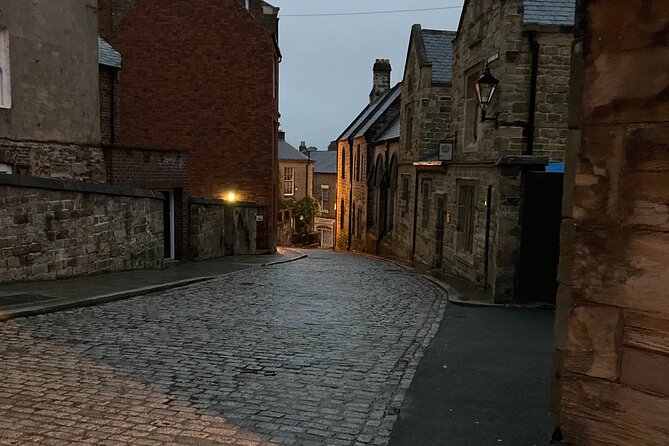
From Prebends Bridge, the walk heads toward St. Cuthbert’s Society and Durham University. On the way, Peter discusses the medieval city wall and Durham’s historic rivalry with Scotland.
This is where the tour starts to reveal how much of the old city is still used today. The Bailey is not a museum street frozen in time. It is home to Durham University, with colleges occupying historic buildings and lanes.
The stop lasts about 15 minutes. You can expect a mix of architectural detail, border history, and university context. The Scots rivalry adds a wider regional angle, showing that Durham’s location in northern England affected its politics and defenses.
I like this part because it connects old and new Durham without forcing a sharp divide between them. You are walking through medieval surroundings while hearing how the university now shapes the city’s daily identity.
The university setting may also help you decide where to return later. The Bailey has a distinct atmosphere from the Market Place, and Peter’s comments can help you recognize the colleges and understand their place in the city.
St. Mary the Less and Bailey architecture
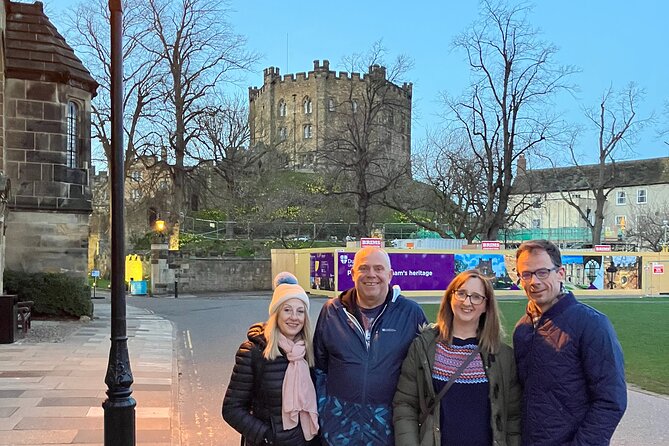
The next stop is St. Mary the Less, now affiliated with St. John’s College. You spend around 10 minutes here, hearing about the church’s links to Durham legends and taking in the architecture of the Bailey.
This is a smaller stop, but it adds texture to the walk. Durham’s story is not carried only by the cathedral. Smaller churches, college buildings, walls, bridges, and lanes all hold pieces of it.
The church also gives Peter another chance to bring in stories rather than simply explain dates. His style, based on the way the tour is described, includes facts and myths, which should suit you if you like history with a human touch.
If you prefer a strictly academic lecture, the anecdotal approach may feel less formal. For most people, though, local legends make it easier to remember the places you are seeing. A story connected to a particular church or lane often stays with you longer than a paragraph of background information.
Bow Lane and the eastern side of the cathedral
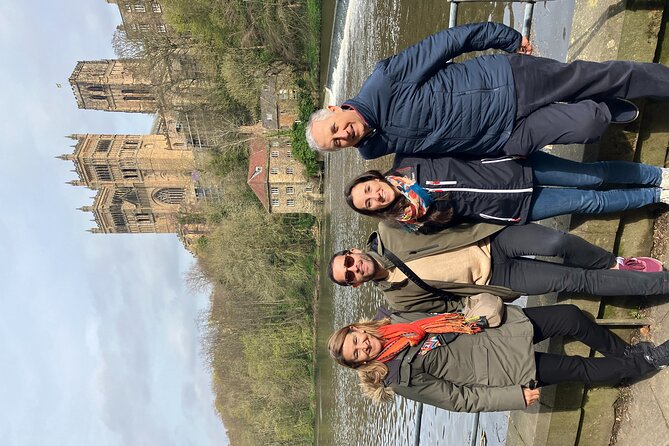
At Bow Lane, the route reaches the eastern side of Durham Cathedral. This 10-minute section covers early medieval history, stories of St. Cuthbert, and several Durham University colleges.
St. Cuthbert is central to Durham’s identity, so this is an important part of the walk. The route along the Bailey then leads toward the top of Saddler Street, giving you a clearer sense of how the university quarter connects with one of the city’s main shopping and walking streets.
This section is useful for orientation. You are no longer looking at the cathedral from the river. You are moving around its edge and approaching the heart of the old city.
The short duration also helps keep the tour moving. Ninety minutes is long enough to cover a lot, but not long enough to explore every church, college, and historical episode in detail. Peter appears to choose the main threads and keep the pace lively.
Palace Green and the final approach to Durham Cathedral
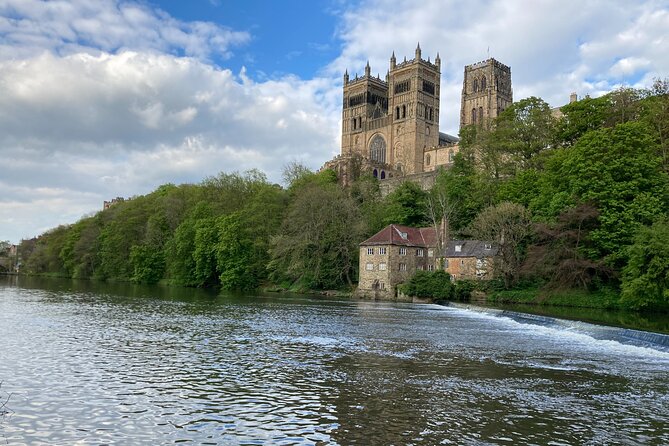
The final stop is Palace Green Library, where the walk enters the center of Durham’s UNESCO World Heritage site. The surrounding buildings carry centuries of religious, academic, and political history.
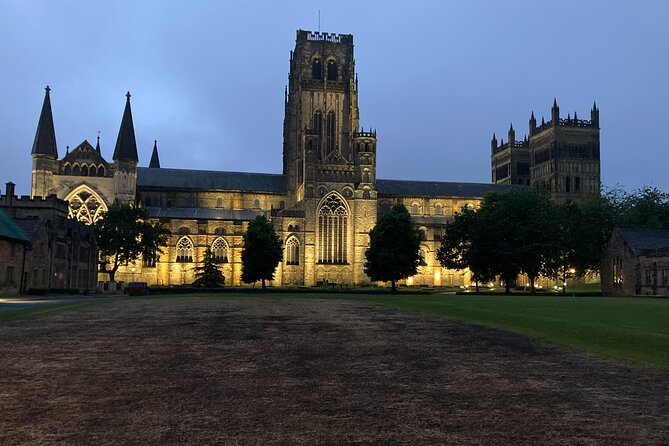
Here you hear about battles, tragedies, and miracles connected with Durham. The route ends at the main doors of Durham Cathedral, after about 15 minutes on Palace Green.
This is a strong finish. You have spent the earlier part of the walk seeing the cathedral from a distance, then from the river, and finally arriving at its entrance. The final approach gives the tour a natural climax without needing a theatrical presentation.
The important limitation is that the experience ends at the cathedral doors. It does not include a cathedral interior visit or access to the tower. If climbing the cathedral tower is a priority, you will need to arrange that separately. One practical plan is to take this walk first, then use the guide’s suggestions to decide how to spend the rest of your time inside the cathedral and around Palace Green.
Peter’s style and the feel of the group
The guide’s name is Peter, and his strengths are clear: he is friendly, easy to approach, and willing to answer questions. His background as a geography teacher has also been noted, which may help explain the mix of place, landscape, local history, and orientation.
The tone is not stiff. Peter uses local anecdotes and stories, and the walk can include both established facts and traditional myths. That makes it a good fit for you if you want history explained in plain language rather than delivered as a formal lecture.
The group limit is 20 people. That is not an intimate private tour, but it is small enough to feel manageable. If the group reaches its maximum, stay near the guide at busy points and during the riverside sections so you do not miss details.
The tour is open to all ages, and dogs are very welcome. Service animals are allowed as well. This makes the walk unusually flexible for a city history experience, though you should still be comfortable managing your dog on bridges, lanes, and slopes.
Price, timing, and physical effort
At $22.20 per person, this is a fair price for a 90-minute guided introduction to Durham. You are paying for a focused route, local interpretation, and a guide who can answer questions. All listed stops have free admission, so the value comes from the guiding rather than entry tickets.
I would book it early if the timing suits you. It is commonly reserved around 15 days ahead, which suggests that popular dates can fill before your visit. The experience is offered in English and uses a mobile ticket.
Plan on roughly an hour and a half, but allow a little extra time afterward. Peter offers tips on other things to see and do, and the cathedral area deserves more than a quick glance. The tour ends at the main cathedral doors, so it is easy to continue exploring from there.
The route is walkable for most people, but Durham’s hills are the main physical consideration. Rain and cold do not necessarily stop the tour, yet the experience is much better with suitable shoes and weatherproof clothing. You will be outdoors throughout the walk, and there is no promise of indoor shelter at each stop.
The cancellation terms are straightforward: cancel at least 24 hours before the start time for a full refund. Changes or cancellations inside that period are not accepted for a refund.
Who will get the most from this Durham walk
I would recommend this tour if you are visiting Durham for the first time, especially if you have only one night or a short day in the city. The route covers the essential geography and gives you enough history to make later sightseeing more rewarding.
It also suits you if you like asking questions. Peter’s open style means you are not limited to a fixed script, and the local stories add something you may not get from reading a sign outside a building.
Families can join, as can dog owners. The route is also a good choice for anyone who wants an active introduction rather than a bus tour or a long indoor presentation.
I would hesitate only if you want extensive cathedral access included in the ticket, a very gentle route with no hills, or a highly specialized academic tour. This experience is broad, friendly, and compact. It gives you a strong framework, not a full study of every period in Durham’s past.
Should you book the Walkabout Durham History Tour?
Yes, if you want to understand Durham quickly and enjoy history told through streets, bridges, river views, churches, and local tales. The route is well chosen, the price is reasonable, and the final arrival at Durham Cathedral gives the walk a satisfying shape.
Book it near the start of your stay so Peter’s suggestions can guide the rest of your visit. Wear good shoes, prepare for weather, and do not expect cathedral tower access. If those points suit your plans, this is a practical and personable way to get your bearings in Durham.
FAQ
Where does the Walkabout Durham History Tour start?
The tour starts at Durham Market Place, Durham DH1 3NJ, in the historic center of the city.
Where does the tour end?
The walk ends at the main doors of Durham Cathedral, Durham DH1 3EH.
How long does the tour last?
The tour lasts approximately 1 hour and 30 minutes.
Is entry to Durham Cathedral included?
The route ends at the cathedral doors, but the tour information does not include admission inside the cathedral or access to the cathedral tower.
Are dogs allowed on the tour?
Yes. Dogs are very welcome, and service animals are allowed.
What is the cancellation policy?
You can cancel at least 24 hours before the local start time for a full refund. Cancellations or changes made less than 24 hours before the start time are not accepted for a refund.
Just added around England
- Private The Beatles Taxi Tour in London★ 5.0 · 12 reviews
- The Alfred Hitchcock London Walk with Sandra Shevey★ 5.0 · 15 reviews
- Dinner and Jazz Cruise on the River Thames★ 4.0 · 140 reviews
- Airport Coach Service from Heathrow to Oxford★ 3.5 · 67 reviews
- Tower of London & 30+ London Sights Walking Tour★ 4.5 · 33 reviews
- Thames Beachcombing★ 4.5 · 100 reviews
- Ted Lasso London Taxi Tour★ 5.0 · 5 reviews
- Ted Lasso Tour of Richmond with Private Guide★ 5.0 · 25 reviews
Historical Tours, compared.


Shadows of York: Ghost Walk and Horrible History.
Read our review →
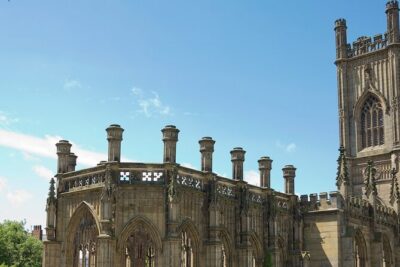
A Walk Through Time: History of Liverpool Walking Tour
Read our review →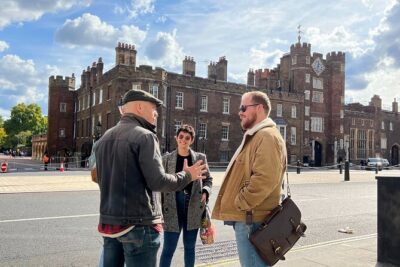
Royal Historic Pubs Walking Guided Tour in London
Read our review →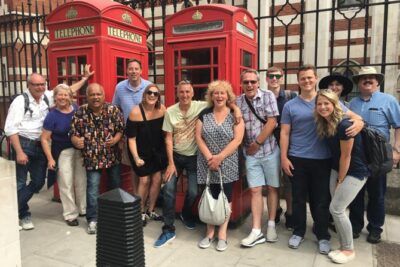
Private Group: Historical Pub Walking Tour of London
Read our review →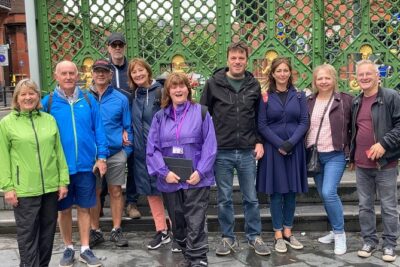
Best Of Liverpool Heritage, History & Culture Guided Walking Tour
Read our review →Browse the lists this tour appears in