
Reviewed · HISTORICAL TOURS
Inspirational Women Liverpool Past-Present History Tour – monthly
Liverpool’s story looks different when you follow the women who helped build it. This two-hour walking tour links cathedrals, theatres, medical sites, universities, galleries, and grand civic buildings with women whose work was often left out of the usual city story.
I like the route’s off-the-beaten-path focus and its relaxed pace. The personal touch also matters: guides Pam and Jean bring strong knowledge and warmth, and Pam has adjusted the walk for older participants and a wheelchair user. The main thing to consider is the ground underfoot. Expect cobbles, busy streets, and some steep slopes, so comfortable non-slip shoes are essential.
Key points to know before you book
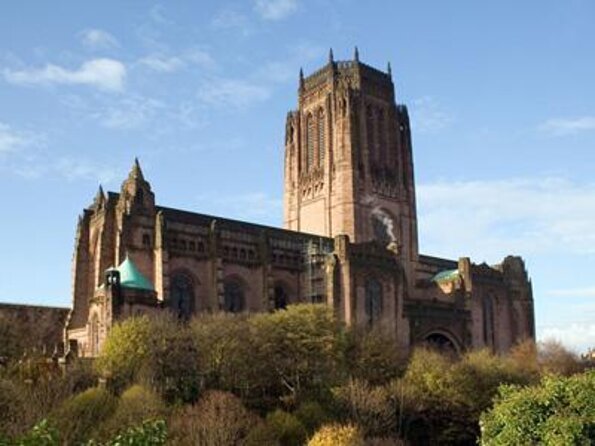
- Liverpool Cathedral begins the story: See the Lady Chapel, its stained glass, and a work by a major female sculptor.
- The route connects many causes: Education, medicine, women’s rights, social reform, art, nursing, and cookery all appear along the way.
- Guides make the difference: Pam and Jean are named guides associated with the tour, with Pam receiving particular praise for her friendly, interactive style.
- A gentle but active walk: The tour lasts about two hours and covers uneven surfaces, slopes, and busy areas.
- Good value for history lovers: At $31.58 per person, you receive guided commentary and cathedral admission by donation.
- Small-group feel: Numbers are limited to 26 people, and the tour is offered monthly in English.
Why this Liverpool walk tells a different story
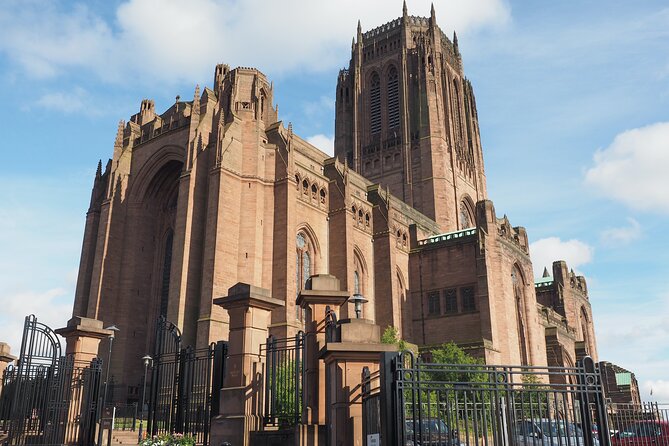
Many Liverpool tours focus on music, maritime trade, football, and the city’s famous waterfront. Those subjects matter, but this walk shifts your attention inland and places women at the centre of the story.
You move through parts of the city that you might otherwise pass without a second thought. A school becomes a place tied to women’s education. A medical district brings up the barriers faced by female doctors and reformers. A theatre opens a window onto political movements and suffrage.
I like that the route does not treat history as a list of famous names. It connects buildings and people. You see how education gave women more choices, how campaigners pushed for legal change, and how nurses, philanthropists, artists, and reformers affected everyday life.
The tour is offered monthly, starts at 10:30 in the morning, and runs for about two hours. The published stop times total roughly 110 minutes, with the remaining time allowing for walking between locations, pauses, and discussion. It is a sensible length for a city walk: long enough to build a clear picture, but not so long that the subject becomes tiring.
A few more Liverpool trips to weigh up
- A Walk Through Time: History of Liverpool Walking Tour
★ 5.0 · 911 reviews - Best Of Liverpool Heritage, History & Culture Guided Walking Tour
★ 5.0 · 539 reviews - History Guided Tour of Liverpool and the Beatles
★ 5.0 · 408 reviews
Starting in the Lady Chapel at Liverpool Cathedral
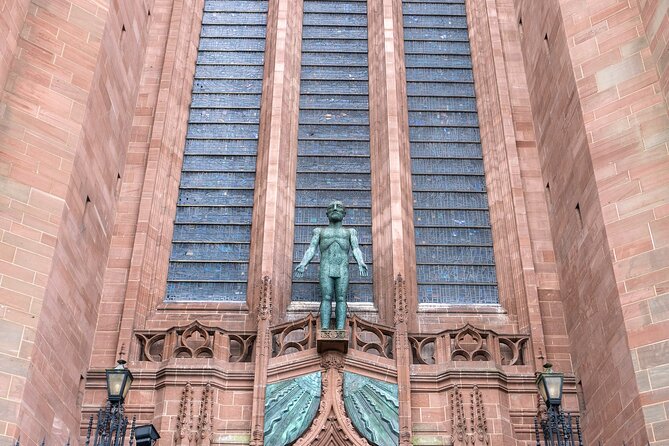
Meet at Liverpool Cathedral on St James’ Mount. The first stop is also one of the most atmospheric, as you enter the Lady Chapel and look at its stained-glass windows.
The windows help set the tone for the morning. They depict women connected with Liverpool’s story and give you an early sense of how women’s influence can be present in a place even when the wider historical record gives them little space.
You also see one of the final works by a famous female sculptor of the modern era. The supplied tour information does not name the sculptor, so ask your guide for the detail when you arrive.
One named figure highlighted on the walk is Juliana of Norwich, whose presence in the windows pleased one participant. The chapel therefore works as more than a quick photo stop. It frames the tour’s central idea: women’s lives and achievements deserve to be seen, named, and discussed.
Admission to the cathedral is included through a donation in the ticket price. That makes this opening stop especially good value, since you are not paying an extra entry fee before the walk begins.
Allow a little care at the start. The tour is described as easy, but Liverpool’s slopes and uneven paving can still matter if you have mobility concerns.
Blackburne House and the fight for women’s education
From the cathedral, the group reaches Blackburne House, a Grade II listed building with an important place in the education of girls and women.
This is one of the tour’s strongest themes. Education is easy to discuss in broad terms, but a real building makes the subject concrete. Here you hear about the school’s role, its famous former pupils, and the wider effort to give women access to learning.
The stop lasts about 10 minutes, so expect a focused explanation rather than a lengthy interior visit. Admission is free, and the value comes from the context your guide provides.
For me, this section helps explain why later stops matter. Women who gained access to education could enter professions, campaign for legal reform, work in public health, and influence culture. The route builds that connection step by step.
Rodney Street and women in Liverpool medicine

Rodney Street has often been called the Harley Street of the North. Its medical associations make it a natural place to discuss female residents who worked in or around medicine.
The subject here is not simply who lived on a handsome street. You learn about the obstacles women faced when trying to study, practise, or influence medicine in an era when professional doors were often closed to them.
The 10-minute stop should appeal to anyone interested in medical history, social change, or the practical barriers faced by women in the professions. It also adds variety to the walk. You are not standing in one museum listening to one theme. The city itself becomes the setting.
Rodney Street is also a reminder that the route is mostly outdoors. You will be listening on a pavement or public street, so traffic and city noise may occasionally compete with the guide’s voice.
Same country, a completely different day out:
- Beatles Magical Mystery Tour
★ 5.0 · 9,266 reviews - Liverpool: “Blue Route” – City & Beatles Tour
★ 5.0 · 8,562 reviews - Liverpool City Sights Hop On Hop Off City Tour – 24hr Ticket
★ 4.5 · 2,555 reviews - The LFC Stadium Tour
★ 5.0 · 1,548 reviews
Everyman Theatre and the politics of Hope Hall
The Everyman Theatre brings the route into Liverpool’s cultural and political life. Its earlier connection with Hope Hall opens a discussion about the bohemian setting and the political energy associated with the site.
You also hear about its links with ground-breaking movements, including the suffragettes. This is an important distinction. The walk is not limited to women who held formal power. It also considers the meetings, campaigns, and public pressure that helped change society.
The stop lasts around 10 minutes. If you enjoy theatre, political history, or the story of social movements, this part should be especially rewarding.
The route’s focus on sites rather than just statues is useful here. You may not see a large monument declaring the full story, but the guide helps you connect the building with the ideas and campaigns that passed through it.
Mount Pleasant and the barriers in medicine
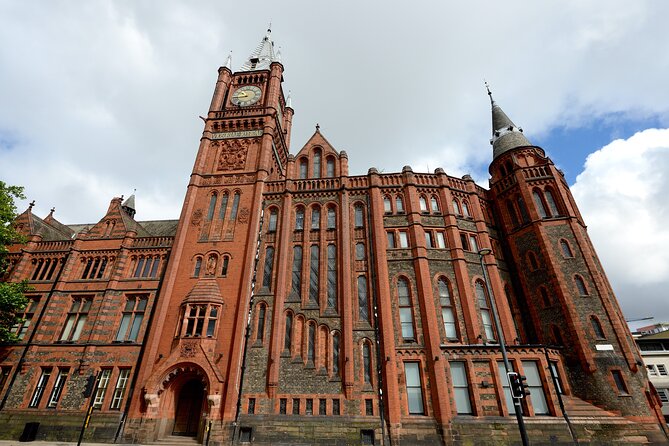
Mount Pleasant has a long association with medicine. Here, the guide introduces women from Liverpool who worked to influence medicine, education, and health services around the turn of the 20th century.
The key point is the challenge they faced. These women were not simply stepping into established careers. They were pushing against rules and expectations that limited their training, employment, authority, and public role.
This stop gives the walk some of its clearest social context. You hear how one woman’s work could affect patients, students, families, and the wider public. It also shows why the tour’s title reaches beyond the past. The discussion links historic struggles with the long process of improving women’s place in public life.
Again, the stop is brief, about 10 minutes, so the guide has to select the most useful details. If a particular medical figure interests you, this is a good moment to ask a question.
Pembroke Place and the women behind the red-brick universities
At Pembroke Place, the subject turns to higher education. The area is linked with the institutions that helped give the name red-brick universities, and the guide discusses female alumni who went on to make their mark.
You hear about pioneering women, including a major philanthropist who campaigned successfully for women’s rights and family welfare in the early 1900s. This section broadens the definition of achievement. A woman’s influence could come through study, professional work, charitable action, or political campaigning.
I find this one of the most useful stops for understanding how the city’s institutions shaped opportunity. The buildings are not just impressive places to pass. They represent access to education, and access to education often came before wider social change.
The stop takes about 10 minutes and is free to enter. The route continues through central Liverpool, so you should be ready for ordinary city conditions rather than a quiet heritage setting.
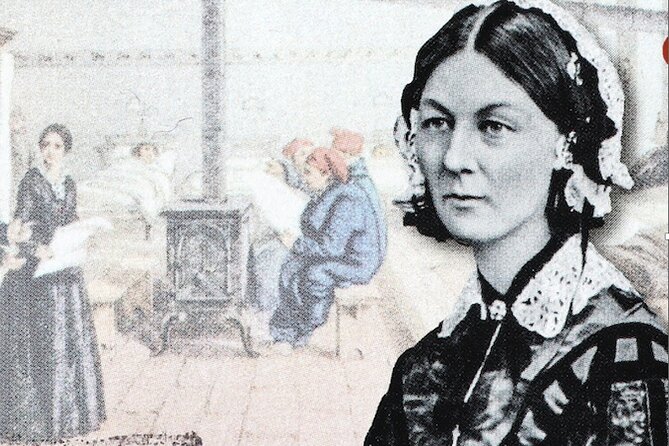
The Metropolitan Cathedral and the Nightingale nurses
The Metropolitan Cathedral of Christ the King provides a striking change of scene. At Liverpool’s Catholic cathedral, you learn about the site itself and its links with the Nightingale nurses.
The discussion also includes a tragic story and the work of a leading 19th-century reformer who helped change legislation supporting women and families. This gives the stop emotional weight, but the focus is not only on hardship. The guide also shows what reformers achieved through persistence and organised action.
The cathedral is free to visit as part of the walking route. A 10-minute stop cannot cover every detail, but it can give you a clear thread to follow: nursing, social reform, and the legal protection of women and families were connected parts of a larger struggle.
The building also offers a useful visual pause during the walk. You move from streets and institutions into a major place of worship before continuing toward Lime Street.
Lime Street and a woman remembered in song
Lime Street brings up Liverpool’s less respectable 19th-century reputation. The guide discusses one woman who appears in several well-known Liverpool songs.
This is a lighter, more popular-culture-based moment in the route, but it still serves a purpose. Women are remembered not only in official records and public buildings. Their names and stories can also survive through music and local memory.
The stop lasts about 10 minutes. It should suit you if you enjoy the way urban history mixes with folklore and song, though the brief format means the guide will likely focus on one central figure rather than offer a full account of Lime Street’s past.
Because Lime Street is a busy central area, stay close to the group and listen carefully when the guide stops to speak.
William Brown Street and the Walker Art Gallery
The walk then passes along William Brown Street, where women’s social and political union meetings took place in the early 1900s.
This is another place where the ordinary street becomes part of the lesson. Campaigns for women’s rights needed places to meet, organise, argue, and plan. Those gatherings helped turn private frustration into public action.
The route continues to the Walker Art Gallery, often described as the national gallery of the North. Here you learn about women connected with the gallery and some who remain represented in its collection.
The art gallery stop should appeal to anyone who wants the tour to include culture as well as politics. It also raises a useful question: who gets collected, displayed, and remembered in public institutions?
The schedule allows about 10 minutes here. That is enough for a pointed introduction, but not enough for a full gallery visit. If you want to explore the Walker properly, plan a separate visit after the walking tour.
St George’s Hall and the final connections
The tour ends near St George’s Hall, one of Liverpool’s Grade I listed landmarks. Its Neoclassical setting gives the final stop a suitably grand backdrop.
Here, the guide explains the building’s place in the suffragist movement and its surprising connection with modern cookery. That last subject adds a touch of humour and shows the wide range of material covered by the tour.
Ending at St George’s Hall is practical. It places you in the heart of central Liverpool, close to Lime Street and other transport links. You can continue sightseeing, visit the Walker Art Gallery, or simply stop for a drink after the walk.
The finish also brings the themes together. Women’s public meetings, political action, civic buildings, and everyday domestic life all belong in the story of how society changed.
Guide style, group size, and the walking conditions
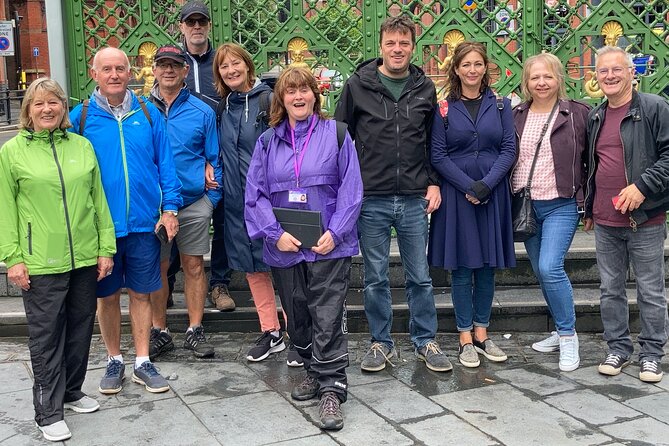
The named guides include Pam and Jean. Pam is especially associated with an engaging, friendly approach. She has made sure groups stay included, altered the pace for older participants, and adapted the route when someone used a wheelchair.
That does not mean the walk is fully step-free or suitable for every mobility need. The route includes steep slopes, cobbles, uneven surfaces, and busy areas. If you use a wheelchair or have difficulty walking, contact the operator before booking and ask about the conditions on the date you plan to go.
The maximum group size is 26 people. That is small enough for a personal feel, though the group can still spread out on busy streets. Children under 16 must be with an adult, and well-behaved dogs are welcome. Service animals are also allowed.
Wear comfortable shoes with good grip. Bring water in a reusable bottle where possible, and use sunscreen even on a cool day if the weather is bright. The walk requires good weather, so poor conditions may lead to another date or a full refund.
Is $31.58 good value for two hours?
At $31.58 per person, this is not the cheapest way to see Liverpool’s streets. Its value depends on how much you want a focused historical theme rather than a general city orientation.
The price includes the guided walk and the cathedral admission by donation. You are also paying for research and storytelling that connects places you might otherwise see as unrelated.
I think the price is fair for a visitor who enjoys social history, women’s history, architecture, or local culture. It is less suitable if you want interior access to every building or a broad introduction to all of Liverpool’s major attractions.
The monthly schedule means you need to plan around the available date. Since the experience is often booked 43 days ahead, reserve early if your visit is fixed, particularly if you want a specific month or guide availability.
Free cancellation is available until 24 hours before the start time. Changes or cancellations inside that period are not accepted for a refund, and weather-related cancellations offer either another date or a full refund.
Who should book this walk?
I would recommend it to you if you have already seen Liverpool’s headline attractions and want a more focused angle. It also works well as a first city walk if women’s history, reform, education, medicine, or culture interests you more than a standard Beatles or waterfront route.
The tour suits solo visitors, couples, family groups with older children, and local residents who want to see familiar streets differently. The comments about Pam and Jean suggest that the human side of the guiding is a major part of the experience, not an afterthought.
Men are welcome too. The campaigners discussed on the route sought equality that would benefit society as a whole, and the subject is not limited to one audience.
I would hesitate if you need a fully accessible route without checking first, or if rainy weather would spoil your day. The walk is gentle in pace, but the surfaces and slopes still require care.
My verdict
Book this tour if you want Liverpool explained through the women who taught, nursed, campaigned, created, organised, and changed public life. The strongest parts are the clear theme, the varied route, and the guides’ personal way of bringing overlooked figures back into view.
The best practical choice is to wear sturdy shoes, arrive ready for an outdoor walk, and leave time after the finish for the Walker Art Gallery or St George’s Hall. At two hours and $31.58, it offers a focused and worthwhile introduction to a side of Liverpool that many standard tours skip.
FAQ
How long is the Inspirational Women Liverpool Past-Present History Tour?
The tour lasts approximately two hours.
Where does the tour start?
It starts at Liverpool Cathedral, St James’ Mount, Liverpool L1 7AZ.
Where does the tour finish?
The walk ends at St George’s Hall, St George’s Place, Liverpool L1 1JJ.
What time does the tour begin?
The scheduled start time is 10:30 am.
Is admission to Liverpool Cathedral included?
Yes. Admission to the cathedral by donation is included in the ticket price.
Is the walk suitable for people with limited mobility or dogs?
The walk is described as easy, but it includes cobbles, uneven surfaces, steep slopes, and busy areas. Well-behaved dogs and service animals are allowed, and children under 16 must be accompanied by an adult.
Just added around Liverpool
- Half Day Welcome to Liverpool Walking Tour★ 5.0 · 17 reviews
- Fun, Flexible Treasure Hunt Around Liverpool with Cryptic Clues & Hidden Gems★ 5.0 · 141 reviews
- The Story of Liverpool 2-Hour Walking Tour★ 5.0 · 3 reviews
- LIVERPOOL: Yorkshire Adventure – Sightseeing Day Trip Tour★ 5.0 · 13 reviews
- Ultimate Ticket To Ride Beatles Half-Day Shore Excursion- Private★ 5.0 · 6 reviews
- Beatles Ticket To Ride Half Day Tour Small Groups★ 5.0 · 60 reviews
- Small-Group: Experience Local Food Tour in Liverpool★ 5.0 · 32 reviews
- Lake District from Liverpool including Lake Cruise★ 4.5 · 49 reviews
Historical Tours, compared.


Shadows of York: Ghost Walk and Horrible History.
Read our review →
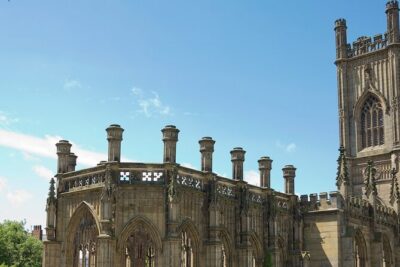
A Walk Through Time: History of Liverpool Walking Tour
Read our review →
Royal Historic Pubs Walking Guided Tour in London
Read our review →
Private Group: Historical Pub Walking Tour of London
Read our review →
Best Of Liverpool Heritage, History & Culture Guided Walking Tour
Read our review →Browse the lists this tour appears in