
Reviewed · HISTORICAL TOURS
Best Of Liverpool Heritage, History & Culture Guided Walking Tour
Liverpool’s story is much bigger than The Beatles. This 2-hour-15-minute walk links the old Ropewalks district, buried docks, the Royal Albert Dock, the Three Graces, medieval traces, and the Cavern quarter. Along the way, guides such as Mike, Carl, Pam, Allan, and Roy bring the city to life with local stories and Scouse humour. The Beatles are part of the walk, not the whole show.
I like the route’s variety, especially the shift from tucked-away Campbell Square to the open waterfront. I also like the practical overview it gives first-time visitors, since you can see many major sights without fighting traffic or working out the city map alone. The main consideration is pace: two hours on cobbles can feel brisk, and one past visitor found that some planned stops were missed. Wear sound shoes and stay alert to route changes.
Key points to know before booking
- A city-centre introduction: Cover Ropewalks, the docks, the waterfront, civic buildings, and Mathew Street in one outing.
- Liverpool beyond the Beatles: Maritime trade, old prisons, buried docks, medieval traces, and links with the United States all enter the story.
- Local guides with different styles: Mike, Carl, Pam, Allan, Roy, Rob, Chris, Paul, and others lead the walks, so the tone can vary from witty and lively to detailed and conversational.
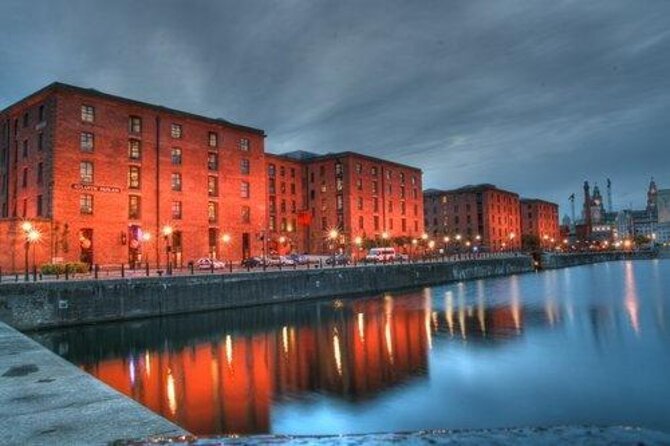
- A useful waterfront route: Royal Albert Dock and the Three Graces provide some of Liverpool’s best-known views and photo stops.
- Small-group feel: The maximum is 20 people, though some departures may be much smaller.
- An easy but active walk: There are no hills or stairs, but you will cross uneven surfaces and cobbles for more than two hours.
Starting beneath Bluecoat’s old walls
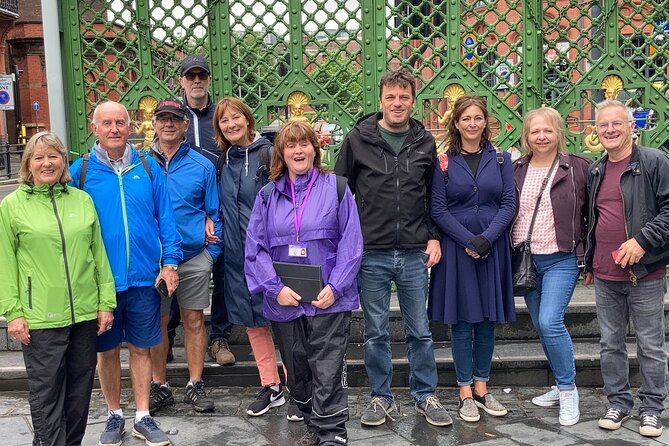
Meet your guide at the front gates of the Bluecoat building on School Lane. This is a handy central starting point, close to public transport and well placed for an opening look at Liverpool’s city centre.
The first stop is brief, only about five minutes, but it gives the walk a clear beginning. You are not being loaded onto a bus and driven between isolated sights. You start in the middle of the city and move through it on foot, which lets the guide point out changes in architecture, street layout, and land use as they appear around you.
From Bluecoat, the route heads toward the Liverpool Sailors Home Gateway. The monument recalls the Sailors Home and Liverpool’s long connection with the maritime community. It is also an easy early photo stop, thanks to the golden Liver bird.
That bird matters because the Liver bird is one of Liverpool’s best-known symbols. You do not need to be an architecture specialist to enjoy this part. The guide uses visible details, such as monuments and building fronts, to explain how the port shaped the city.
A few more Liverpool trips to weigh up
- A Walk Through Time: History of Liverpool Walking Tour
★ 5.0 · 911 reviews - History Guided Tour of Liverpool and the Beatles
★ 5.0 · 408 reviews - Liverpool Hidden History and Dead House Evening Walking Tour
★ 5.0 · 200 reviews
Ropewalks and a glimpse inside The Bridewell
At Henry Street, the walk enters the Ropewalks district for around 15 minutes. The name comes from the rope-making trade once linked to sailing ships. This is one of the more useful stops for understanding how Liverpool worked before the city became known mainly for music, football, and tourism.
I like this section because it moves away from the most familiar postcard sights. You get a sense of an old working district rather than simply ticking off a famous building. The route also gives the guide room to explain how maritime needs affected the streets and trades of the city.
Next comes Campbell Square, a quieter corner near Ropewalks. The square is home to The Bridewell, a converted Victorian gaol. You may have the chance to see one of the original cells, an unusual detail that adds texture to the walk.
This is the sort of stop that can make a guided walk worthwhile. You might pass a converted building on your own and admire its exterior, but the prison connection gives it a much stronger place in Liverpool’s story. Access inside is not guaranteed, so treat the cell as a possible bonus rather than a promised feature.
Buried docks and Liverpool’s oversized sign
The route then reaches Thomas Steers Way, built on the site of Liverpool’s first dry dock. Here the guide connects the modern city with the dock system that helped Liverpool grow.
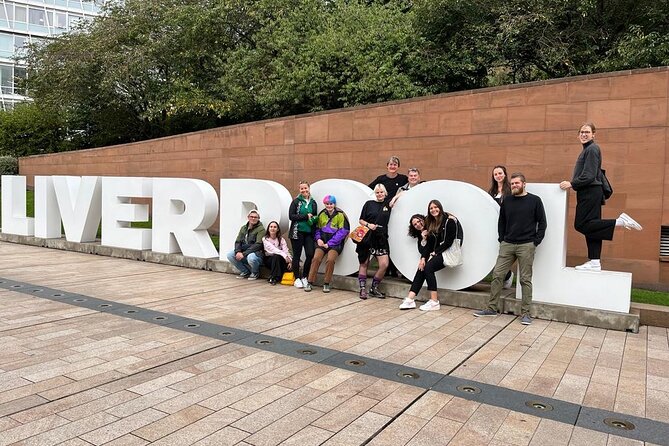
A large water fountain captures part of that maritime story, and you can take a quick look through a port hole. These small details are easy to miss without someone directing your attention to them. The stop also includes the oversized LIVERPOOL sign, whose colors change with seasons and events.
This section works well for photographs, but it is not just a selfie pause. The location shows how Liverpool has reused former dock areas for public spaces and modern attractions. You get a quick lesson in the city’s physical changes while still having time for a picture.
The tour does not include food or drinks, so bring water. A bottle is especially useful on warm days or if you prefer not to stop during the walk.
Royal Albert Dock and the city’s maritime memory
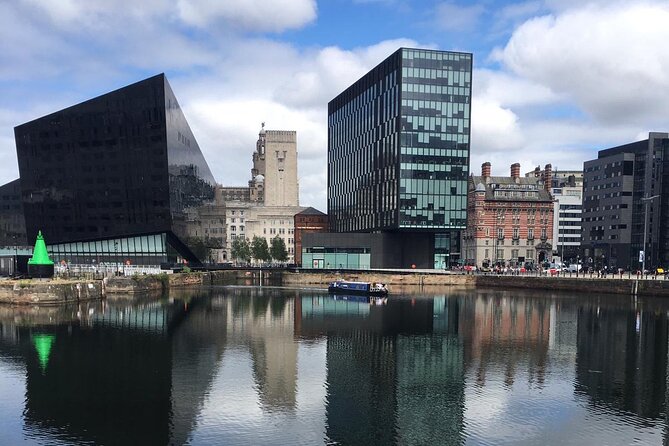
The Royal Albert Dock receives about 20 minutes, one of the longer stops. This is where Liverpool’s waterfront story becomes easier to read. Your guide explains the role of the docks in the city’s development and connects Liverpool with the Titanic story.
The point is not simply to admire the red-brick warehouses and open dock basin. You learn why the waterfront mattered and how maritime activity shaped Liverpool’s wealth, identity, and links with the wider world. The route also lets you compare older dock architecture with newer additions around the waterfront.
You pass a bronze statue of Bill Fury, which has become a shrine for his fans. It is a striking example of how Liverpool’s public spaces hold more than one kind of memory. Port history, popular culture, and local affection share the same route.
The Royal Albert Dock can be busy, and the walk is taken in a group. Your guide needs to keep people moving while still allowing time for questions and photographs. That balance depends partly on the group size and partly on the guide’s style.
Same country, a completely different day out:
- Beatles Magical Mystery Tour
★ 5.0 · 9,266 reviews - Liverpool: “Blue Route” – City & Beatles Tour
★ 5.0 · 8,562 reviews - Liverpool City Sights Hop On Hop Off City Tour – 24hr Ticket
★ 4.5 · 2,555 reviews - The LFC Stadium Tour
★ 5.0 · 1,548 reviews
Meeting the Fab Four and reaching the Three Graces
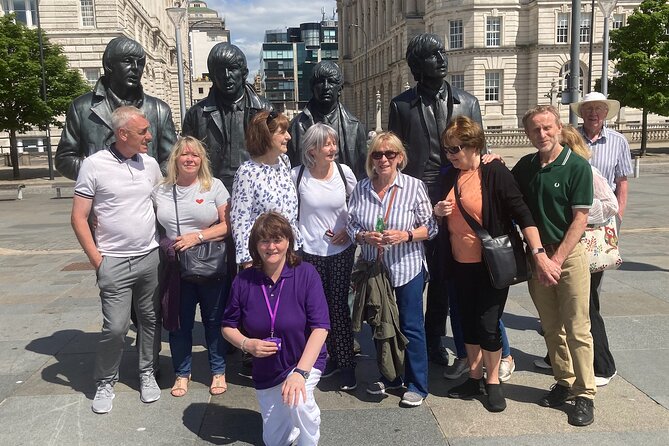
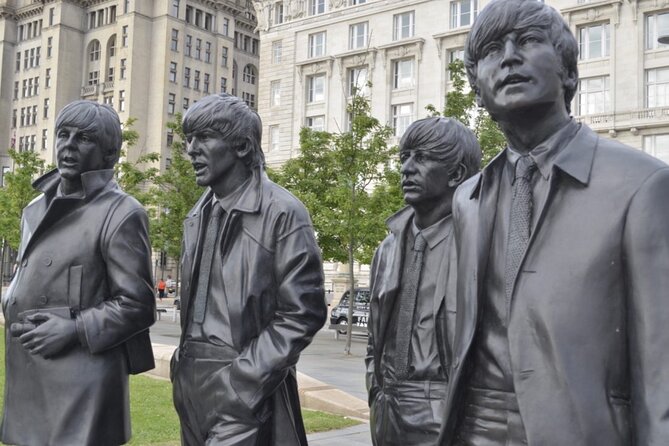
The Beatles Statue is the obvious music stop. You have time to take a selfie with the bronze Fab Four sculpture by Andrew Edwards. The statue offers a simple, recognizable moment for fans, even if you know little about the band.
The guide also tells behind-the-scenes stories about The Beatles and Liverpool’s music past. Still, this is not a full Beatles tour. The walk gives you an introduction and passes near The Cavern Club at the end, but anyone wanting a sustained account of the band’s career should consider a separate Beatles-focused walk.
Access to the Andy Edwards Beatles Statue can occasionally be restricted. If that happens, the route may use alternative statues. This is worth knowing if the statue is your main reason for booking.
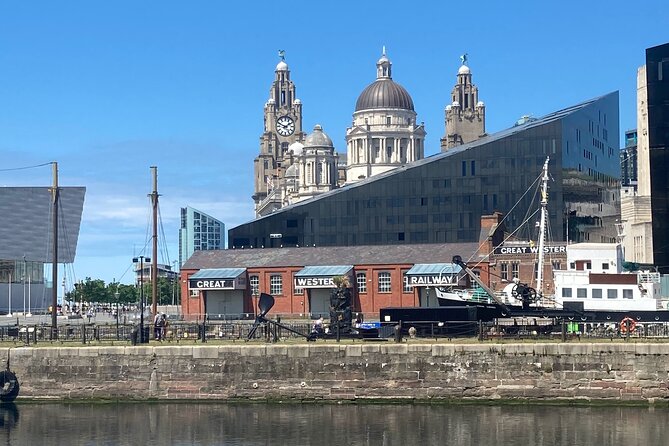
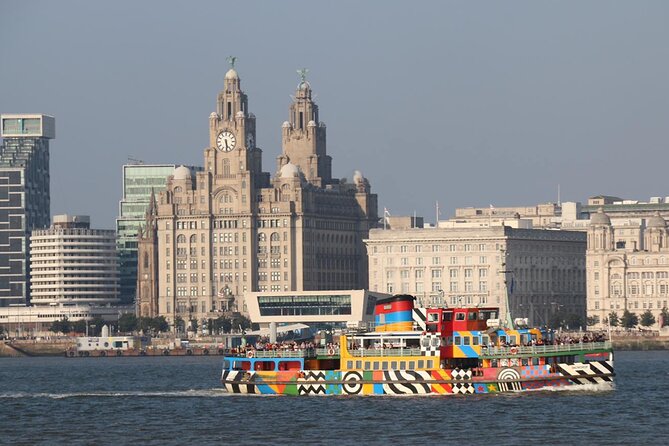
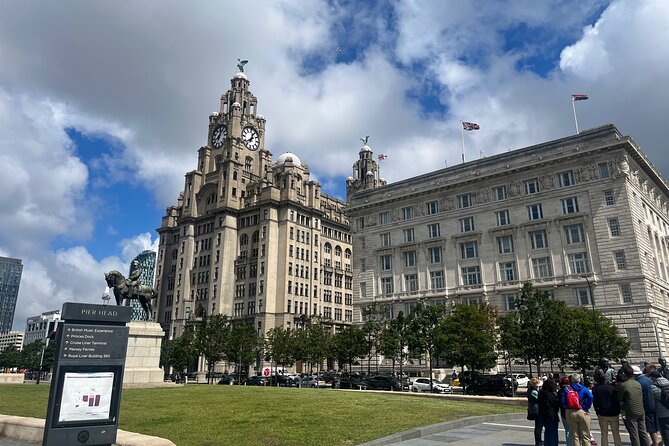
The next major section covers the Three Graces: the Cunard Building, the Port of Liverpool Building, and the Liver Building. These Grade II listed buildings form one of the city’s defining architectural groups, with the Liver Building providing the most instantly recognizable silhouette.
Your guide explains the history and heritage of all three. This is a good place to pause and look upward, since the scale and detail of the buildings can be easy to rush past. The golden Liver birds seen earlier connect naturally with the Liver Building, giving the walk a visual thread.
Castle Street, Town Hall, and Liverpool’s civic story
Castle Street provides a change of mood. Its buildings and layout retain a connection to Liverpool’s medieval past, and the street is framed by handsome architecture. The guide helps you read the city as a series of layers rather than one neatly preserved period.
The walk continues toward Liverpool Town Hall, a Grade I listed building regarded as one of England’s finest surviving 18th-century town halls. You also hear about earlier town halls dating back to the 1500s.
This is a useful reminder that Liverpool’s public life did not begin with the docks or the Beatles. Civic buildings tell a different story, one involving local government, public ceremony, and the city’s growth over time. I find this part particularly helpful if you want to understand Liverpool as a functioning city, not just a collection of attractions.
At Exchange Flags, the buildings form a courtyard facing the Town Hall. The site also has Second World War associations and houses a large bronze monument to Nelson from the early 1800s.
The contrast here is part of the appeal. One short stretch brings together civic architecture, military history, and an older monument to a major naval figure. Your guide may spend more or less time on each subject depending on questions and group interest.
Derby Square and the walk toward Mathew Street
The final historic stop is Derby Square, where you hear about Liverpool Castle, which once stood here. The square is now home to an imposing monument to Queen Victoria.
This stop is brief, but it adds another period to the route. You have moved from medieval traces to maritime trade, Victorian industry, civic power, and modern popular culture. That range is the strongest reason to choose this walk as a first visit.
The tour ends at the entrance to Mathew Street, a convenient central location. You can continue on your own into the Cavern quarter and find The Cavern Club, or book a separate Beatles walking tour if you want more detail about how the Fab Four became internationally famous.
One practical point matters here: the stated route includes several stops, but the exact order or coverage can change. Operational issues may prevent access to a location, and one person found that Derby Square, Mathew Street, and the Eleanor Rigby statue were not all covered. I would treat the walk as a guided overview, not a guarantee that every listed point will receive equal time.
What the guides add to the walk
The quality of a city walk depends heavily on the person holding the story together. The named guides have different strengths.
Mike is described as passionate, witty, and highly engaged with questions. Carl is presented as clear, friendly, and well informed, with a talent for giving first-time visitors a broad introduction. Pam is known for her detailed grasp of Liverpool and her warm delivery.
Allan brings humor, photographs, and careful pacing, while Roy adds strong local character and Scouse wit. Other guides, including Rob, Chris, Paul, and Michael, are praised for clear explanations, enthusiasm, and useful suggestions for the rest of a Liverpool stay.
That range means you should expect a human-led experience rather than a fixed audio script. A small group can make a real difference. Some departures have had only two or three people, allowing the guide to answer questions quickly and adapt the conversation to personal interests.
The trade-off is that larger groups may be harder to hear. One person specifically felt that earphones would have helped with questions asked by other members of the group. If you have hearing concerns, position yourself near the guide and speak up when the group gathers.
Price, pace, and practical value
At $31.90 per person, this is priced as an affordable orientation rather than an all-day sightseeing product. You are paying for a local guide, a planned route, and the ability to connect several parts of Liverpool without spending time on navigation.
I think the value is strongest if you have limited time or are visiting Liverpool for the first time. The walk covers central districts, the waterfront, major civic buildings, Beatles landmarks, and maritime stories in a single session. It can help you decide where to return later.
The value is less clear if you want long interior visits, museum admission, or a slow photography walk. No attraction admission is included, and there is no food or drink. Most stops are outside, with only the possible glimpse into an original cell at The Bridewell.
The group limit is 20 people, which is reasonable for a walking tour. Since the walk lasts more than two hours, you need moderate physical fitness. There are no hills or stairs, but cobbles and uneven surfaces can be tiring. Wear comfortable, non-slip shoes.
Children under 16 must be accompanied by a responsible adult. Service animals are allowed, and well-behaved dogs are welcome, though busy streets and group movement may make the outing less relaxed for some pets.
The tour is offered in English and uses a mobile ticket. It is booked, on average, 18 days ahead, so I would not leave it until the last moment if your Liverpool dates are fixed. Free cancellation is available up to 24 hours before the start time. If poor weather causes the operator to cancel, you are offered another date or a full refund.
Who should book this Liverpool walk?
I would choose this experience if you want a broad first look at Liverpool and prefer stories tied to real streets and buildings. It suits people who enjoy moving at a steady pace and asking questions along the way.
It is also a good fit for repeat visitors. The Ropewalks, old jail, buried dock site, civic courtyards, and medieval references can reveal a side of Liverpool you may not notice on a Beatles-only visit. Several guides also suggest places to see and things to do after the walk, which is useful when your stay is short.
You may want something else if your main goal is a detailed Beatles pilgrimage. The Beatles Statue and Cavern quarter appear near the end, but the tour gives equal weight to maritime, civic, architectural, and social history. You should also think twice if uneven streets are difficult for you or if you prefer indoor sightseeing.
Should you book it?
Book this tour if you want to understand how Liverpool fits together. In just over two hours, you move from Bluecoat and Ropewalks to the docks, the Three Graces, Castle Street, Town Hall, Derby Square, and Mathew Street. That is a lot of ground, but the route has a clear purpose.
I would book it early in a short Liverpool stay, carry water, wear grippy shoes, and keep your schedule flexible after the finish. For a first visit, the mix of local guides, maritime history, architecture, Beatles connections, and useful city orientation makes $31.90 a fair spend. Just choose a separate Beatles tour if that is the only story you want.
FAQ
Where does the tour start?
The tour starts at the front gates of the Bluecoat building on School Lane, Liverpool L1 3BX.
Where does the tour end?
It ends at the entrance to Mathew Street in Liverpool city centre, near the Cavern quarter.
How long does the walking tour last?
The tour lasts approximately 2 hours and 15 minutes.
Is The Beatles Statue included?
The route normally includes a stop at the Beatles Statue for photographs and Beatles stories. Access may occasionally be restricted, in which case alternative statues are visited.
Does the tour include The Cavern Club?
The walk ends near Mathew Street, where you can explore the Cavern quarter and The Cavern Club independently. The tour does not state that admission to The Cavern Club is included.
Is the walk suitable for children and dogs?
Children under 16 must be accompanied by a responsible adult. Well-behaved dogs are welcome, and service animals are allowed.
What happens if the weather is poor?
The experience requires good weather. If the operator cancels because of poor weather, you are offered a different date or a full refund.
Just added around Liverpool
- Half Day Welcome to Liverpool Walking Tour★ 5.0 · 17 reviews
- Fun, Flexible Treasure Hunt Around Liverpool with Cryptic Clues & Hidden Gems★ 5.0 · 141 reviews
- The Story of Liverpool 2-Hour Walking Tour★ 5.0 · 3 reviews
- LIVERPOOL: Yorkshire Adventure – Sightseeing Day Trip Tour★ 5.0 · 13 reviews
- Ultimate Ticket To Ride Beatles Half-Day Shore Excursion- Private★ 5.0 · 6 reviews
- Beatles Ticket To Ride Half Day Tour Small Groups★ 5.0 · 60 reviews
- Small-Group: Experience Local Food Tour in Liverpool★ 5.0 · 32 reviews
- Lake District from Liverpool including Lake Cruise★ 4.5 · 49 reviews
Historical Tours, compared.


Shadows of York: Ghost Walk and Horrible History.
Read our review →
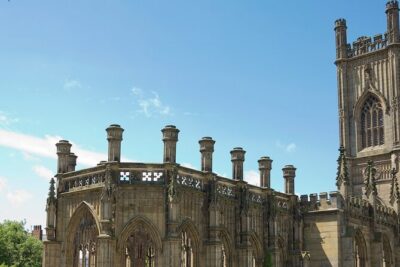
A Walk Through Time: History of Liverpool Walking Tour
Read our review →
Royal Historic Pubs Walking Guided Tour in London
Read our review →
Private Group: Historical Pub Walking Tour of London
Read our review →
Browse the lists this tour appears in